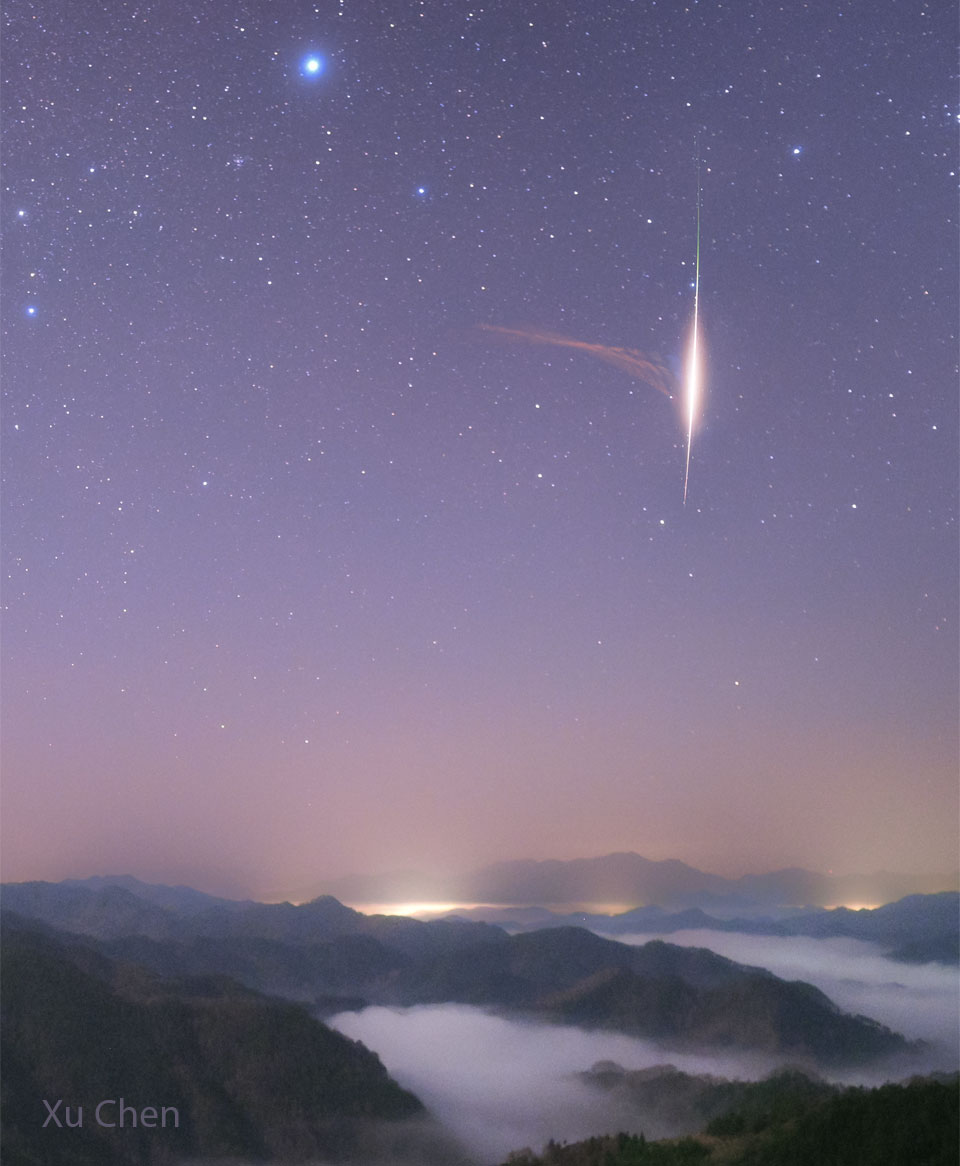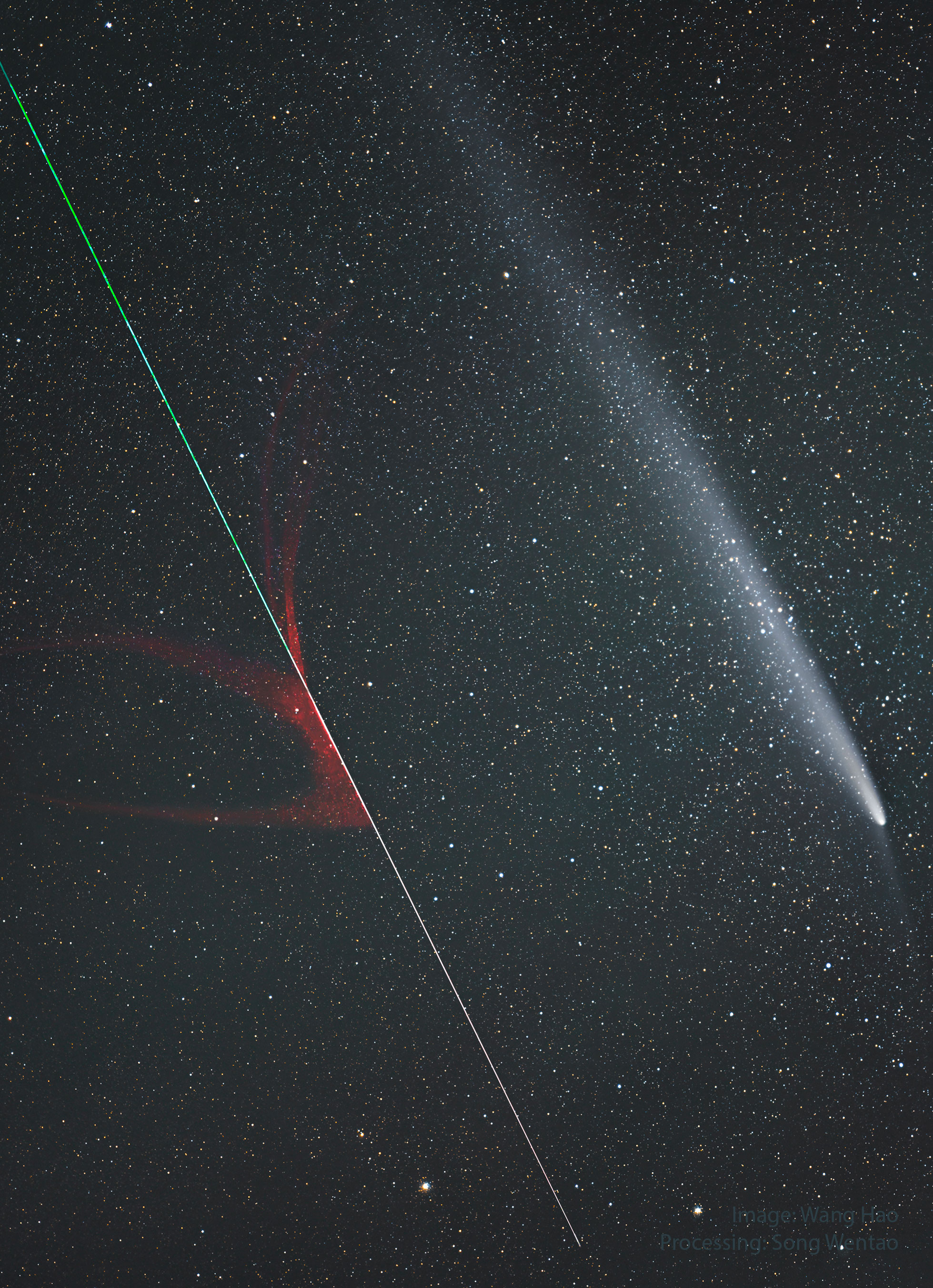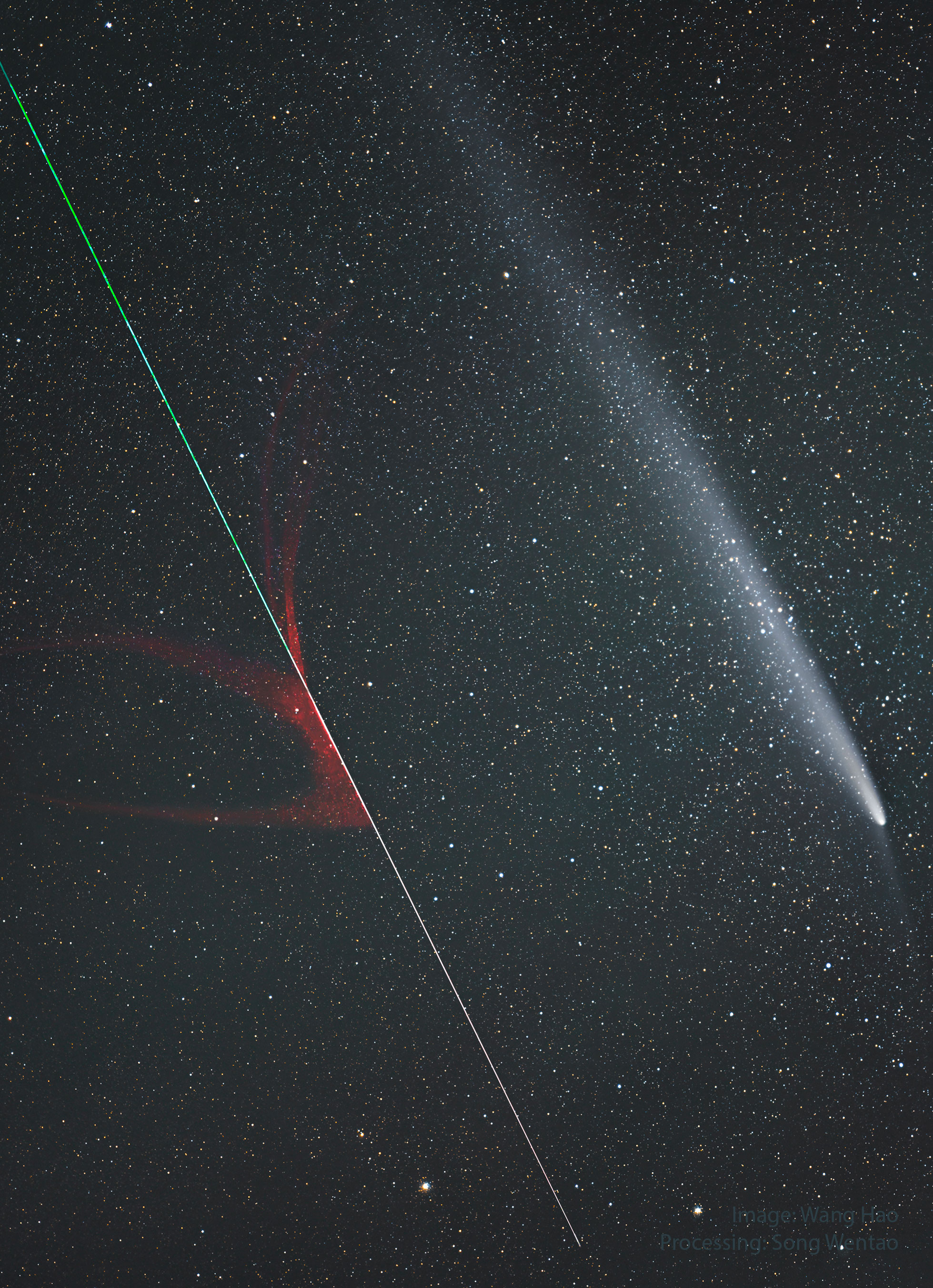
How different are these two streaks? The streak on the upper right is Comet Tsuchinshan-Atlas showing an impressive dust tail. The comet is a large and dirty iceberg that entered the inner Solar System and is shedding gas and dust as it is warmed by the Sun's light. The streak on the lower left is a meteor showing an impressive evaporation trail. The meteor is a small and cold rock that entered the Earth's atmosphere and is shedding gas and dust as it is warmed by molecular collisions. The meteor was likely once part of a comet or asteroid -- perhaps later composing part of its tail. The meteor was gone in a flash and was only caught by coincidence during a series of exposures documenting the comet's long tail. The featured image was captured just over a month ago from Sichuan Province in China. Gallery: Comet Tsuchinshan-ATLAS in 2024
¿Qué tan diferentes son estos dos rastros? El rastro en la parte superior derecha es el cometa Tsuchinshan-Atlas, que muestra una cola de polvo impresionante. El cometa es un gran iceberg sucio que entró al sistema solar interior y está liberando gas y polvo a medida que se calienta por la luz del Sol. El rastro en la parte inferior izquierda es un meteorito que muestra una cola de evaporación impresionante. El meteorito es una roca pequeña y fría que entró a la atmósfera terrestre y está liberando gas y polvo a medida que se calienta por colisiones moleculares. El meteorito probablemente fue parte de un cometa o un asteroide en el pasado — quizás formando más tarde parte de su cola. El meteorito desapareció en un destello y fue capturado por casualidad durante una serie de exposiciones que documentaban la larga cola del cometa. La imagen destacada fue capturada hace un poco más de un mes desde la provincia de Sichuan en China.