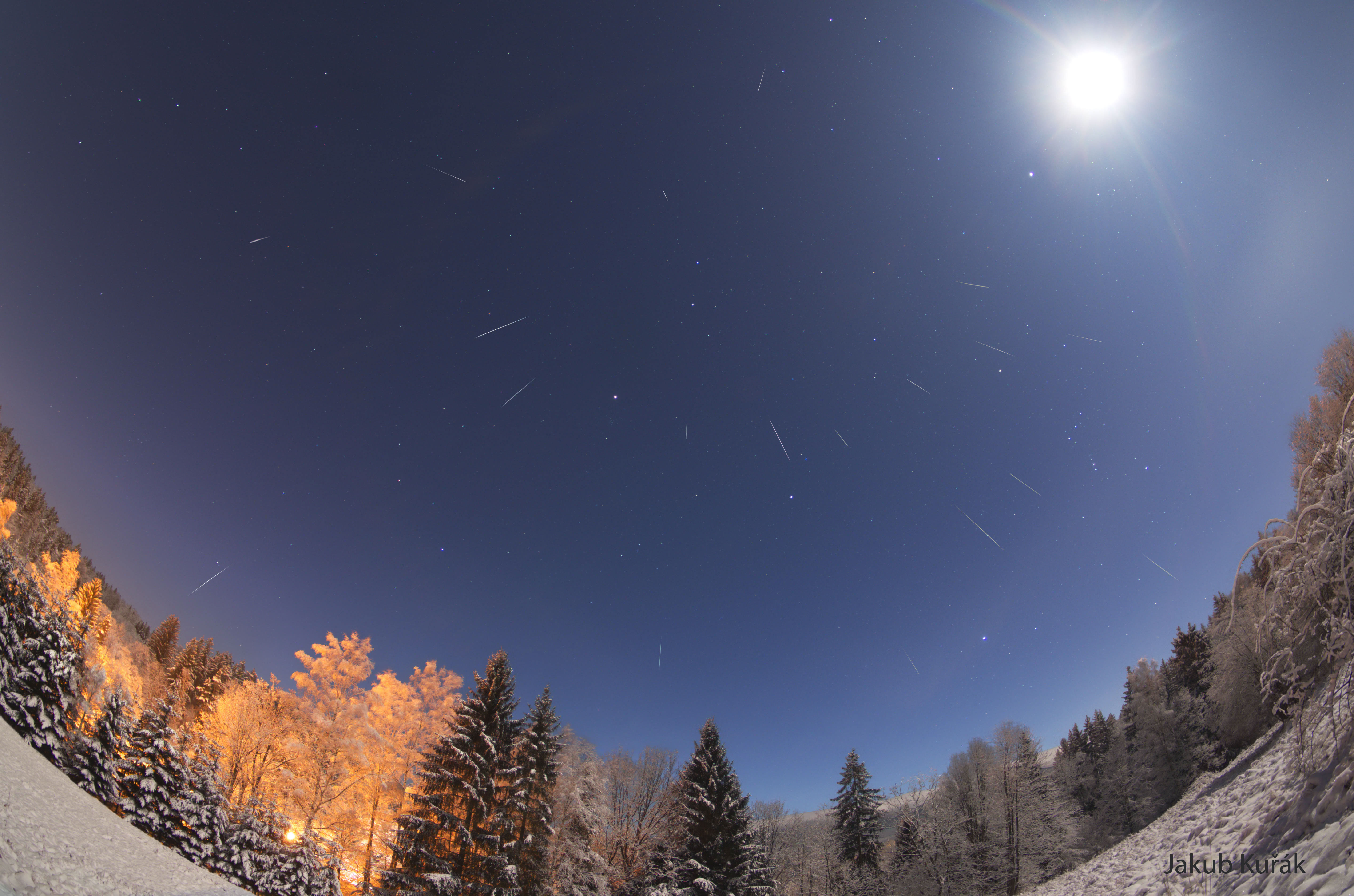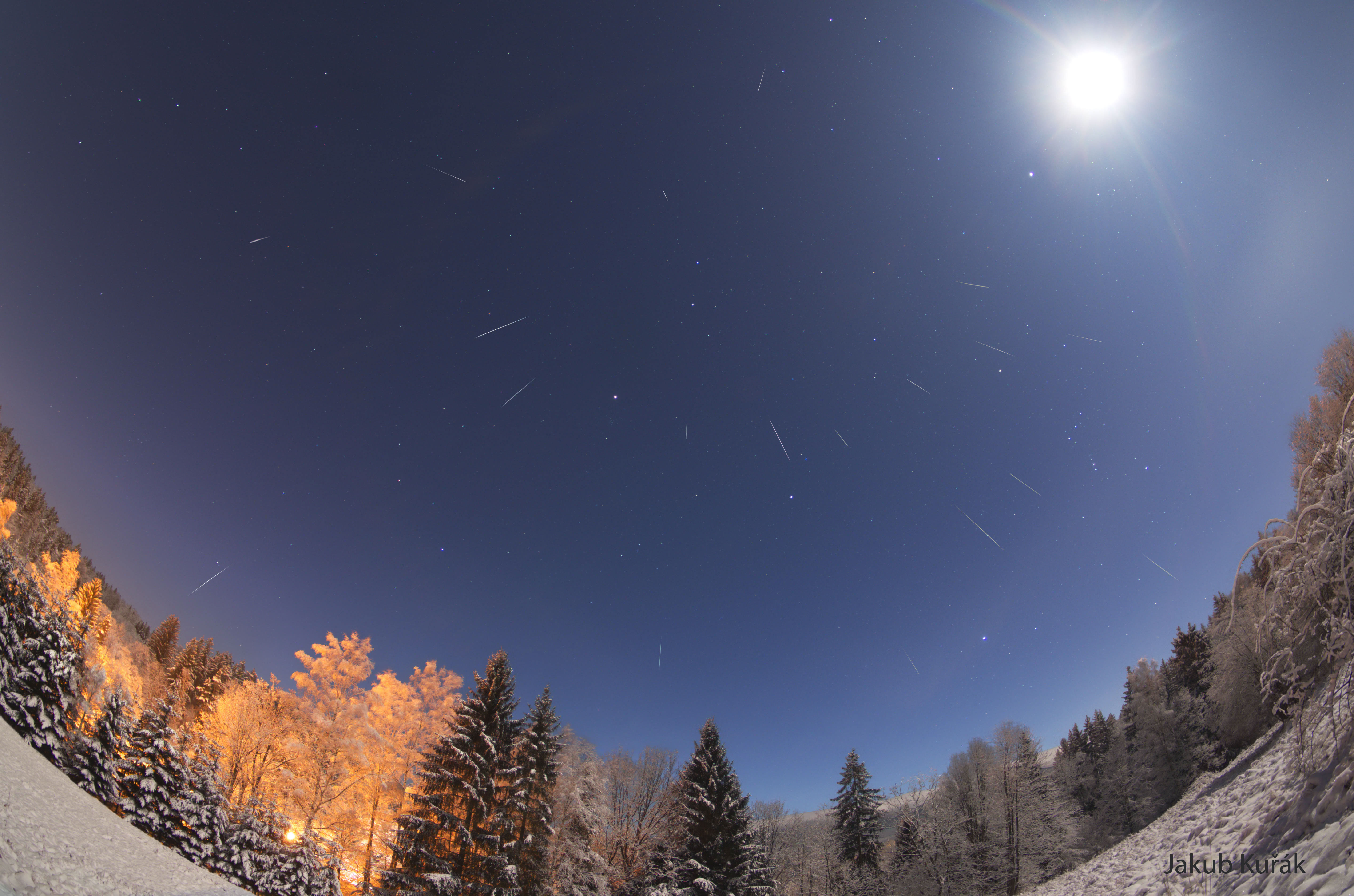
Meteors have been flowing out from the constellation Gemini. This was expected, as mid-December is the time of the Geminid Meteor Shower. Pictured here, over two dozen meteors were caught in successively added exposures taken over several hours early Saturday morning from a snowy forest in Poland. The fleeting streaks were bright enough to be seen over the din of the nearly full Moon on the upper right. These streaks can all be traced back to a point on the sky called the radiant toward the bright stars Pollux and Castor in the image center. The Geminid meteors started as sand sized bits expelled from asteroid 3200 Phaethon during its elliptical orbit through the inner Solar System. Jigsaw Challenge: Astronomy Puzzle of the Day
Los meteores han estado fluyendo desde la constelación de Géminis. Esto era de esperarse, ya que mediados de diciembre es el momento de la lluvia de meteoros de los Géminis. En la imagen, se capturaron más de dos docenas de meteores en exposiciones sucesivas tomadas durante varias horas el sábado temprano desde un bosque nevado en Polonia. Los breves destellos eran lo suficientemente brillantes como para ser vistos sobre el resplandor de la Luna casi llena en la parte superior derecha. Todos estos destellos pueden ser trazados hacia un punto en el cielo llamado radiante, ubicado hacia las brillantes estrellas Pollux y Castor en el centro de la imagen. Los meteores de los Géminis comenzaron como partículas del tamaño de la arena expulsadas por el asteroide 3200 Fáeton durante su órbita elíptica a través del sistema solar interior.