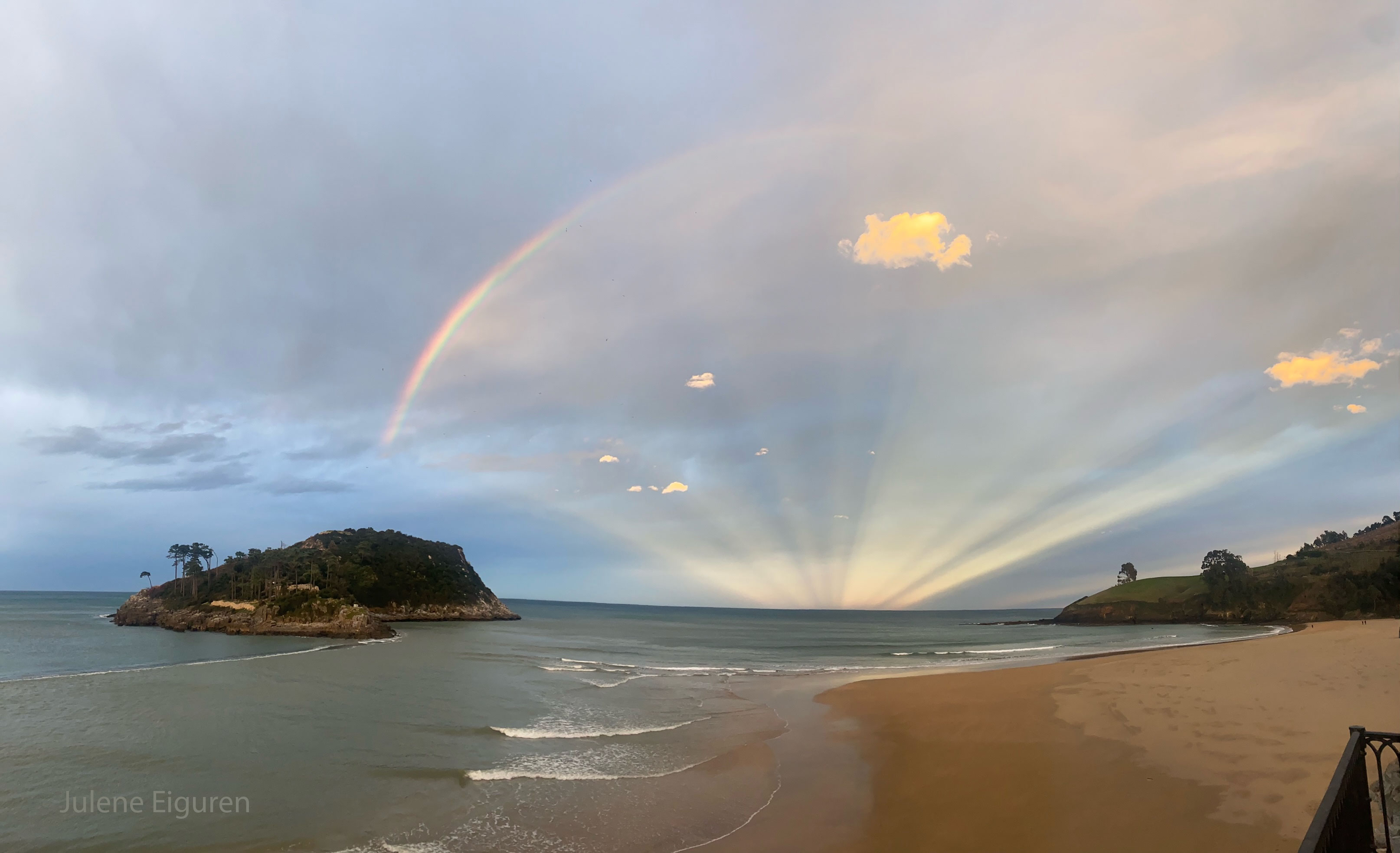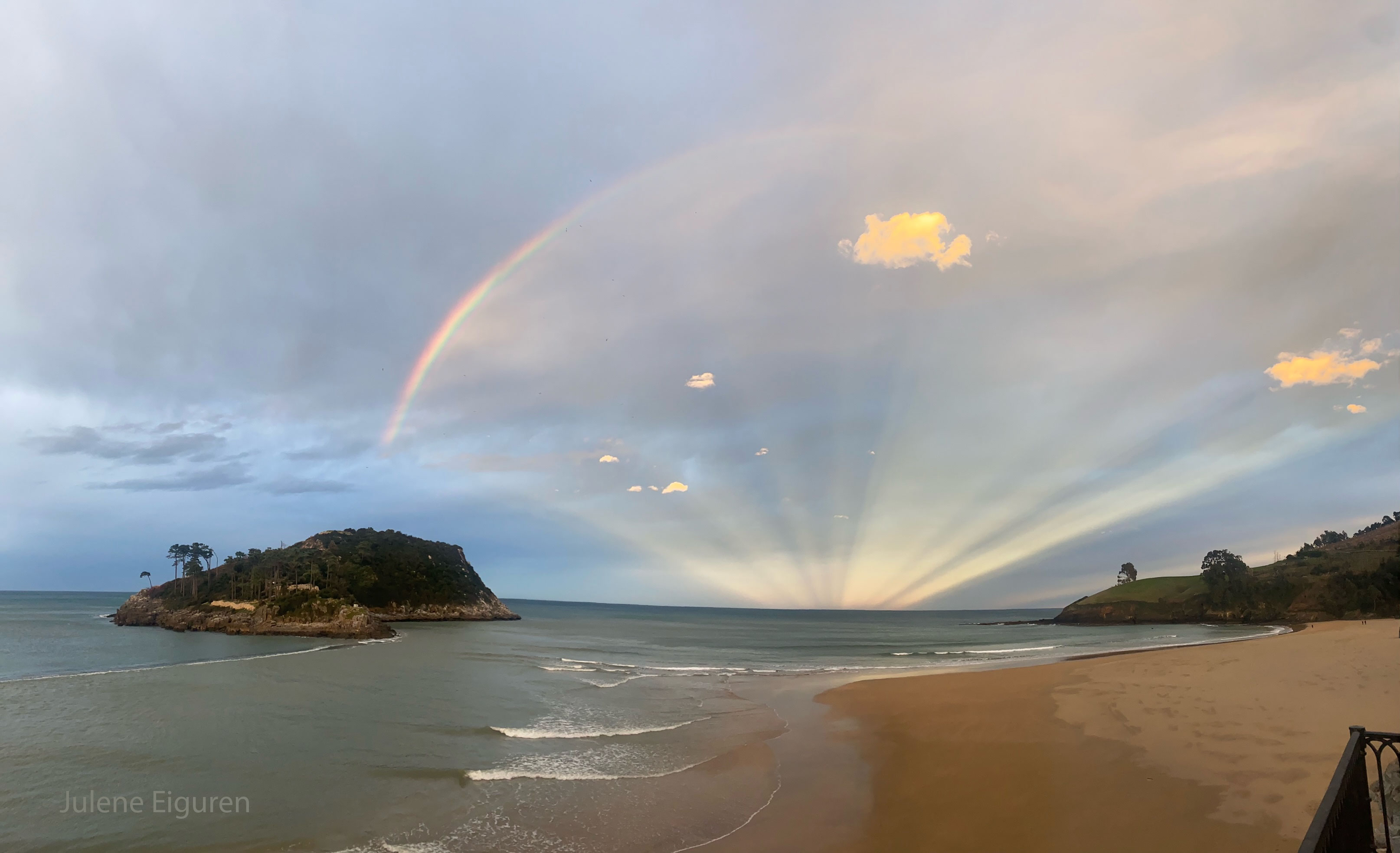
Yes, but can your rainbow do this? Late in the day, the Sun set as usual toward the west. However, on this day, the more interesting display was 180 degrees around -- toward the east. There, not only was a rainbow visible, but an impressive display of anticrepuscular rays from the rainbow's center. In the featured image from Lekeitio in northern Spain, the Sun is behind the camera. The rainbow resulted from sunlight reflecting back from falling rain. Anticrepuscular rays result from sunlight, blocked by some clouds, going all the way around the sky, overhead, and appearing to converge on the opposite horizon -- an optical illusion. Rainbows by themselves can be exciting to see, and anticrepuscular rays a rare treat, but capturing them both together is even more unusual -- and can look both serene and surreal. Jigsaw Challenge: Astronomy Puzzle of the Day
Sí, pero ¿puede tu arcoíris hacer esto? Al caer la tarde, el Sol se puso como de costumbre hacia el oeste. Sin embargo, ese día, el espectáculo más interesante se encontraba 180 grados en dirección opuesta: hacia el este. Allí no solo era visible un arcoíris, sino también una impresionante exhibición de rayos anticrepusculares que emanaban desde el centro del arcoíris. En la imagen destacada, tomada desde Lekeitio, en el norte de España, el Sol queda detrás de la cámara. El arcoíris fue el resultado de la luz solar reflejada por la lluvia que caía. Los rayos anticrepusculares se originan cuando la luz solar, bloqueada por algunas nubes, recorre todo el cielo de extremo a extremo —pasando por el cénit— y parece converger en el horizonte opuesto: una ilusión óptica. Los arcoíris por sí solos pueden ser un espectáculo emocionante, y los rayos anticrepusculares constituyen un fenómeno raramente observado, pero capturarlos a ambos juntos es aún más inusual, y el resultado puede parecer a la vez sereno y surrealista. Desafío de rompecabezas: Puzzle astronómico del día