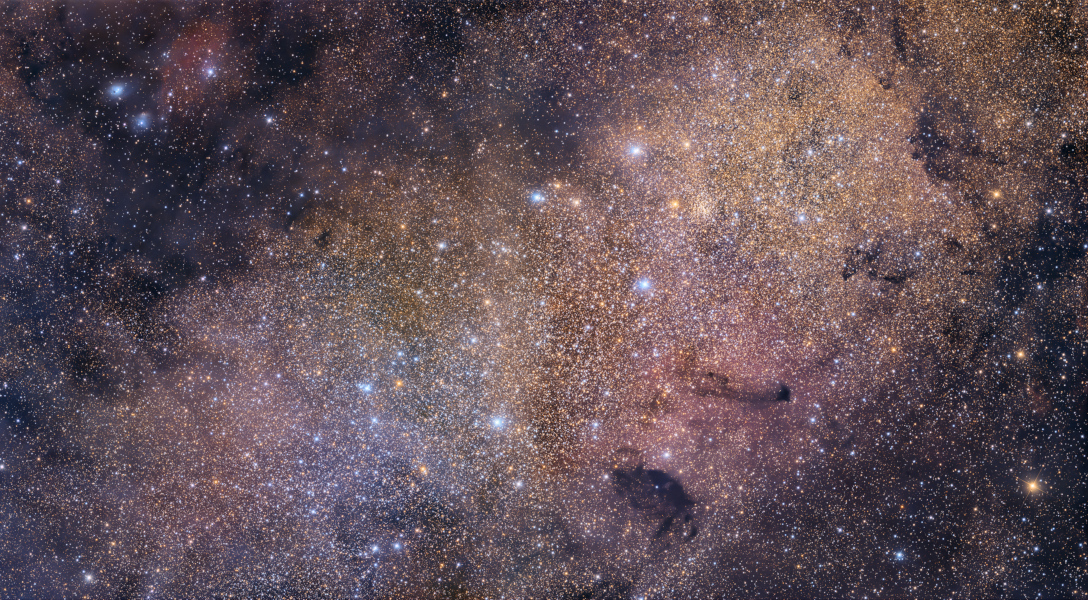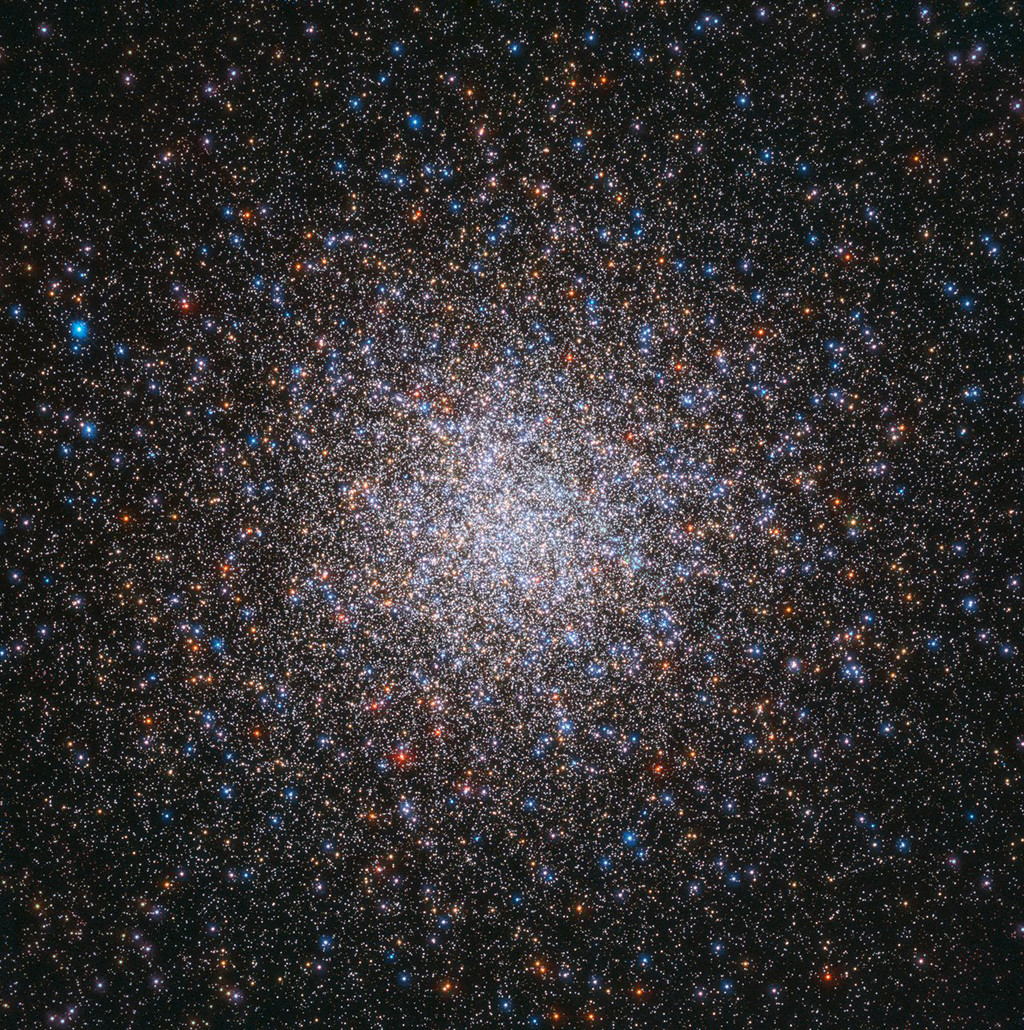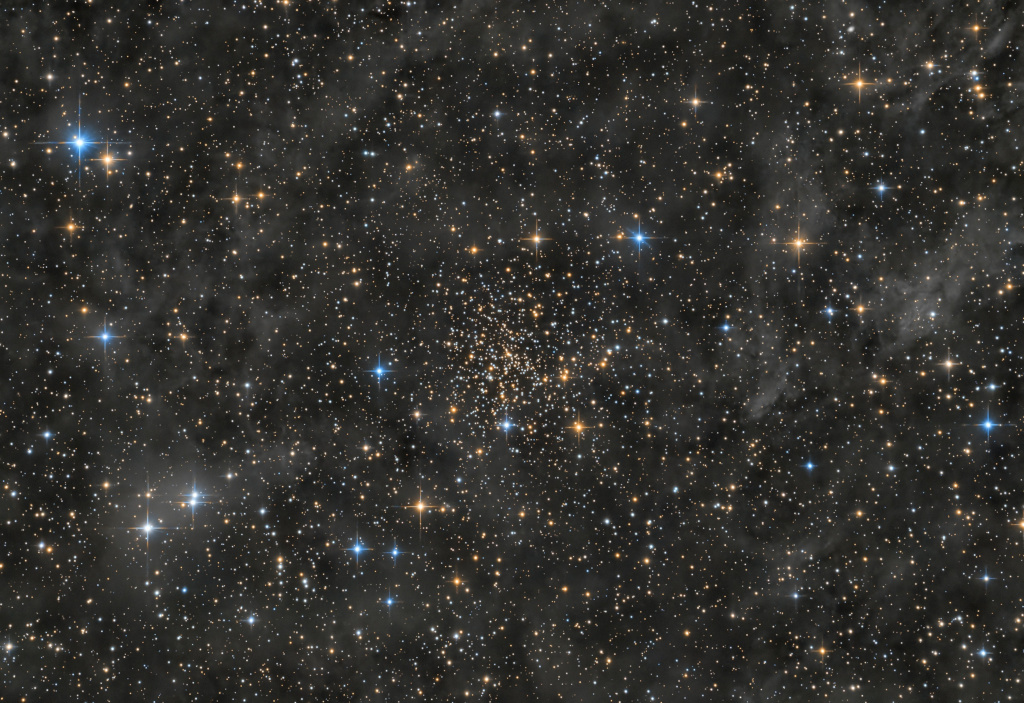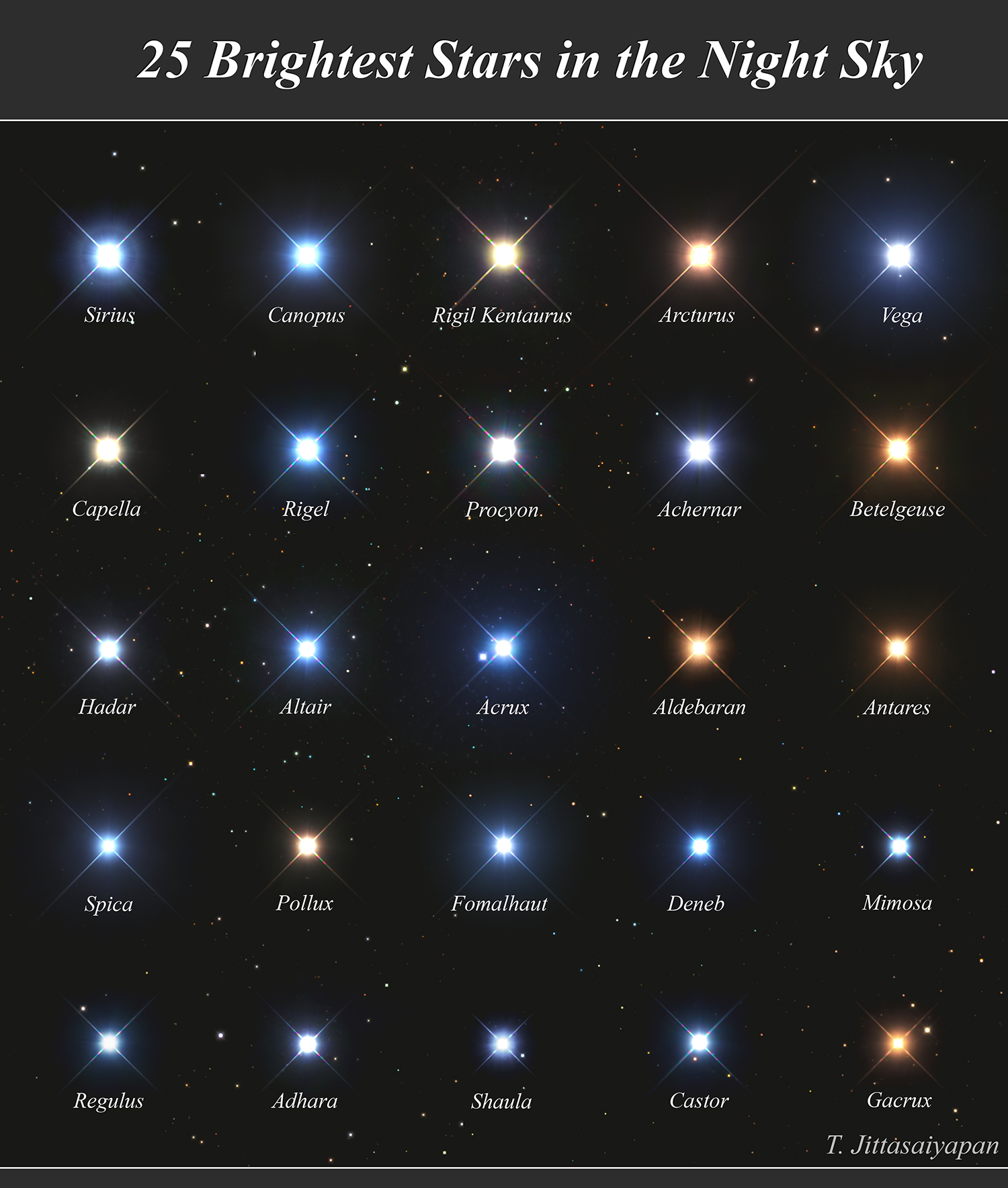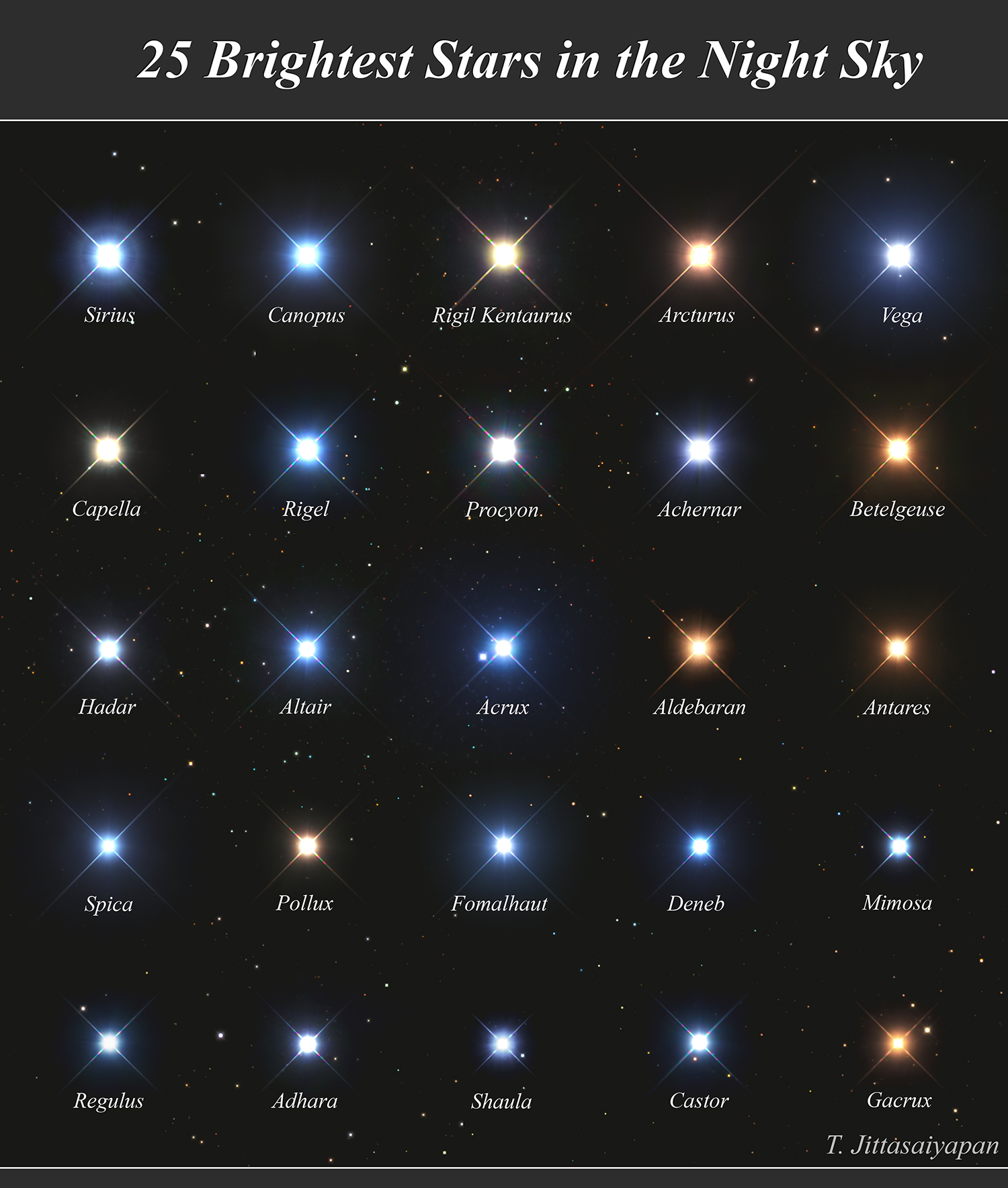
Do you know the names of some of the brightest stars? It's likely that you do, even though some bright stars have names so old they date back to near the beginning of written language. Many world cultures have their own names for the brightest stars, and it is culturally and historically important to remember them. In the interest of clear global communication, however, the International Astronomical Union (IAU) has begun to designate standardized star names. Featured here in true color are the 25 brightest stars in the night sky, currently as seen by humans, coupled with their IAU-recognized names. Some star names have interesting meanings, including Sirius ("the scorcher" in Latin), Vega ("falling" in Arabic), and Antares ("rival to Mars" in Greek). You are likely even familiar with the name of at least one star too dim to make this list: Polaris. APOD Turns 30!: Free public lecture in Anchorage TONIGHT (Wednesday) at 7 pm
¿Conoces los nombres de algunas de las estrellas más brillantes? Es probable que sí, incluso aunque algunos nombres de estrellas brillantes sean tan antiguos que datan de casi el comienzo del lenguaje escrito. Muchas culturas del mundo tienen sus propios nombres para las estrellas más brillantes, y es cultural y históricamente importante recordarlos. Sin embargo, en interés de una comunicación global clara, la Unión Astronómica Internacional (IAU) ha comenzado a designar nombres estandarizados para las estrellas. Aquí se muestran en color real las 25 estrellas más brillantes del cielo nocturno, tal como actualmente se ven desde la Tierra, junto con sus nombres reconocidos por la IAU. Algunos nombres de estrellas tienen significados interesantes, incluyendo Sirius ("el quemador" en latín), Vega ("cayendo" en árabe) y Antares ("rival de Marte" en griego). Probablemente también estés familiarizado con el nombre de al menos una estrella demasiado tenue para estar en esta lista: Polaris.