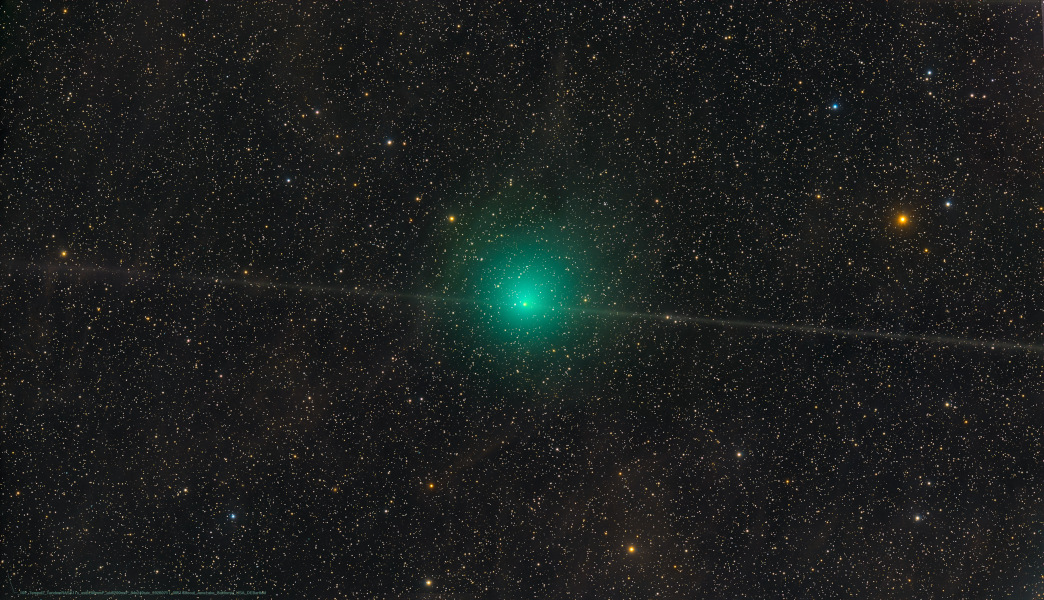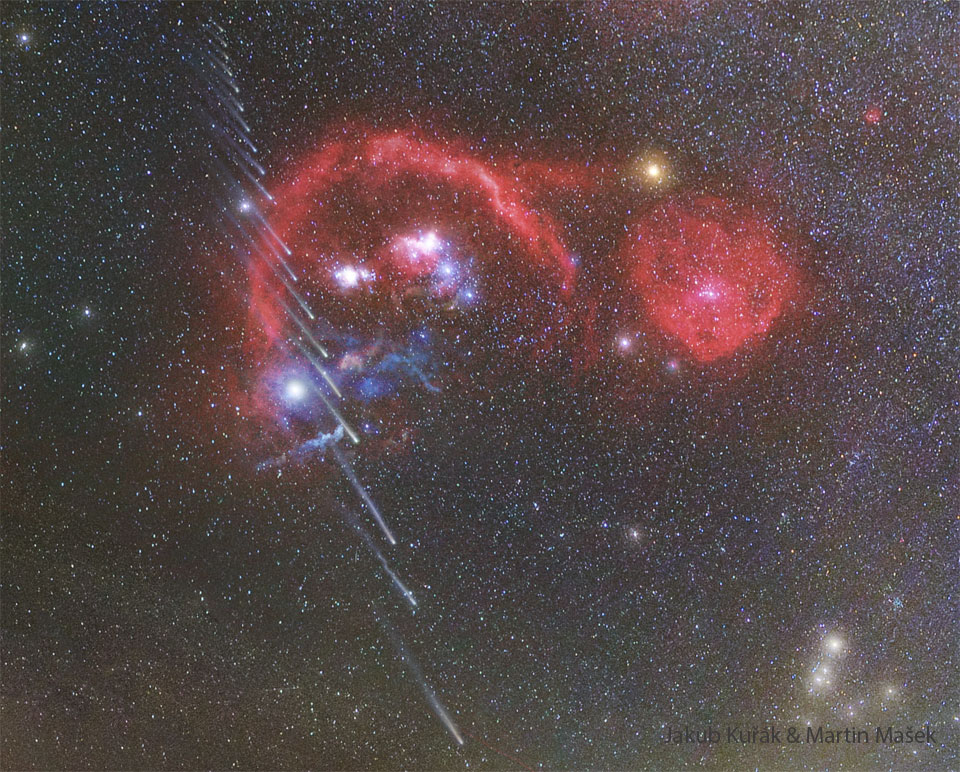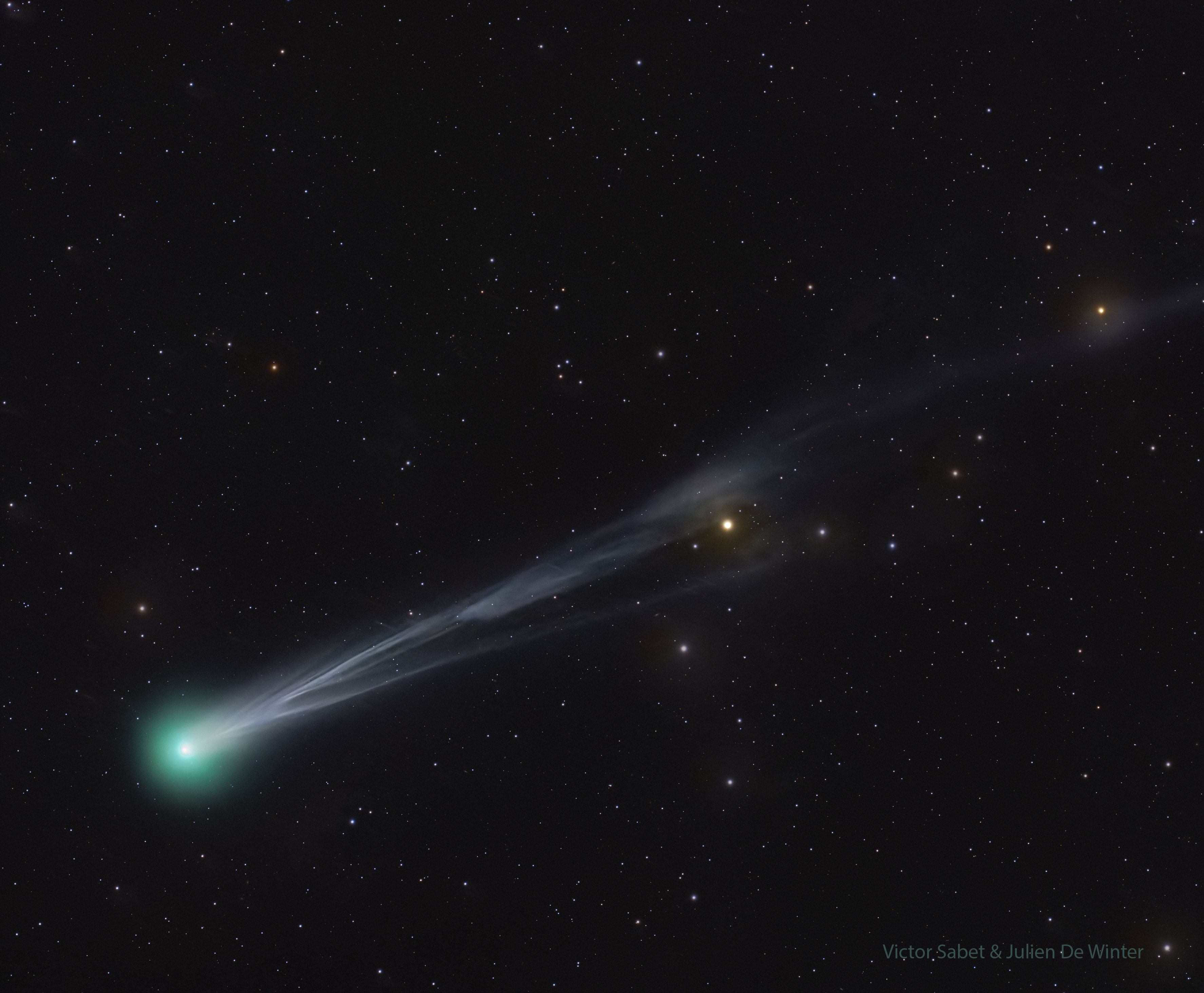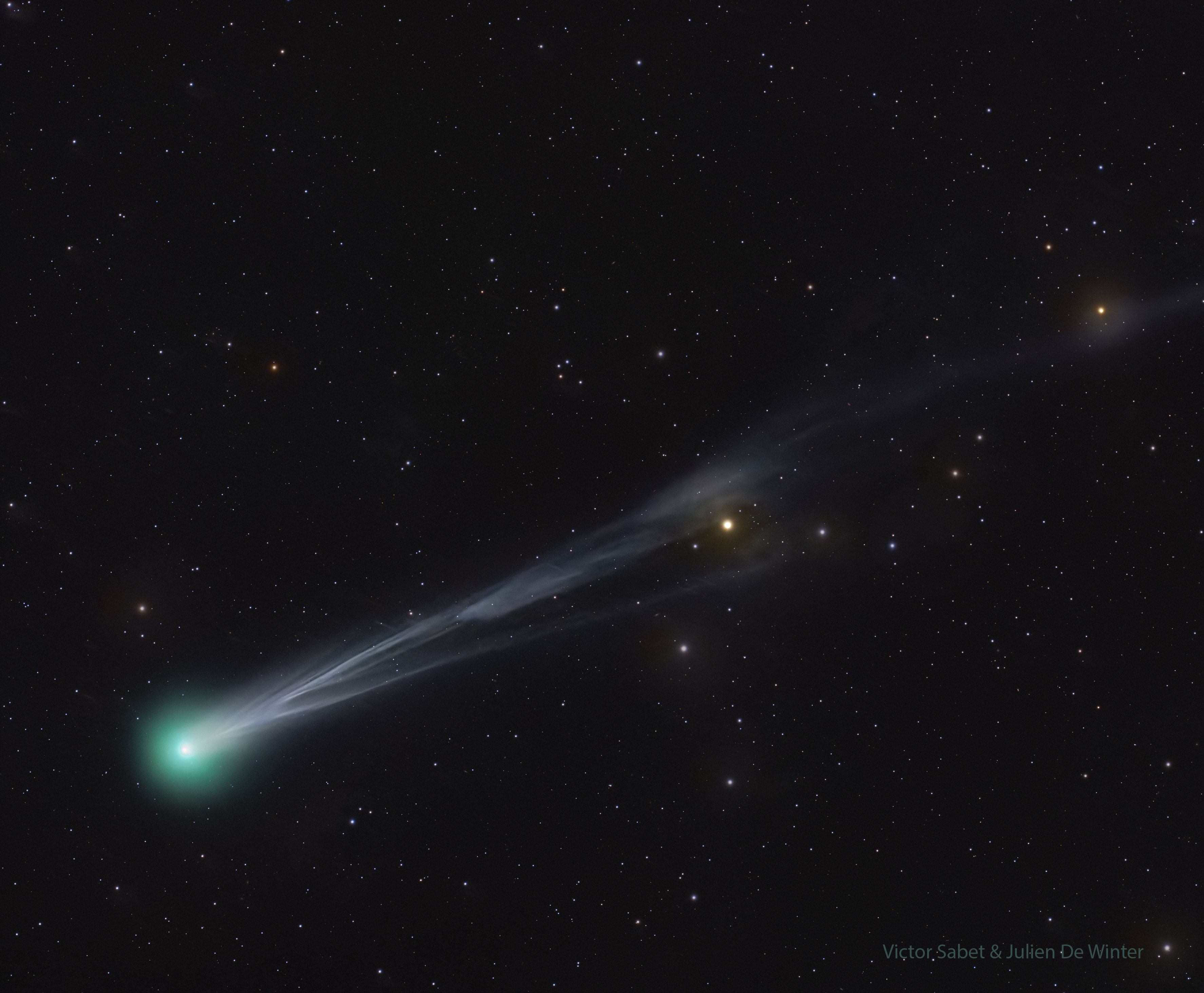
Comet Lemmon is brightening and moving into morning northern skies. Besides Comet SWAN25B and Comet ATLAS, Comet C/2025 A6 (Lemmon) is now the third comet currently visible with binoculars and on long camera exposures. Comet Lemmon was discovered early this year and is still headed into the inner Solar System. The comet will round the Sun on November 8, but first it will pass its nearest to the Earth -- at about half the Earth-Sun distance -- on October 21. Although the brightnesses of comets are notoriously hard to predict, optimistic estimates have Comet Lemmon then becoming visible to the unaided eye. The comet should be best seen in predawn skies until mid-October, when it also becomes visible in evening skies. The featured image showing the comet's split and rapidly changing ion tail was taken in Texas, USA late last week. Growing Gallery: Comet Lemmon in 2025
El cometa Lemmon se está aclarando y moviéndose hacia el cielo norte matutino. Además del cometa SWAN25B y el cometa ATLAS, el cometa C/2025 A6 (Lemmon) es ahora el tercer cometa actualmente visible con binoculares y en exposiciones largas de cámara. El cometa Lemmon fue descubierto a principios de este año y aún se dirige hacia el sistema solar interior. El cometa dará la vuelta al Sol el 8 de noviembre, pero primero pasará su punto más cercano a la Tierra, a unos medio de la distancia Tierra-Sol, el 21 de octubre. Aunque la brillantez de los cometas es notablemente difícil de predecir, estimados optimistas sugieren que el cometa Lemmon se volverá visible a simple vista en ese momento. El cometa debería verse mejor en los cielos previos al amanecer hasta mediados de octubre, cuando también se volverá visible en los cielos vespertinos. La imagen destacada que muestra la cola iónica dividida y rápidamente cambiante del cometa fue tomada en Texas, EE. UU., a finales de la semana pasada.