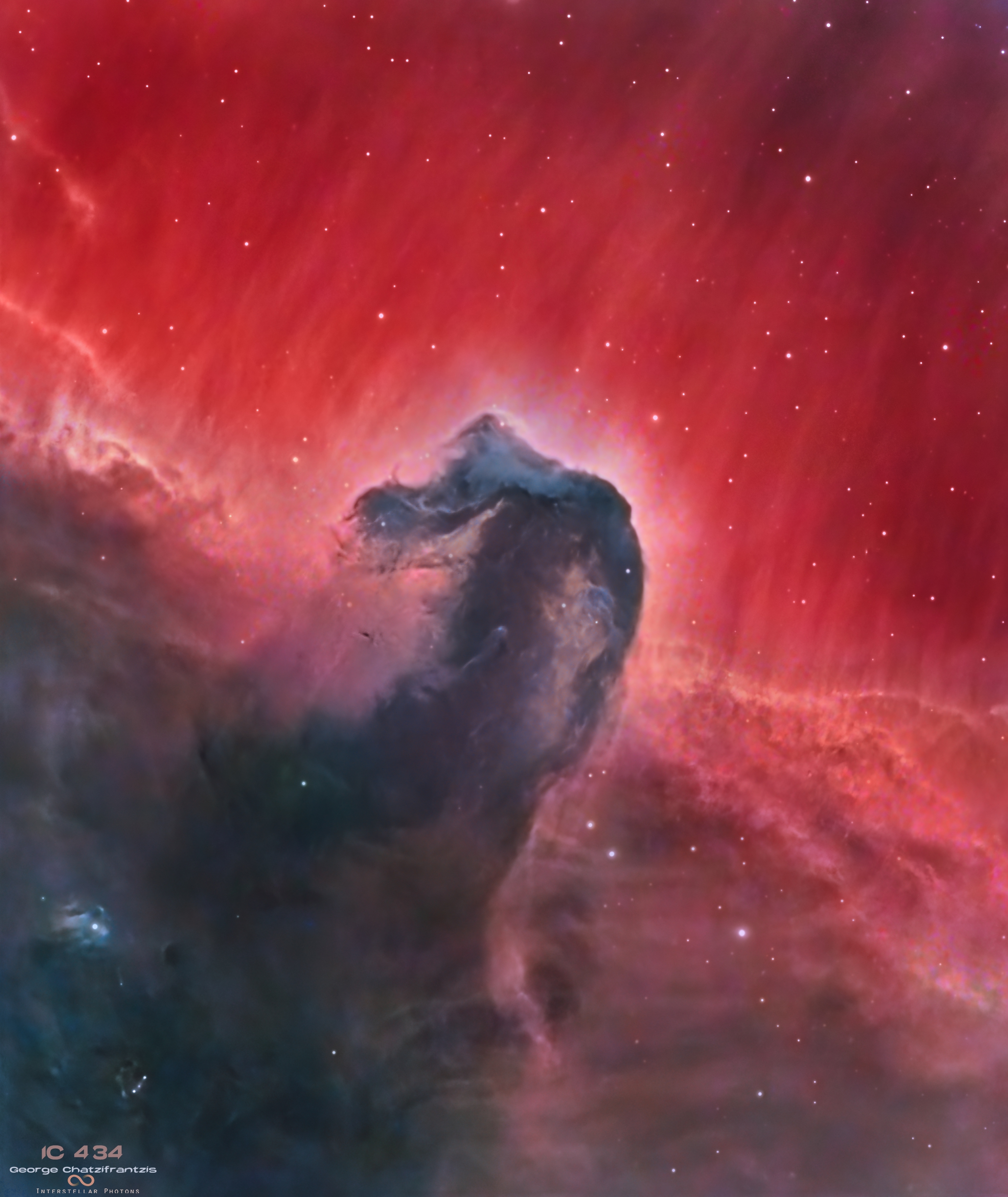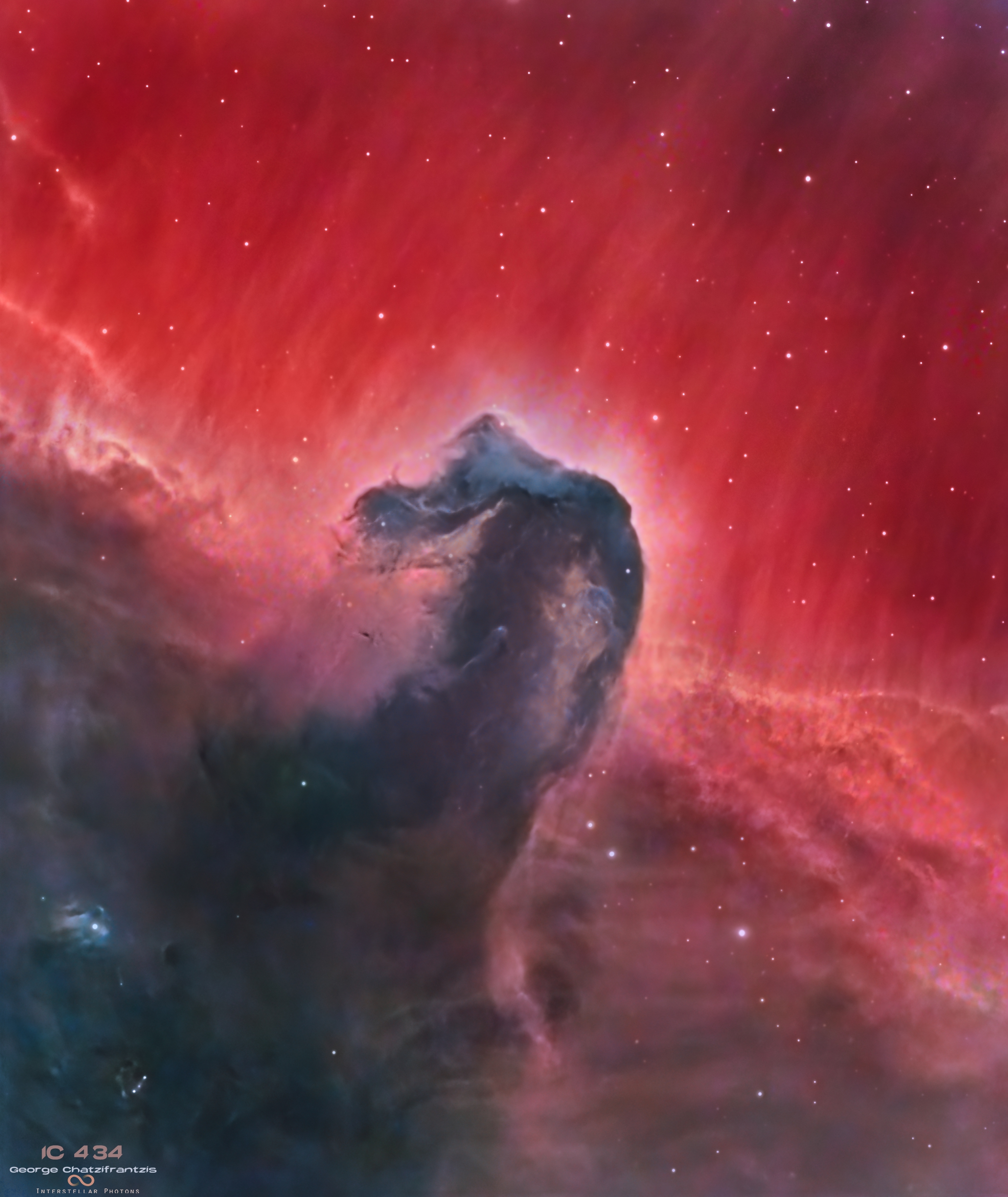
Sculpted by stellar winds and radiation, this dusty interstellar molecular cloud has by chance assumed an immediately recognizable shape. Fittingly known as The Horsehead Nebula, it lies some 1,500 light-years distant, embedded in the vast Orion cloud complex. About five light-years "tall," the dark cloud is cataloged as Barnard 33, first identified on a photographic plate taken in the early 20th century. B33 is visible primarily because its obscuring dust is silhouetted against the glow of emission nebula IC 434. Hubble Space Telescope images from the early 21st century find young stars forming within B33. Of course, the magnificent interstellar cloud will slowly shift its apparent shape over the next few million years. But for now the Horsehead Nebula is a rewarding though difficult object to view with small telescopes from planet Earth.
Esculpido por vientos estelares y radiación, esta nube molecular interestelar polvorienta ha asumido por casualidad una forma inmediatamente reconocible. Apropiadamente conocida como La Nebulosa del Caballo de Bucefalo, se encuentra a unos 1.500 años luz de distancia, incrustada en el vasto complejo de nubes de Orión. Con aproximadamente cinco años luz de