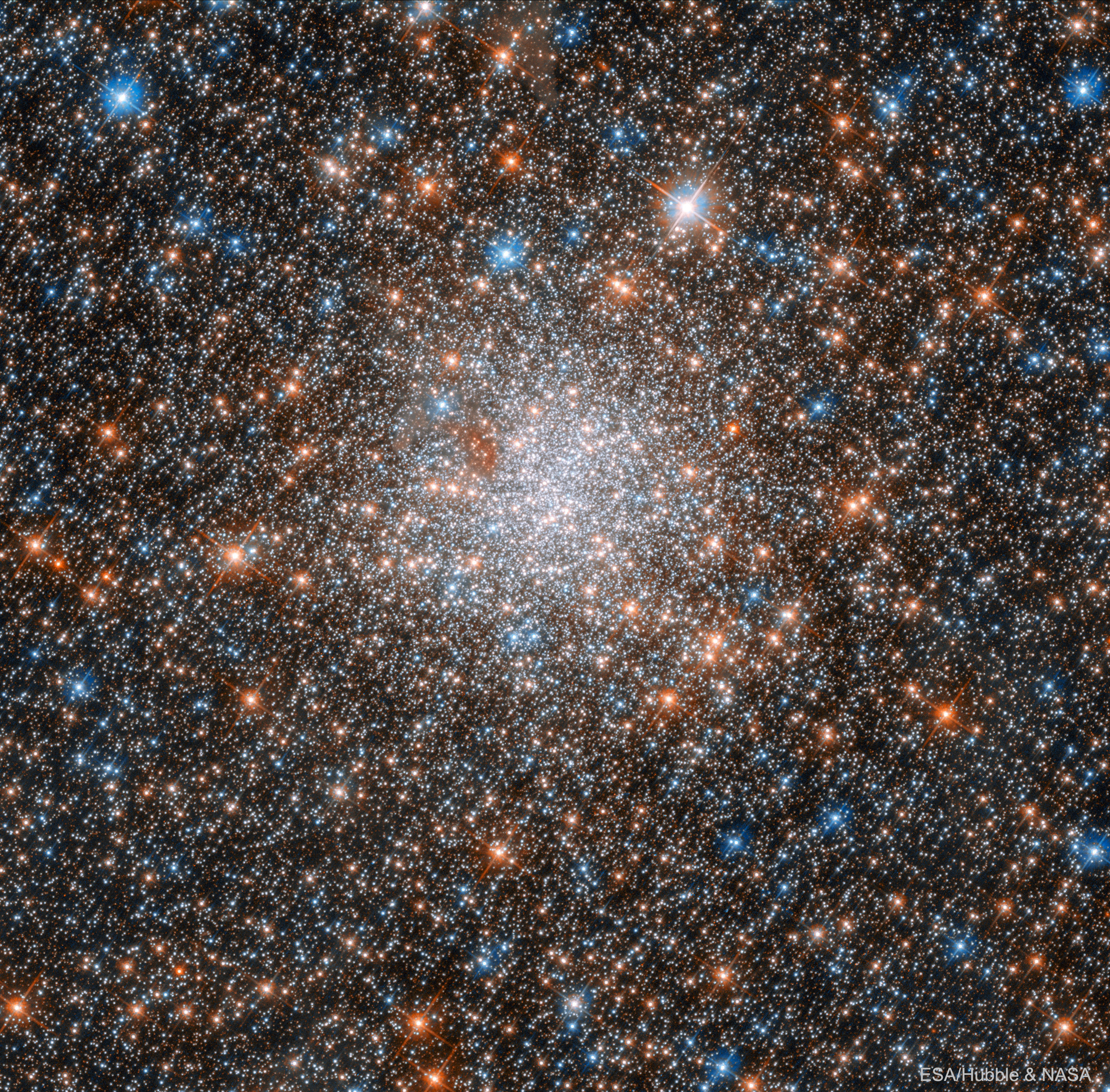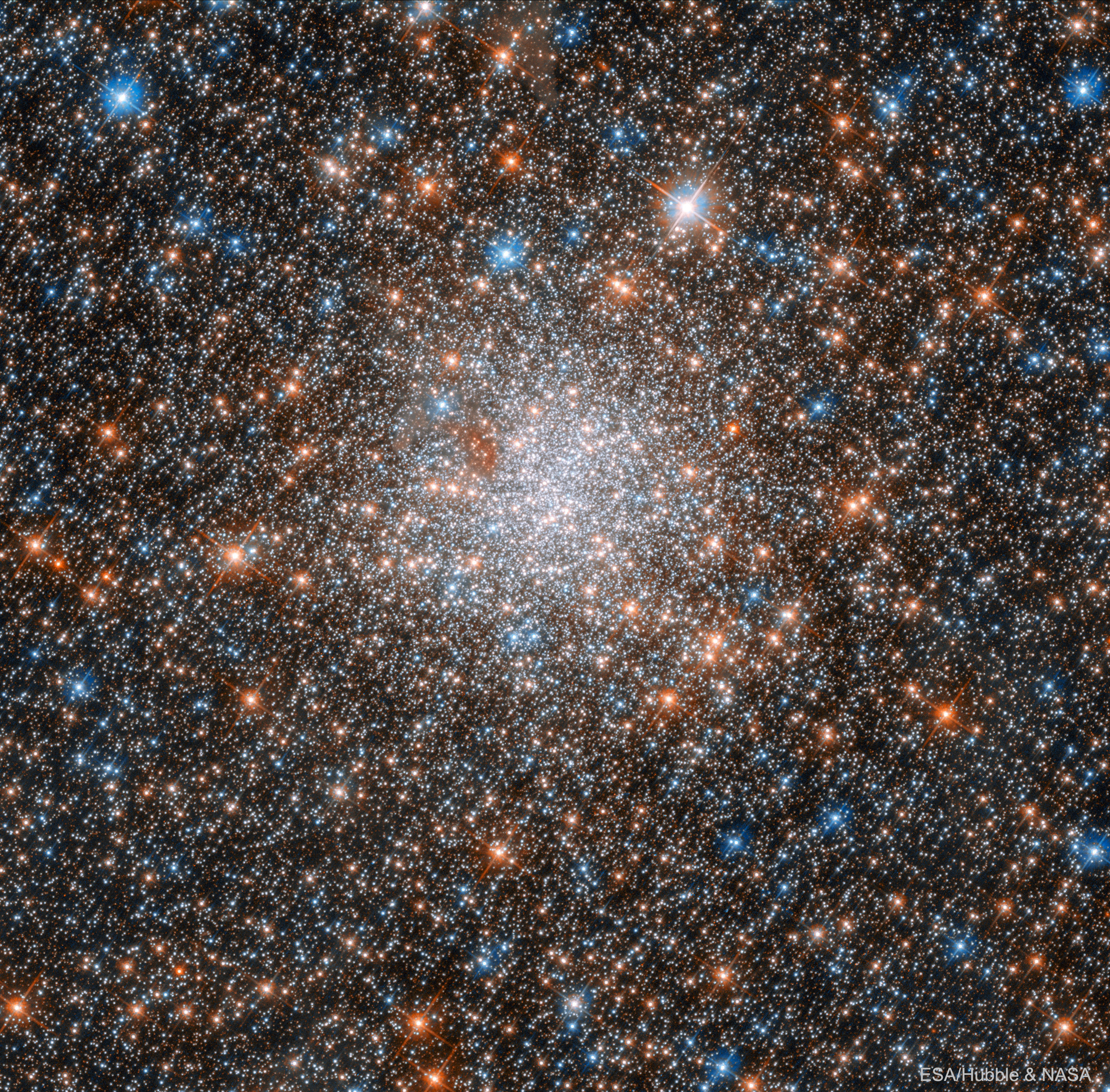
Jewels don't shine this bright -- only stars do. And almost every spot in this jewel-box of an image from the Hubble Space Telescope is a star. Now, some stars are more red than our Sun, and some more blue -- but all of them are much farther away. Although it takes light about 8 minutes to reach Earth from the Sun, NGC 1898 is so far away that it takes light about 160,000 years to get here. This huge ball of stars, NGC 1898, is called a globular cluster and resides in the central bar of the Large Magellanic Cloud (LMC) -- a satellite galaxy of our Milky Way Galaxy. The featured multi-colored image includes light from the infrared to the ultraviolet and was taken to help determine if the stars of NGC 1898 all formed at the same time or at different times. There are increasing indications that most globular clusters formed stars in stages, and that, in particular, stars from NGC 1898 formed shortly after ancient encounters with the Small Magellanic Cloud (SMC) and our Milky Way Galaxy. Space Telescopes Live: Where are Hubble and Webb looking right now?
Las joyas no brillan así de intensamente — solo las estrellas lo hacen. Y casi cada punto en esta imagen de caja de joyas captada por el Telescopio Espacial Hubble es una estrella. Algunas estrellas son más rojas que nuestro Sol, y otras más azules, pero todas están mucho más lejos. Aunque la luz tarda aproximadamente 8 minutos en llegar a la Tierra desde el Sol, NGC 1898 está tan lejos que la luz tarda unos 160 000 años en llegar hasta nosotros. Esta gran bola de estrellas, NGC 1898, se llama cúmulo globular y se encuentra en la barra central de la Nube de Magallanes Grande (LMC) — una galaxia satélite de nuestra Vía Láctea. La imagen multicolor mostrada incluye luz desde el infrarrojo hasta el ultravioleta y fue tomada para ayudar a determinar si las estrellas de NGC 1898 se formaron todas al mismo tiempo o en distintos momentos. Hay cada vez más indicios de que la mayoría de los cúmulos globulares formaron estrellas en etapas sucesivas, y en particular, que las estrellas de NGC 1898 se formaron poco después de antiguas interacciones con la Nube de Magallanes Pequeña (SMC) y nuestra Vía Láctea.