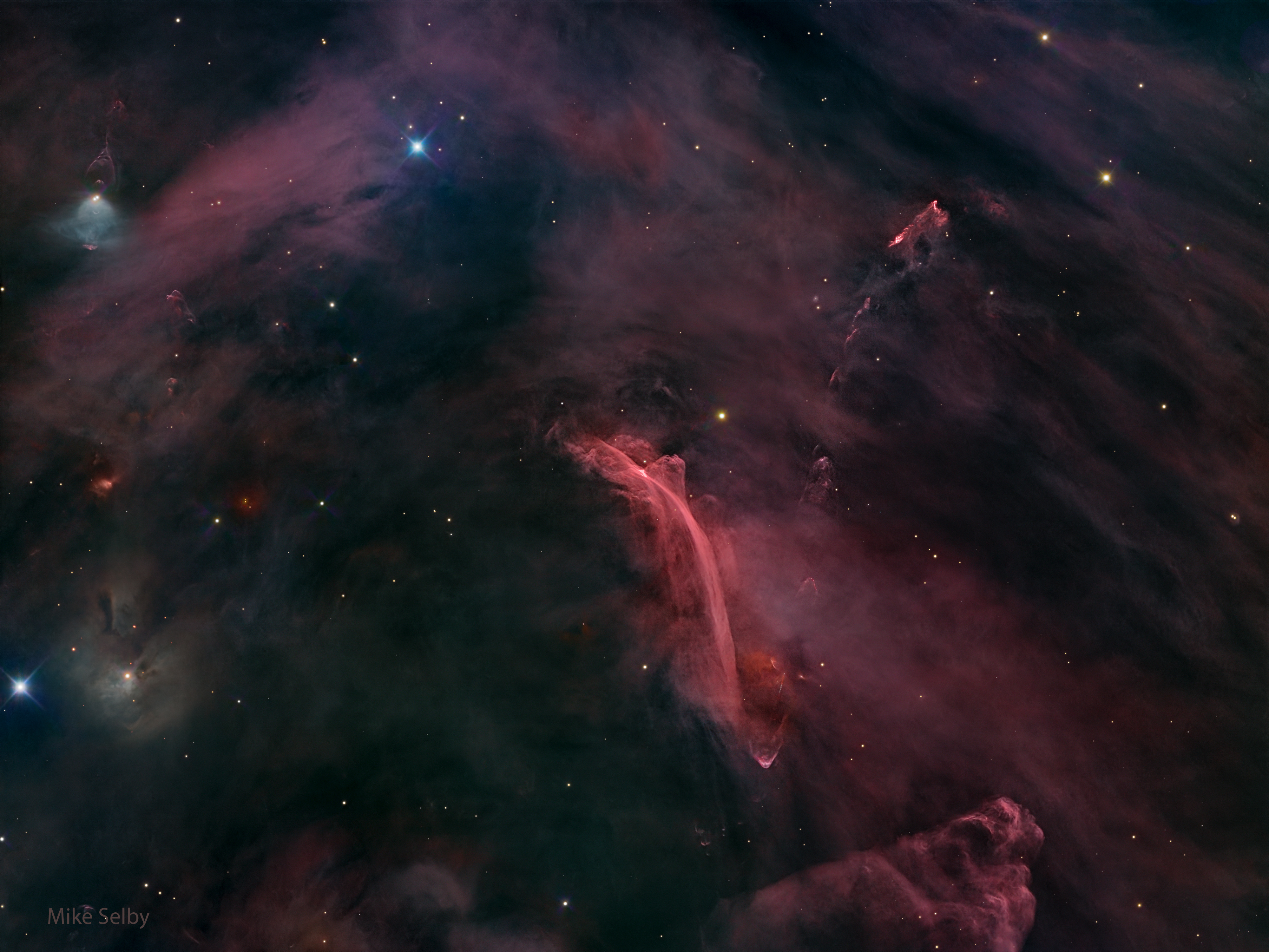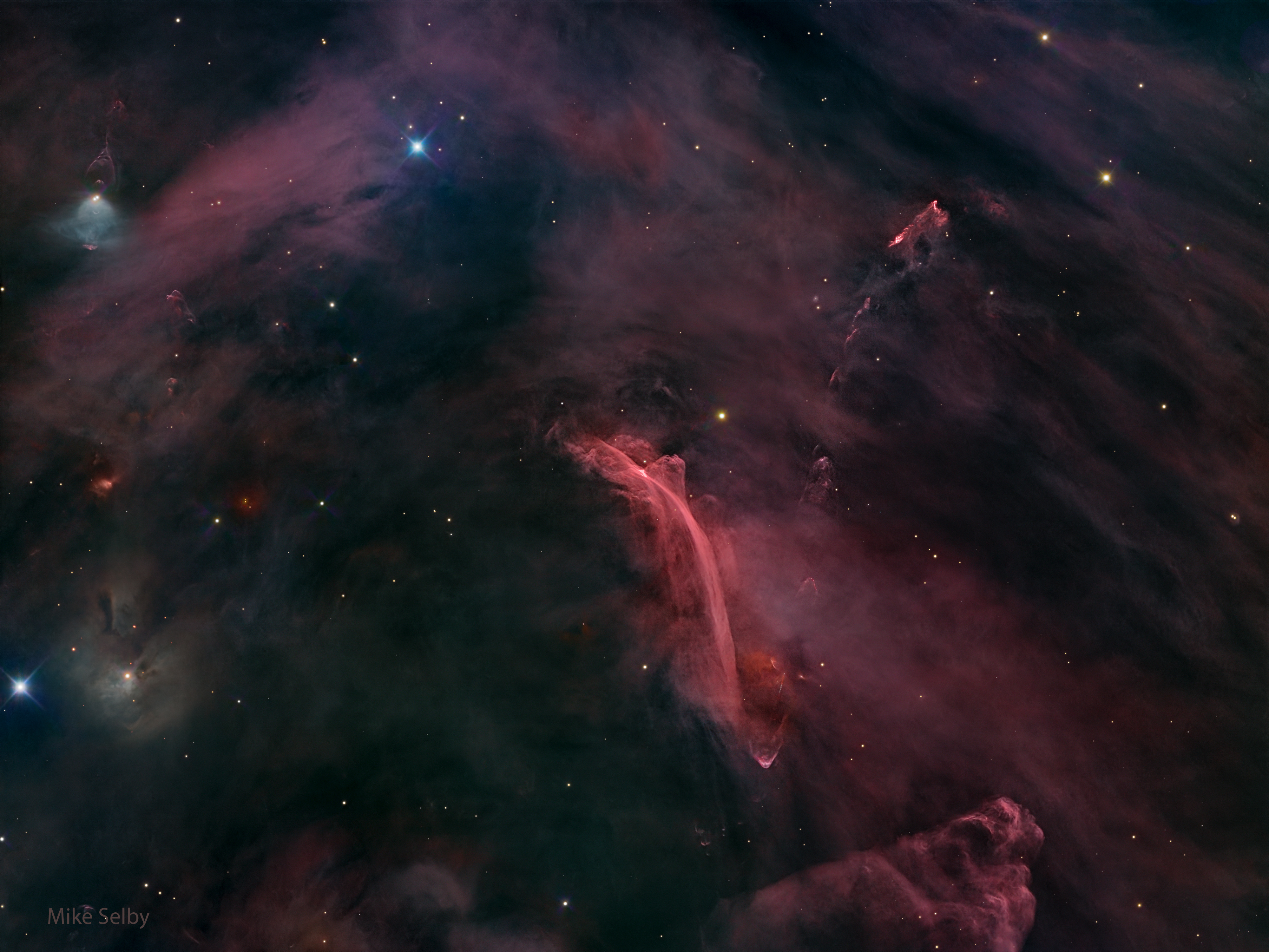
What created the Waterfall Nebula? The origin is still being researched. The structure, officially designated Herbig-Haro 222, appears in the region of NGC 1999 in the Great Orion Molecular Cloud complex. The elongated gaseous stream stretches about ten light years but appears similar to a long waterfall on Earth. Recent observations indicate that HH-222 is likely a gigantic gaseous bow shock, similar to a wave of water caused by a fast-moving ship. The origin of this shock wave is thought to be a jet outflow from the multiple star system V380 Orionis off the lower left of the frame. Therefore, gas does not flow along the waterfall, but rather the entire structure moves toward the upper right. The Waterfall Nebula lies about 1,500 light years away toward the constellation of Orion. The featured image was captured earlier this month from El Sauce Observatory in Chile. Jigsaw Nebula: Astronomy Puzzle of the Day
¿Qué creó la Nebulosa Catarata? Su origen aún se investiga. La estructura, oficialmente designada como Herbig-Haro 222, aparece en la región de NGC 1999 dentro del complejo del Gran Núcleo Molecular de Orión. El flujo gaseoso alargado se extiende aproximadamente diez años luz, pero se parece a una larga catarata en la Tierra. Observaciones recientes indican que HH-222 probablemente sea un choque ondulante gigantesco, similar a una ola de agua causada por un barco en movimiento rápido. El origen de esta onda de choque se cree que es un chorro de salida del sistema estelar múltiple V380 Orionis, ubicado fuera de la esquina inferior izquierda del marco. Por lo tanto, el gas no fluye a lo largo de la catarata, sino que toda la estructura se mueve hacia la parte superior derecha. La Nebulosa Catarata se encuentra a unos 1500 años luz de distancia, en dirección a la constelación de Orión. La imagen destacada fue capturada este mes desde el Observatorio El Sauce en Chile.