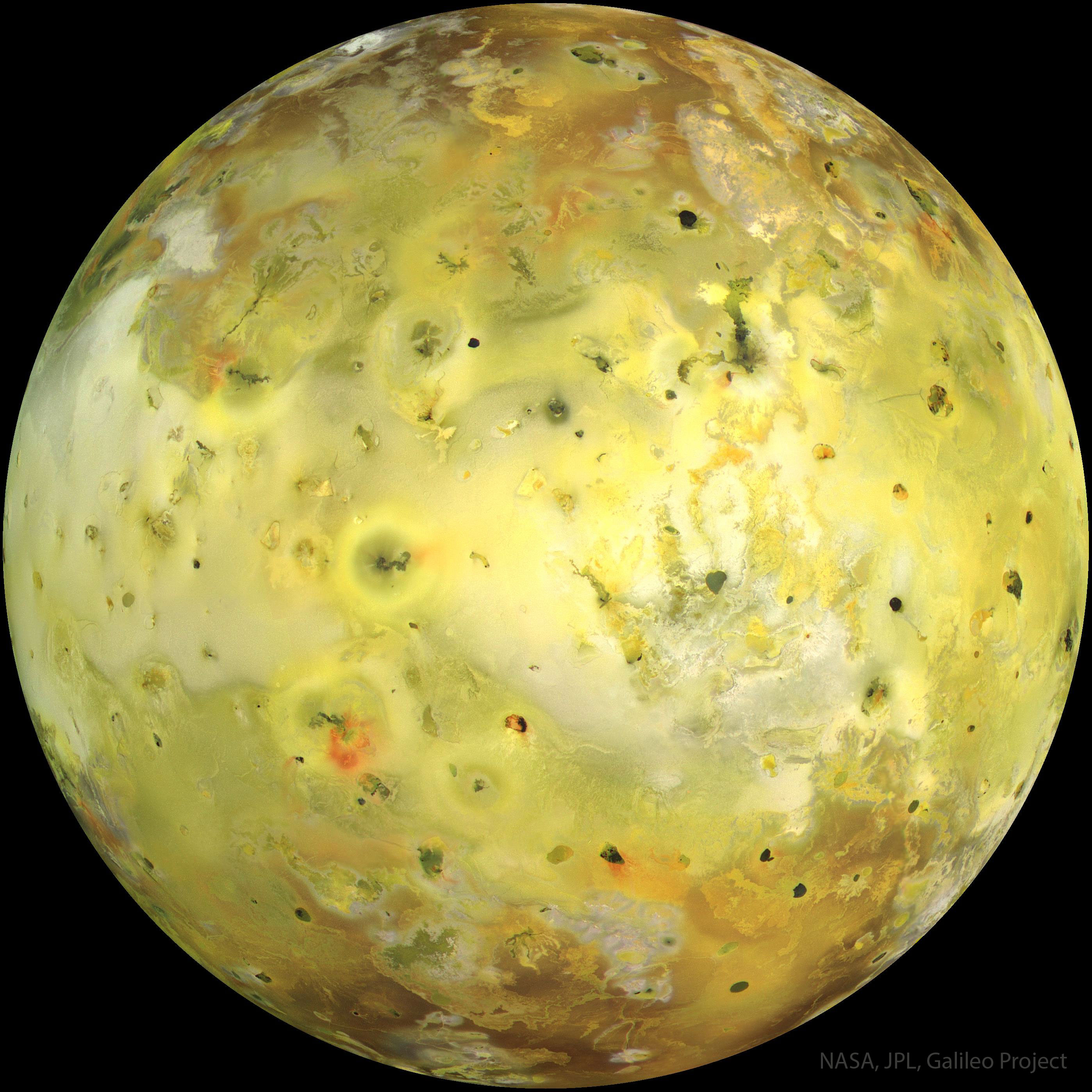
The strangest moon in the Solar System is bright yellow. The featured picture, an attempt to show how Io would appear in the "true colors" perceptible to the average human eye, was taken in 1999 July by the Galileo spacecraft that orbited Jupiter from 1995 to 2003. Io's colors derive from sulfur and molten silicate rock. The unusual surface of Io is kept very young by its system of active volcanoes. The intense tidal gravity of Jupiter stretches Io and damps wobbles caused by Jupiter's other Galilean moons. The resulting friction greatly heats Io's interior, causing molten rock to explode through the surface. Io's volcanoes are so active that they are effectively turning the whole moon inside out. Some of Io's volcanic lava is so hot it glows in the dark.
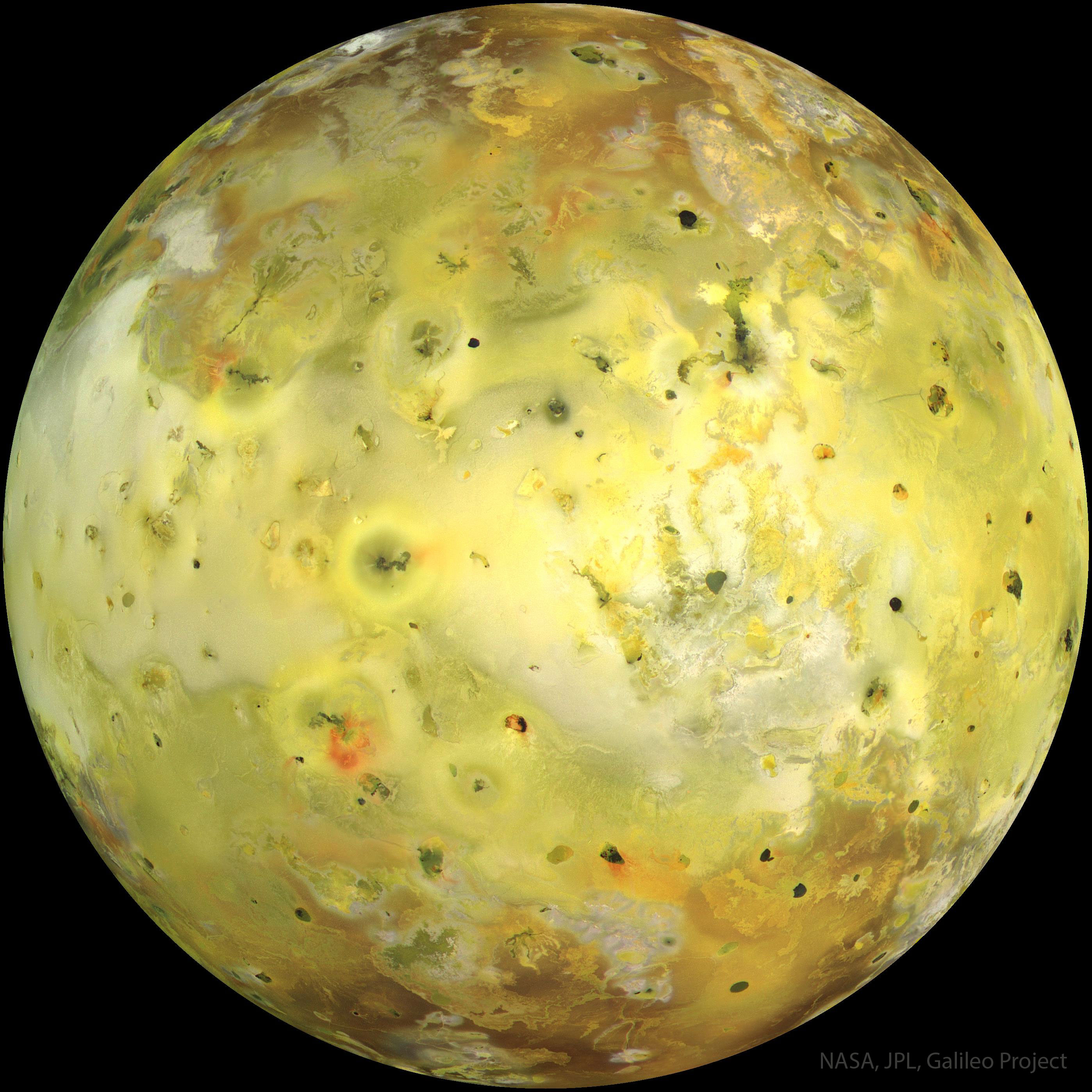
La luna más extraña del Sistema Solar es de color amarillo brillante. La imagen destacada, un intento de mostrar cómo se vería Ío en los "colores verdaderos" perceptibles para el ojo humano promedio, fue tomada en julio de 1999 por la sonda espacial Galileo, que orbitó Júpiter desde 1995 hasta 2003. Los colores de Ío provienen del azufre y la roca de silicato fundido. La inusual superficie de Ío se mantiene muy joven gracias a su sistema de volcanes activos. La intensa gravedad mareal de Júpiter estira a Ío y amortigua las oscilaciones causadas por las otras lunas galileanas de Júpiter. La fricción resultante calienta enormemente el interior de Ío, provocando que la roca fundida explote a través de la superficie. Los volcanes de Ío son tan activos que están, en la práctica, dando vuelta a la luna de adentro hacia afuera. Algunas lavas volcánicas de Ío están tan calientes que brillan en la oscuridad.