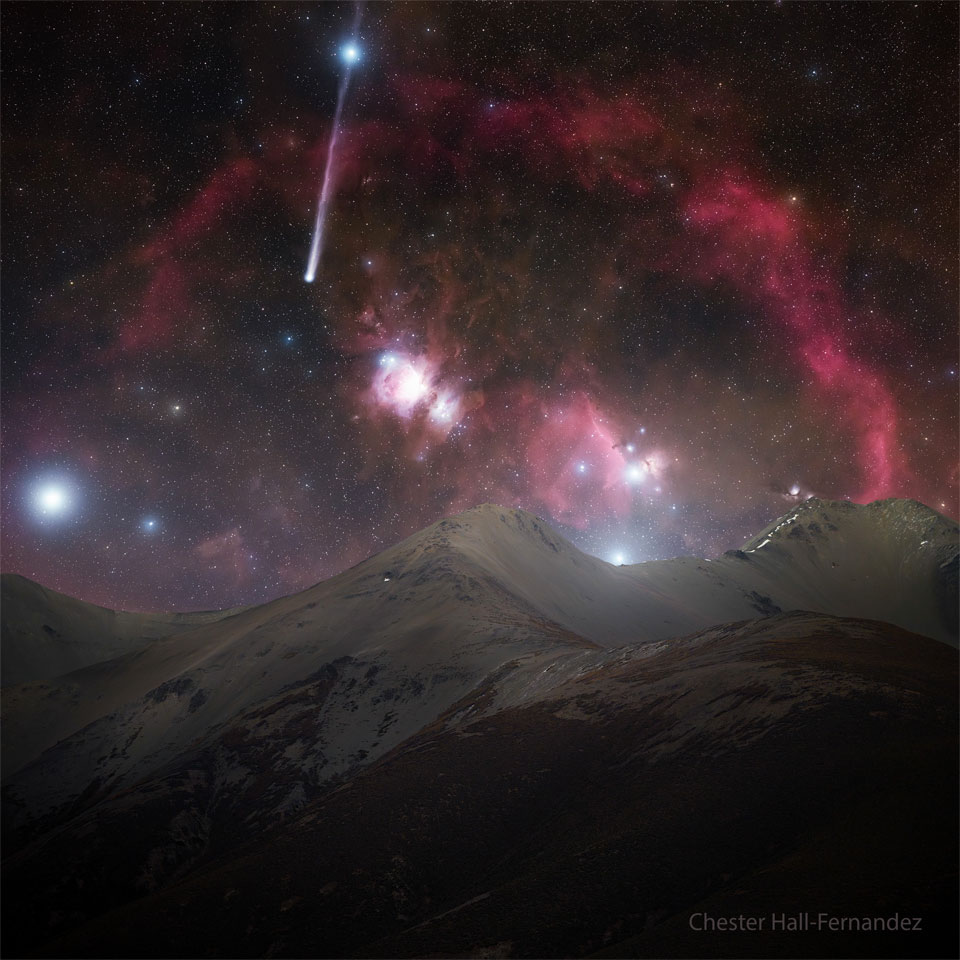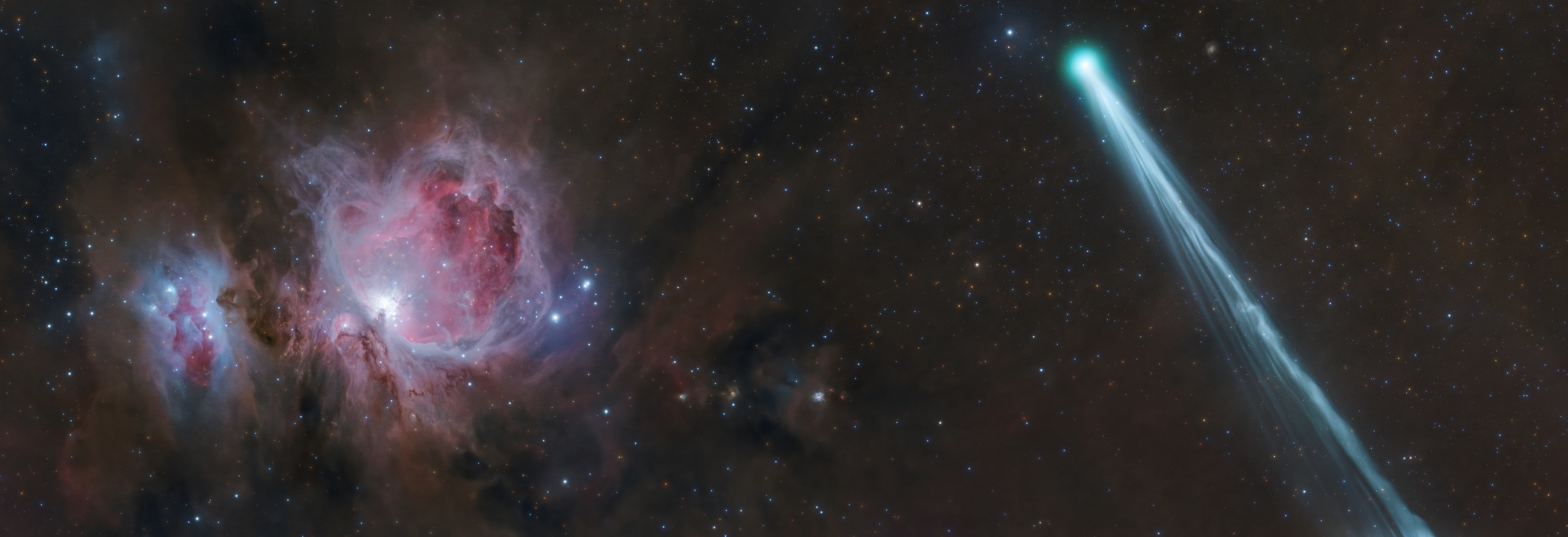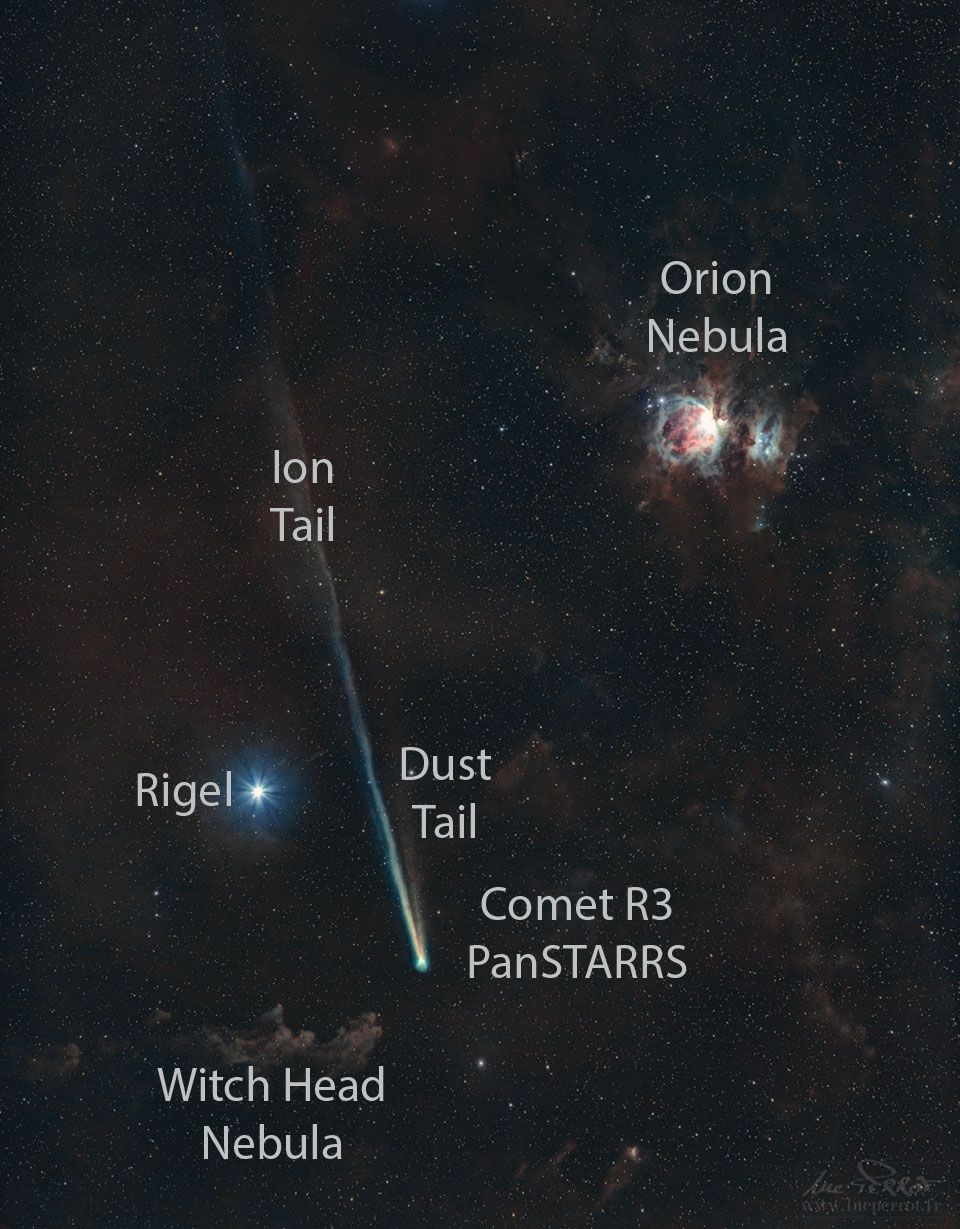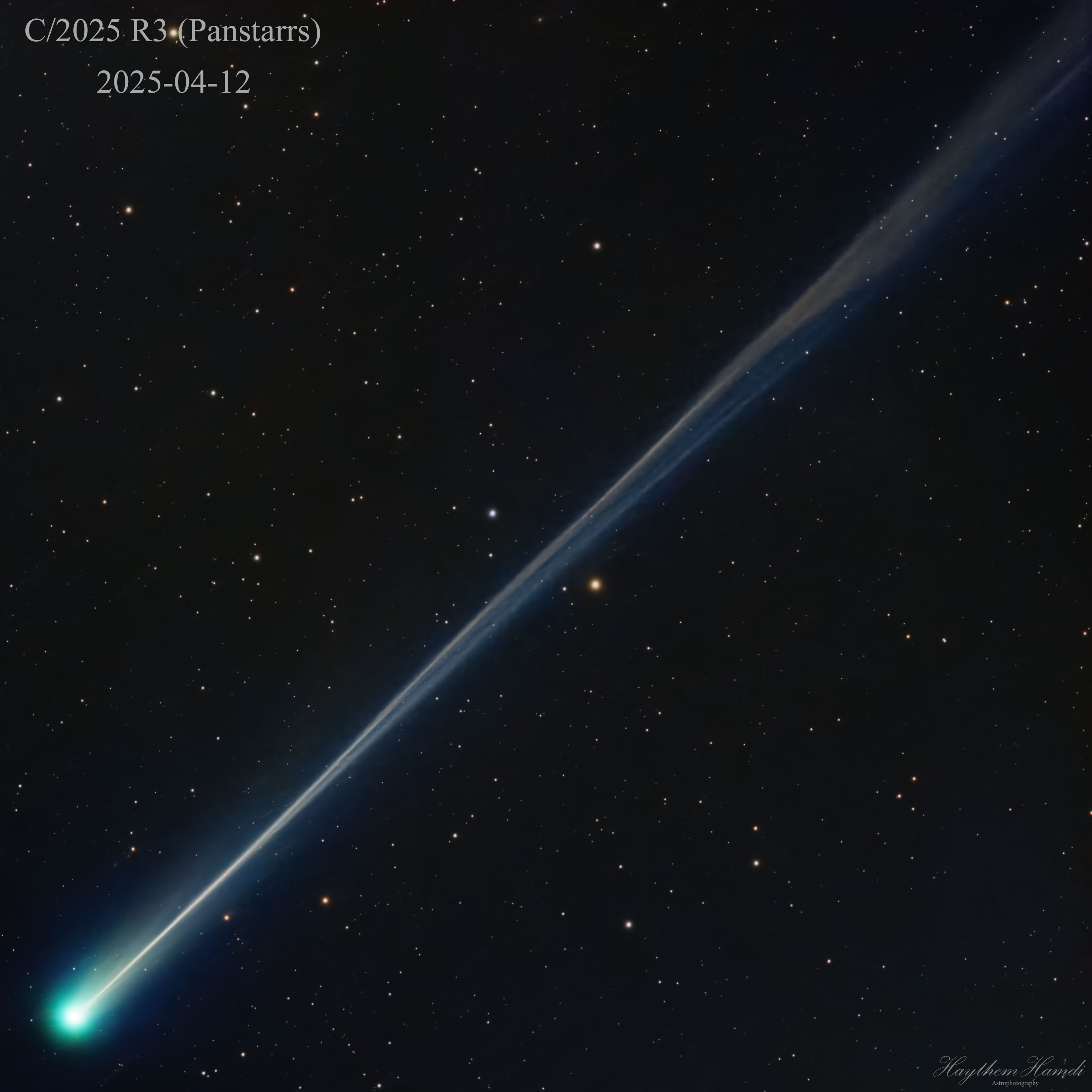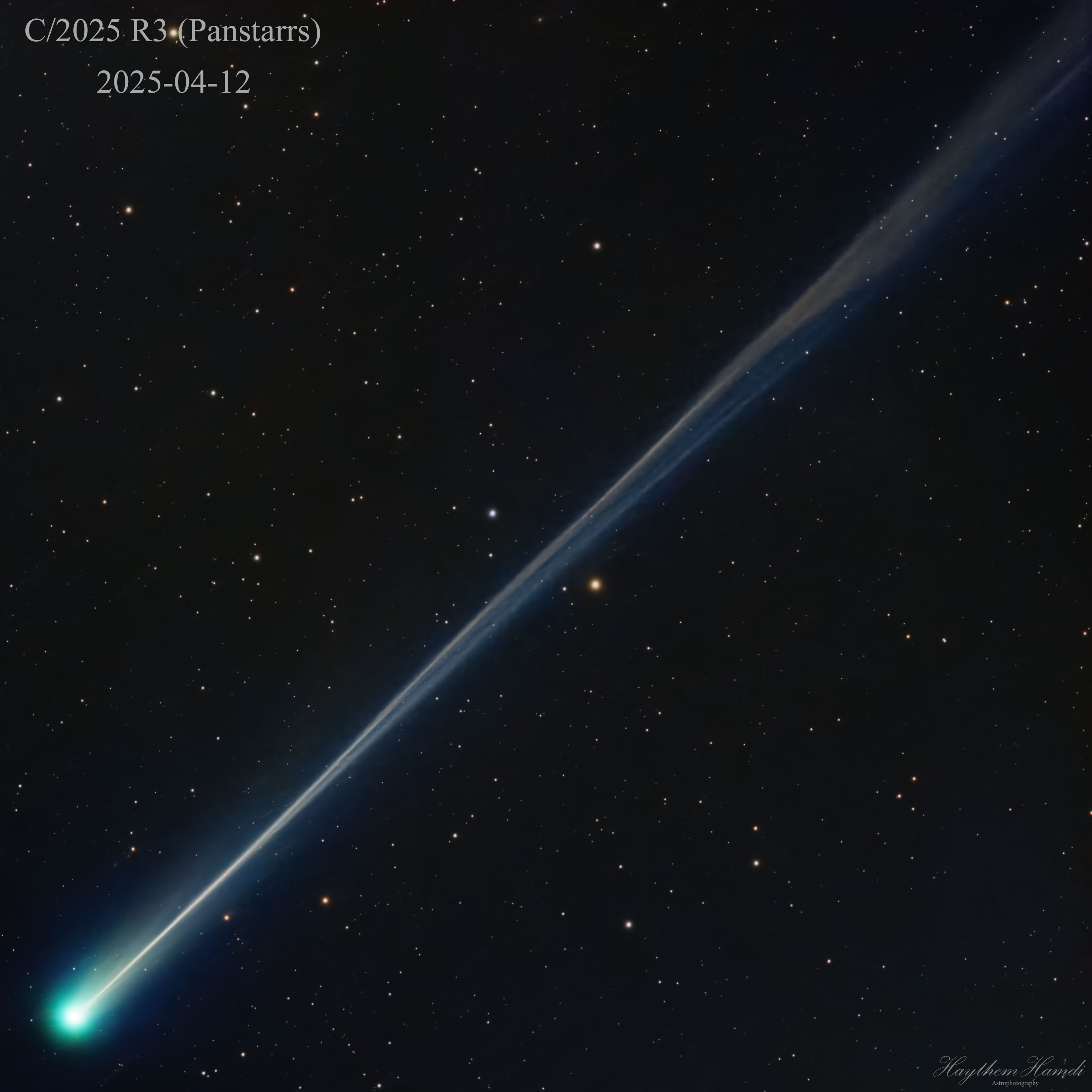
Why does Comet R3 (PanSTARRS) have a wispy tail? The newest bright member of the inner Solar System, Comet C/2025 R3 (PanSTARRS) is already extending an impressive stream of glowing gas. This tail starts from an unseen central nucleus of dirty ice that is likely a few kilometers across. The nucleus is warmed by the Sun and emits a cloud of neutral gas into a coma that glows light green. Nuclear gas ionized by energetic sunlight is pushed away from the Sun by the solar wind into an ion tail that glows light blue. The wispy nature of the ion tail is caused by the constantly changing structure of the solar wind. Pictured from Rhode Island, USA two days ago, Comet R3 (PanSTARRS) shows off a many-degree ion tail. Comet R3 (PanSTARRS) is best seen before dawn from northern skies for another 10 days, after which it will be best visible from southern skies. Growing Gallery: Comet R3 in 2026
¿Por qué el Cometa R3 (PanSTARRS) tiene una cola tenue y difusa? El más reciente miembro brillante del Sistema Solar interior, el Cometa C/2025 R3 (PanSTARRS), ya extiende una impresionante corriente de gas luminoso. Esta cola parte de un núcleo central invisible de hielo sucio que probablemente mide algunos kilómetros de diámetro. El núcleo es calentado por el Sol y emite una nube de gas neutro hacia una coma que brilla en color verde claro. El gas nuclear ionizado por la energética luz solar es empujado lejos del Sol por el viento solar, formando una cola iónica que brilla en azul claro. La naturaleza tenue y vaporosa de la cola iónica se debe a la estructura en constante cambio del viento solar. Fotografiado desde Rhode Island, EE. UU., hace dos días, el Cometa R3 (PanSTARRS) exhibe una cola iónica de varios grados de extensión. El Cometa R3 (PanSTARRS) se observa mejor antes del amanecer desde los cielos del hemisferio norte durante los próximos 10 días, tras los cuales será mejor visible desde los cielos del hemisferio sur.