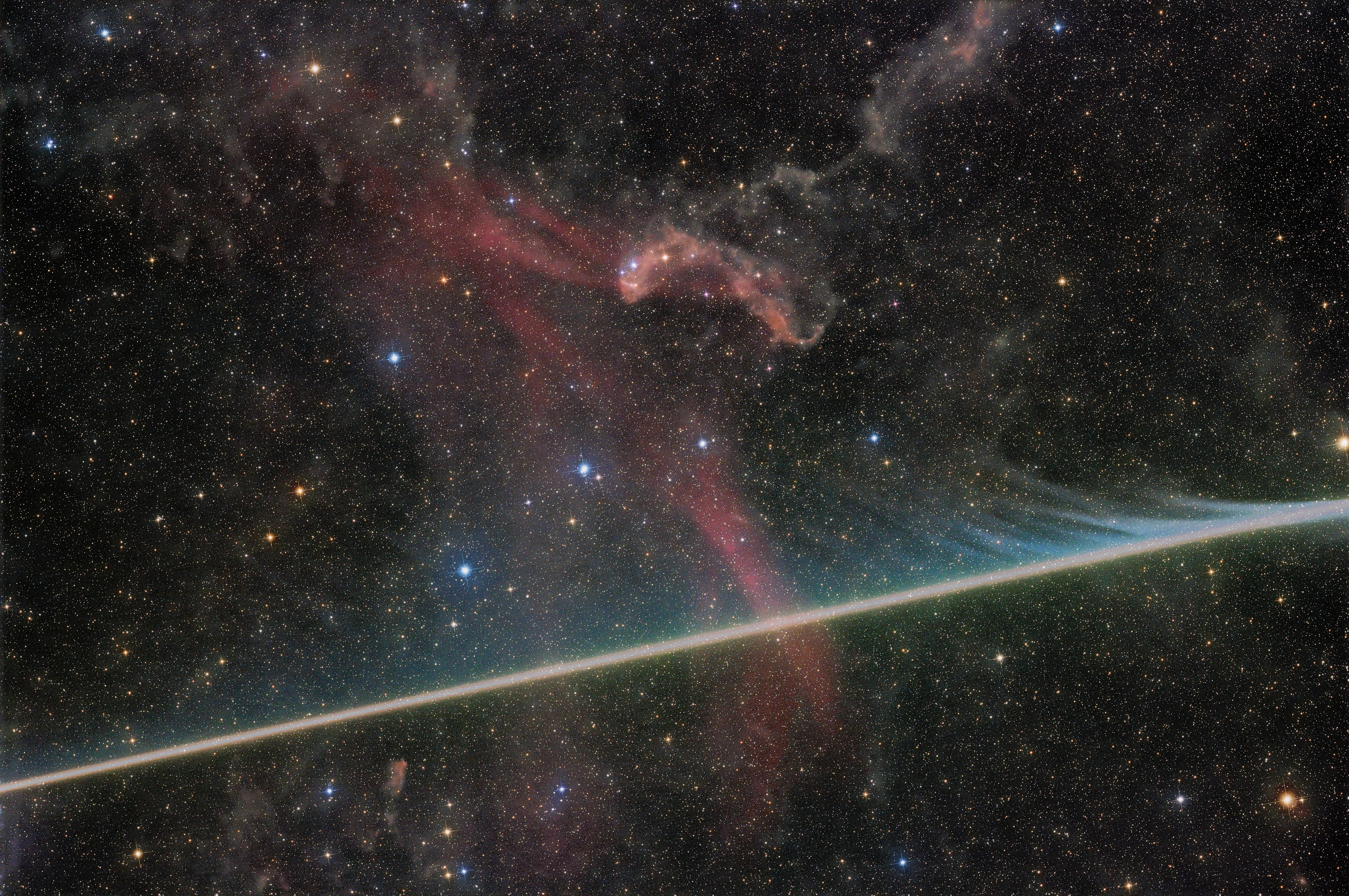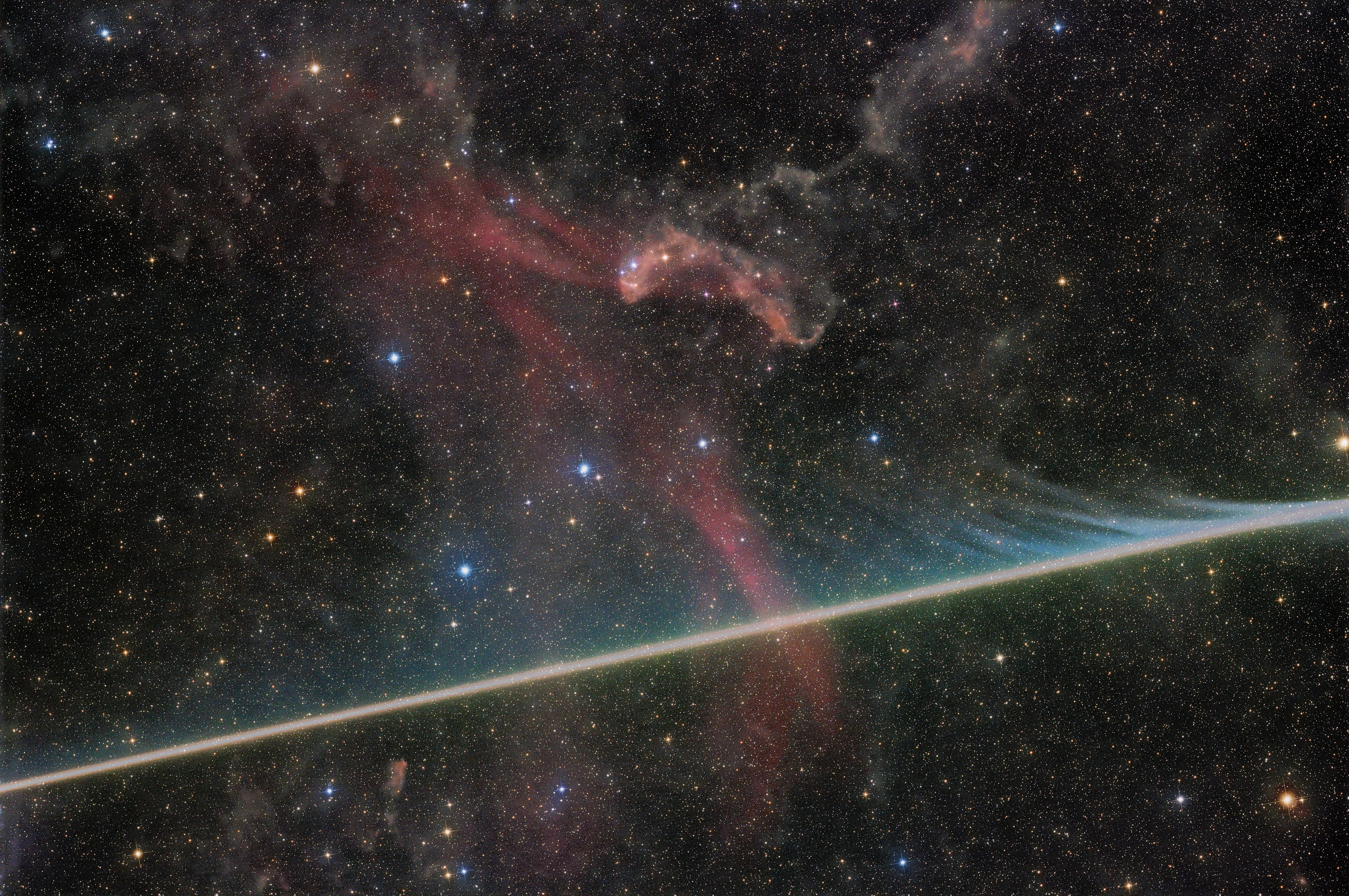
What's happening to this meteor? This bright meteor streak appeared and disappeared quickly during a long exposure of the Great Lacerta Nebula, seen faintly in red toward the center of the image. The meteoroid, likely a small pebble, creates its glow partly by heating and exciting surrounding air in Earth's atmosphere, but itself vaporizes and leaves wind-blown gas and dust with colors that give clues to its composition. The featured image was captured last month from Death Valley Observatories in Nevada, USA. This month, though, is particularly good for seeing meteors. Presently there are three meteor showers ongoing, although they are currently competing for visibility with the glow of a bright gibbous Moon. The most active of these showers, the Perseids, will be busiest in about 10 days -- after the Moon has dimmed considerably. This year, the Perseids peak nearly coincides with not only a new Moon, but, from some locations, one that totally eclipses the Sun. Sky Surprise: What picture did APOD feature on your birthday? (after 1995)
¿Qué le ocurre a este meteoro? Esta brillante estela meteórica apareció y desapareció rápidamente durante una larga exposición de la Gran Nebulosa de Lacerta, visible tenuemente en rojo hacia el centro de la imagen. El meteoroide, probablemente una pequeña piedra, genera su resplandor en parte al calentar y excitar el aire circundante en la atmósfera terrestre, pero él mismo se vaporiza y deja gas y polvo dispersados por el viento, cuyos colores ofrecen pistas sobre su composición. La imagen destacada fue capturada el mes pasado desde los Observatorios del Valle de la Muerte, en Nevada, EE. UU. El mes en curso, sin embargo, es especialmente favorable para observar meteoros. Actualmente hay tres lluvias de meteoros activas simultáneamente, aunque compiten por visibilidad con el brillo de una brillante Luna gibosa. La más activa de estas lluvias, las Perseidas, alcanzará su máximo en unos diez días, cuando la Luna haya disminuido considerablemente su brillo. Este año, el pico de las Perseidas coincide casi exactamente no solo con una Luna nueva, sino también, desde algunas ubicaciones, con una que eclipsa totalmente al Sol.