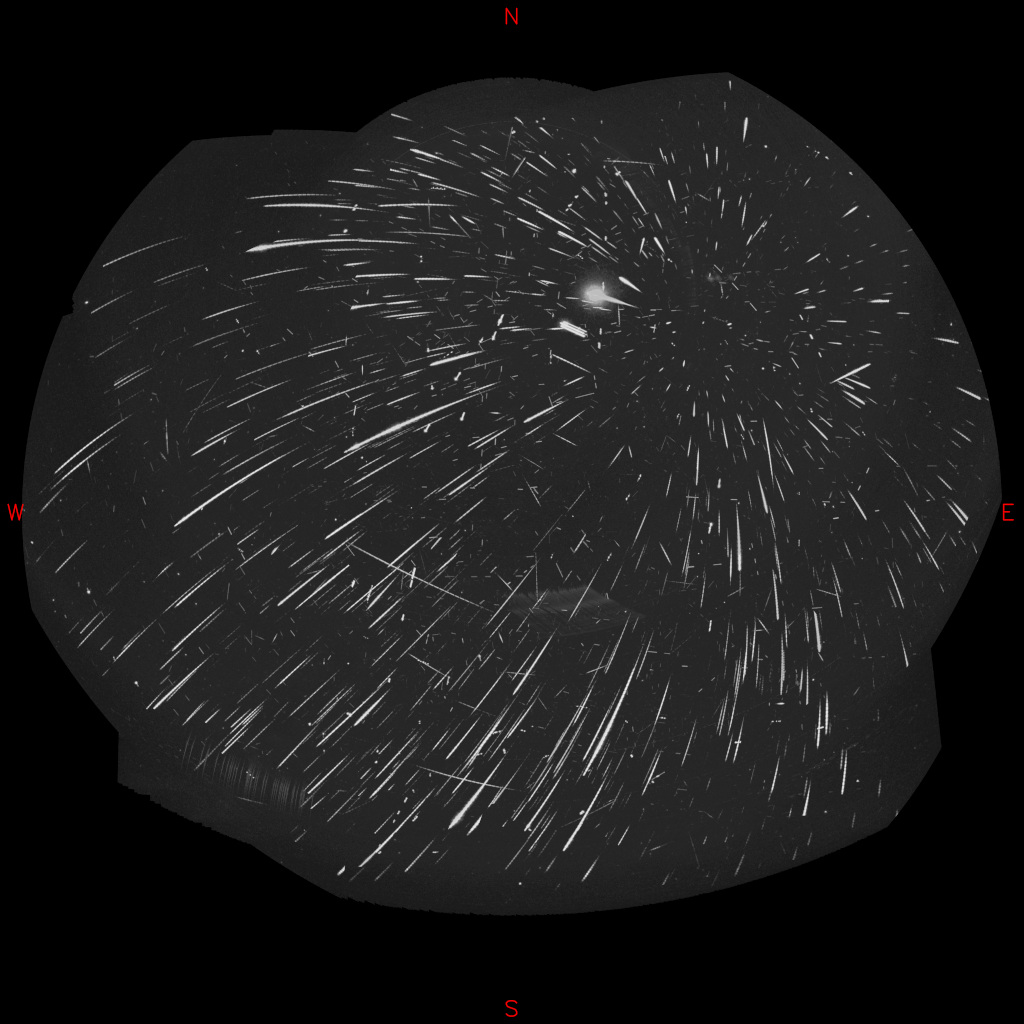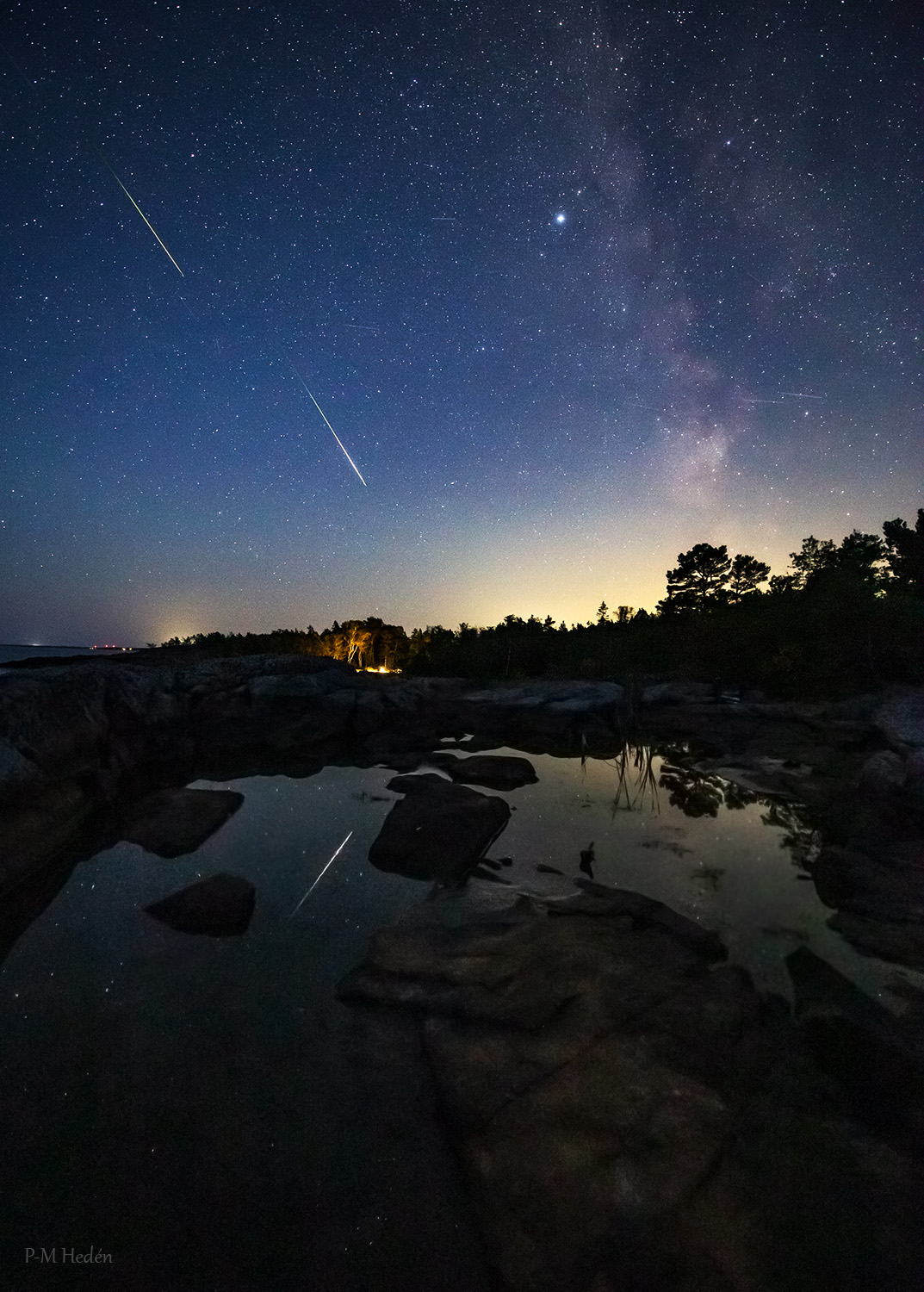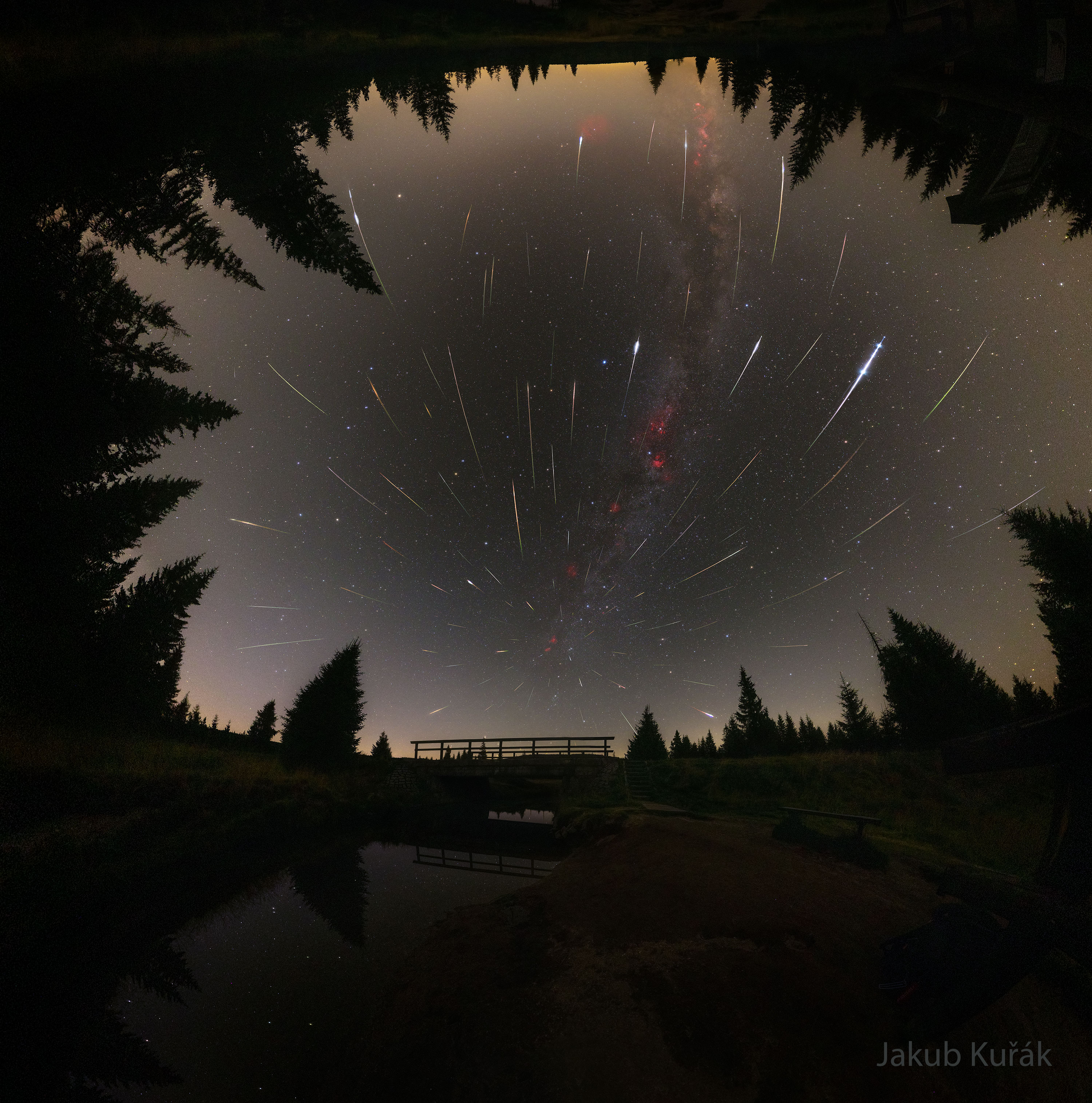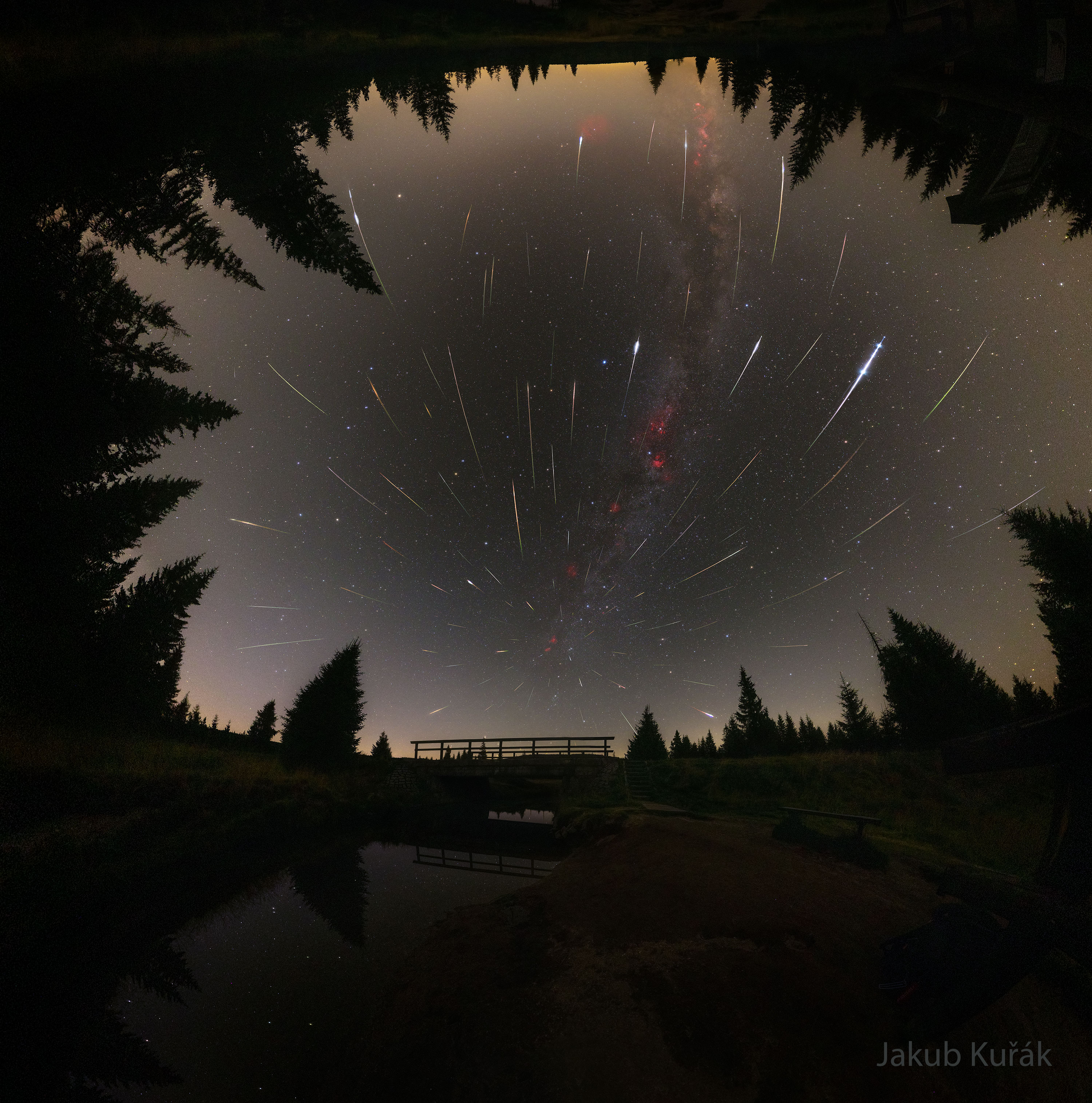
This was a good year for the Perseids meteor shower. A key reason was the Moon was absent from lighting up Earth's night sky so that more meteors were visible than usual. Where was the Moon? It was busy visiting the Sun. Near the Perseids peak, the Moon moved directly in front of the Sun and created a total solar eclipse visible from Greenland and Spain. The Perseids occur when the Earth collides with a stream of Sun-orbiting debris cast off by Comet Swift-Tuttle. Perseid meteors, although typically only the size of a sand grain, tend to be fast and bright because Swift-Tuttle's debris orbits the Sun in a direction partly opposite Earth's orbital motion. In the featured image compilation, accumulated over several nights from Jizerka in the Czech Republic, the Perseids meteor streaks can be traced back to a single location on the sky -- its radiant in Perseus. Gallery: Perseids Meteor Shower of 2026
Este fue un buen año para la lluvia de meteoros de las Perseidas. Un factor clave fue la ausencia de la Luna iluminando el cielo nocturno terrestre, lo que permitió que más meteoros fueran visibles de lo habitual. ¿Dónde estaba la Luna? Estaba ocupada visitando al Sol. Cerca del pico de las Perseidas, la Luna se desplazó directamente frente al Sol y creó un eclipse solar total visible desde Groenlandia y España. Las Perseidas ocurren cuando la Tierra colisiona con una corriente de escombros en órbita solar desprendidos por el cometa Swift-Tuttle. Los meteoros de las Perseidas, aunque típicamente tienen el tamaño de un grano de arena, suelen ser rápidos y brillantes porque los escombros del Swift-Tuttle orbitan el Sol en una dirección parcialmente opuesta al movimiento orbital de la Tierra. En la compilación de imágenes destacada, acumulada durante varias noches desde Jizerka, en la República Checa, los rastros de los meteoros de las Perseidas pueden rastrearse hasta un único punto en el cielo: su radiante en la constelación de Perseo.