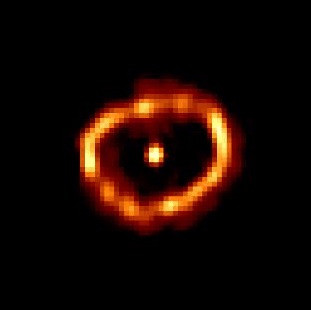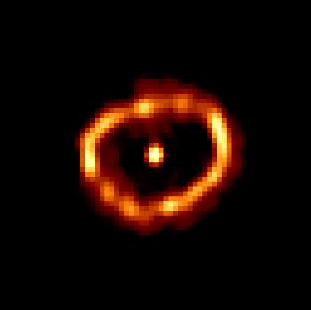
In 1992 a tremendous explosion occurred in the constellation of Cygnus. Dubbed Nova Cygni 1992, this event most probably occurred in an accretion disk binary system. Astronomers hypothesize that this system's white dwarf had so much gas dumped onto it's surface that conditions became ripe for nuclear fusion. The resulting thermonuclear detonation blasted much of the surrounding gas into an expanding shell. The Hubble Space Telescope photographed this expanding shell in 1994. Nova Cygni 1992 was the brightest nova in recent history - at its brightest it could be seen without a telescope. It was observed in every part of the electromagnetic spectrum.
En 1992 ocurrió una tremenda explosión en la constelación de Cygnus. Denominado Nova Cygni 1992, este evento ocurrió muy probablemente en un sistema binario de disco de acreción. Los astrónomos plantean la hipótesis de que la enana blanca de este sistema acumuló tanto gas en su superficie que las condiciones se volvieron propicias para la fusión nuclear. La detonación termonuclear resultante expulsó gran parte del gas circundante en una envoltura en expansión. El Telescopio Espacial Hubble fotografió esta envoltura en expansión en 1994. Nova Cygni 1992 fue la nova más brillante de la historia reciente: en su máximo brillo podía observarse sin telescopio. Fue observada en todas las partes del espectro electromagnético.