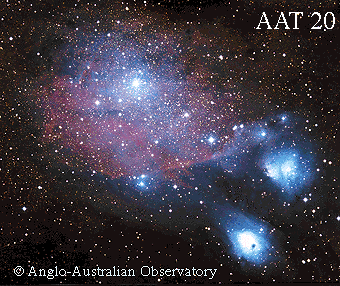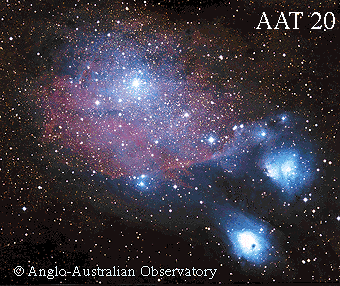
What causes the colors in this beautiful nebulosity in Sagittarius? Dubbed NGC 6589 and NGC 6590, the colors of this nebulosity, are caused by gas and dust. The blue color of the nebula nearest the bright stars is caused by reflection off interstellar dust. The dust emits little visible light of its own - in the absence of a nearby star the dust would appear dark, blocking light from background stars. The red color of the nebula farthest from the bright stars is caused by glowing hydrogen gas. Energetic light from the central stars ionizes hydrogen gas - which glows red when recombining with a local electron. In the absence of a nearby star, the gas would neither glow on its own nor absorb much background starlight.
¿Qué causa los colores en esta hermosa nebulosidad en Sagitario? Denominada NGC 6589 y NGC 6590, los colores de esta nebulosidad son causados por gas y polvo. El color azul de la nebulosa más cercana a las estrellas brillantes se debe a la reflexión en el polvo interestelar. El polvo emite poca luz visible por sí mismo; en ausencia de una estrella cercana, el polvo aparecería oscuro, bloqueando la luz de las estrellas de fondo. El color rojo de la nebulosa más alejada de las estrellas brillantes es causado por el gas hidrógeno luminiscente. La luz energética de las estrellas centrales ioniza el gas hidrógeno, que emite luz roja al recombinarse con un electrón local. En ausencia de una estrella cercana, el gas ni brillaría por sí solo ni absorbería mucha luz de las estrellas de fondo.