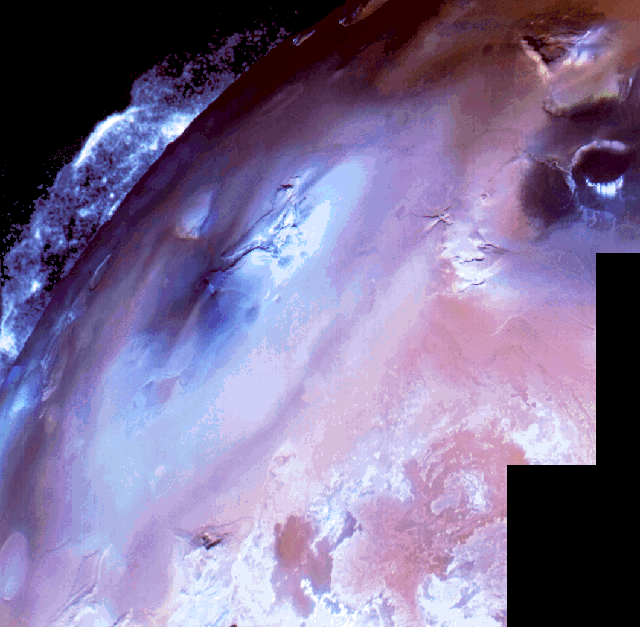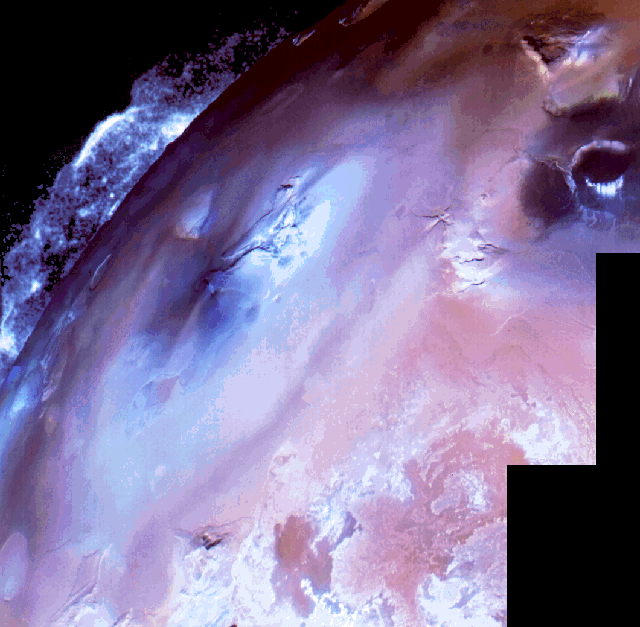
Jupiter's moon Io has active volcanoes. The Voyager spacecraft caught several erupting when they passed the energetic moon in 1979. In the above picture, several of Io's volcanoes are visible and one is seen actually erupting. Debris from this explosive event can be seen on the upper left of the photo, just beyond Io's edge. Io's volcanism is thought to be caused by the large tidal distortions raised by Jupiter, Europa, and Ganymede. These tides stretch Io, cause internal friction, and thus heat the interior. The hot interior then expands and forces its way out through volcanoes. Currently, the spacecraft Galileo is orbiting Jupiter and photographing Jupiter's Galilean moons.
La luna de Júpiter, Ío, posee volcanes activos. Las sondas Voyager capturaron varios en erupción cuando sobrevolaron esta energética luna en 1979. En la imagen, varios volcanes de Ío son visibles y uno de ellos se observa en plena erupción. Los materiales expulsados por este evento explosivo pueden verse en la parte superior izquierda de la fotografía, justo más allá del borde de Ío. Se cree que el vulcanismo de Ío es causado por las enormes deformaciones de marea generadas por Júpiter, Europa y Ganímedes. Estas mareas estiran a Ío, provocan fricción interna y, por consiguiente, calientan su interior. El interior caliente se expande entonces y se abre paso hacia el exterior a través de los volcanes. Actualmente, la sonda espacial Galileo está orbitando Júpiter y fotografiando las lunas galileanas de dicho planeta.