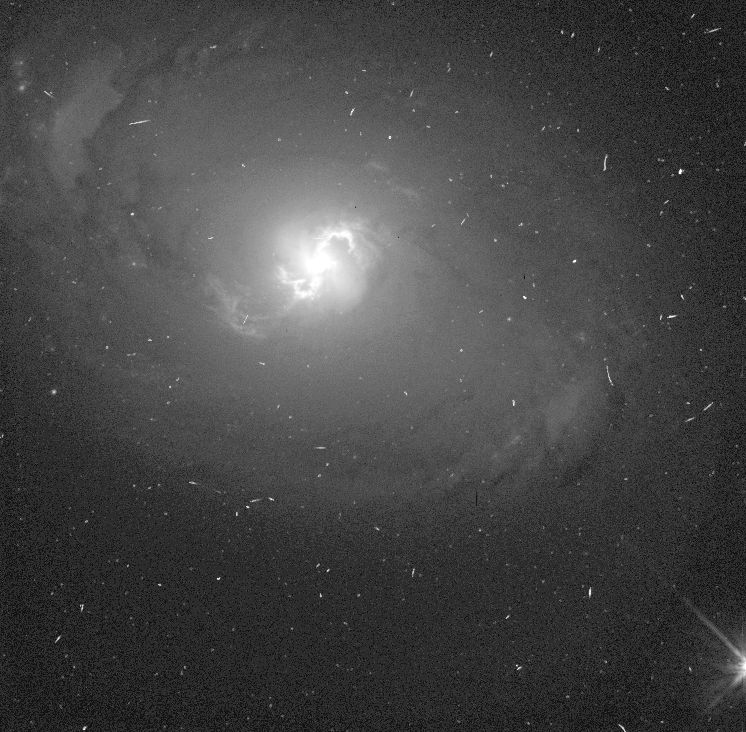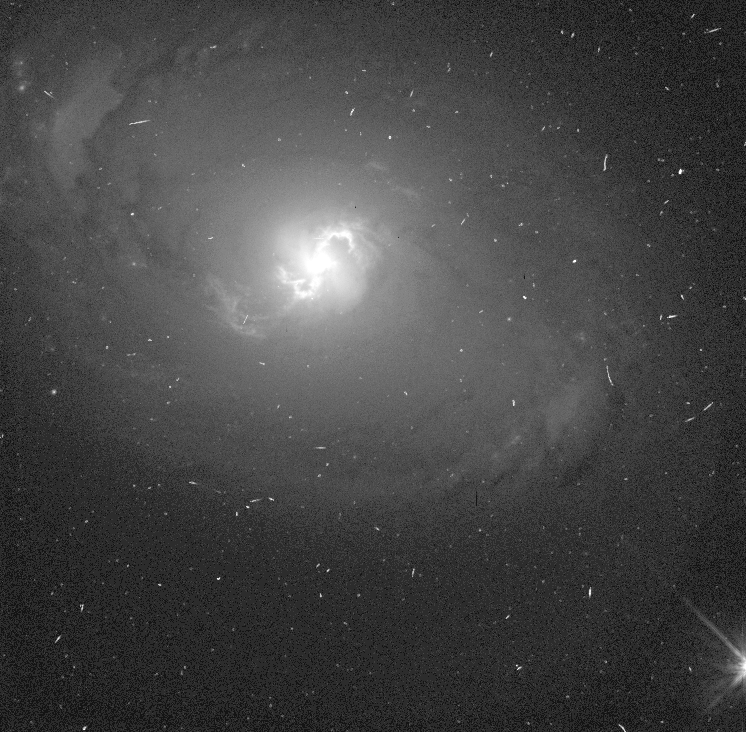
A bird? A plane? No, but pictured here is something physically much larger, flying much higher, and moving much faster than either of these. It is, in fact, a Seyfert type 2 spiral galaxy. The "S" is actually a lane of stars, gas and dust circling the core. Designated NGC 3393, the bright core makes this galaxy a Seyfert and the infrared glow of central dust help distinguish it as "type 2." Seyfert galaxies have extremely energetic nuclei similar to more powerful quasars. Seyferts are thought to have black holes in their centers. Most of the lines and small spots in this image are due to cosmic rays striking the imager and are unrelated to structure in the galaxy.
¿Un pájaro? ¿Un avión? No, pero lo que se muestra aquí es algo físicamente mucho más grande, que vuela mucho más alto y se mueve mucho más rápido que cualquiera de ellos. Se trata, en realidad, de una galaxia espiral de tipo 2 de Seyfert. La "S" es en realidad un brazo de estrellas, gas y polvo que orbita alrededor del núcleo. Designada NGC 3393, su brillante núcleo la convierte en una galaxia de Seyfert, y el resplandor infrarrojo del polvo central ayuda a clasificarla como "tipo 2". Las galaxias de Seyfert poseen núcleos extremadamente energéticos, similares a los de los cuásares, que son aún más potentes. Se cree que las galaxias de Seyfert albergan agujeros negros en sus centros. La mayoría de las líneas y pequeños puntos presentes en esta imagen se deben a rayos cósmicos que impactaron el detector y no están relacionados con la estructura de la galaxia.