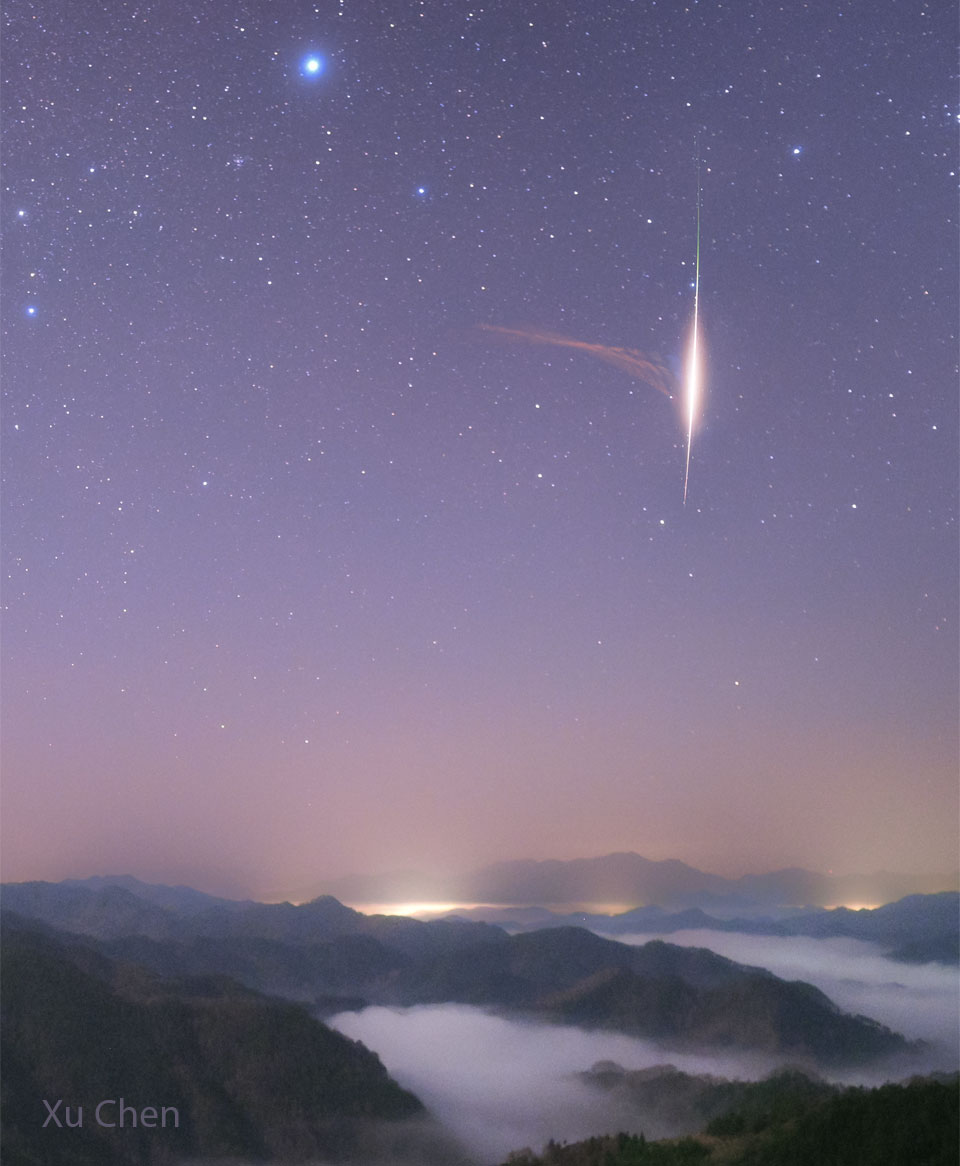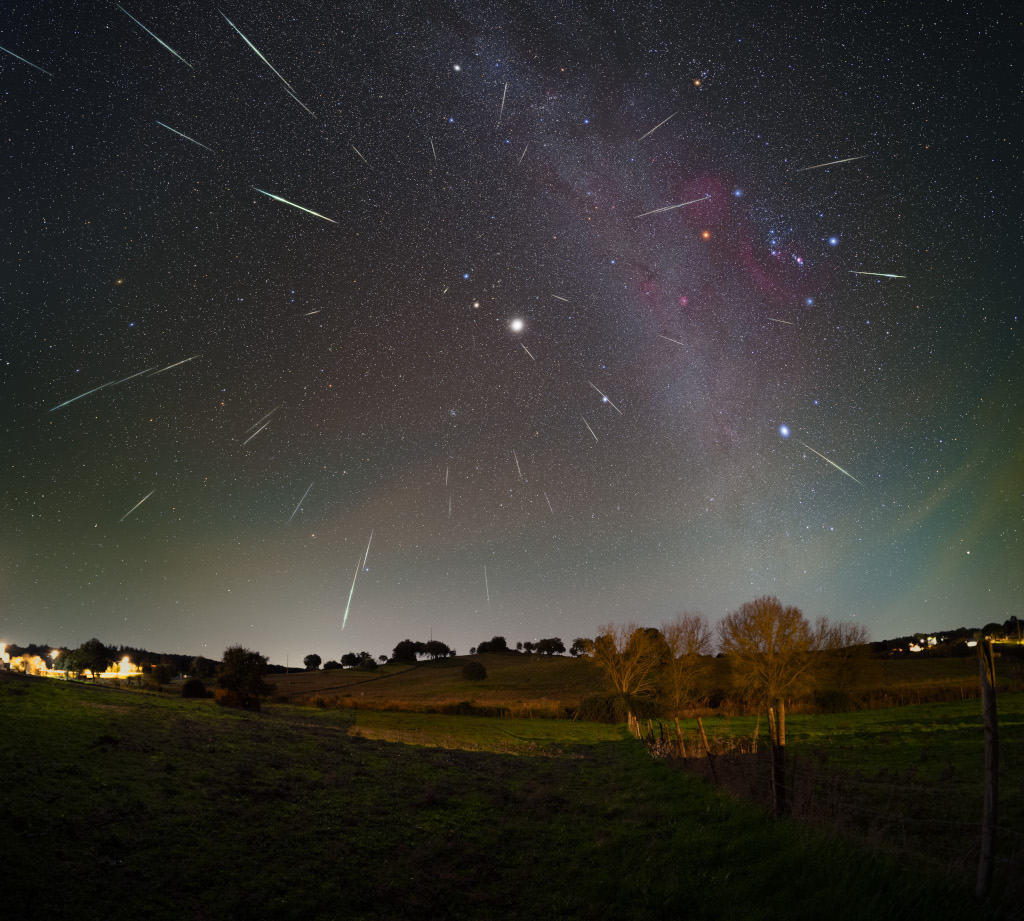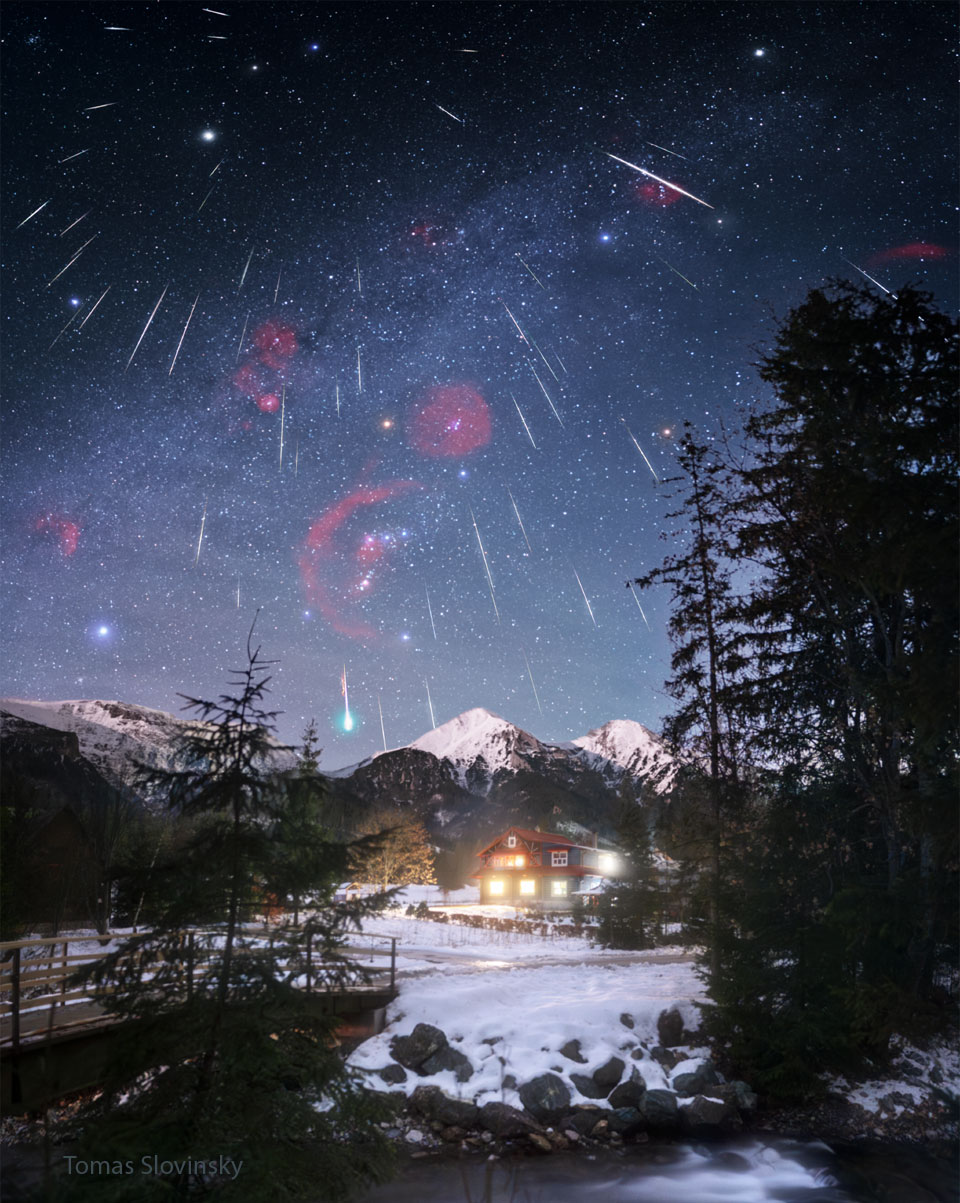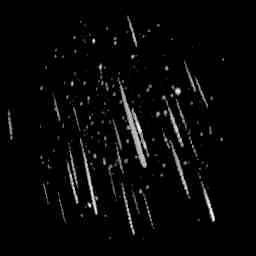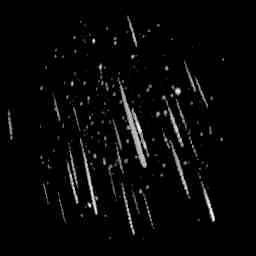
From a radiant point in the constellation of Perseus, Comet Swift-Tuttle presents -- The Perseid Meteor Shower -- coming to your night sky this weekend! A bookish E. C. Herrick of New Haven, Connecticut correctly suspected in 1837 that this meteor shower was an annual event. Indeed it is now known to be a regular August shower caused by the yearly passage of the Earth through the orbiting debri left behind by periodic comet Swift-Tuttle. Since the bits of comet debri are moving along parallel orbits, on entering the atmosphere they leave fiery trails which appear to originate from a common radiant point in the sky, in this case in the constellation of Perseus. Dramatically illustrated in this composite video image made using MOVIE, meteors from the 1994 Perseids streak across the sky framed by the three bright stars of the asterism known as the "Summer Triangle". The image shows bright Perseids recorded that year from August 9 through 14. Here the trails appear nearly parallel as the camera was centered on the sky about 90 degrees from the radiant point. This year, European and North American observers should be able to view the shower near its maximum, about 90 meteors per hour, early Monday morning August 12, but the shower should be enjoyable on clear weekend nights (August 10,11) as well. After midnight is generally the best time for viewing. What's the best way to enjoy a meteor shower? Get a warm jacket and a comfortable lawnchair ... go outside and look up.
¡Desde un punto radiante en la constelación de Perseo, el cometa Swift-Tuttle presenta — La Lluvia de Meteoros de las Perseidas — que llega a su cielo nocturno este fin de semana! El estudioso E. C. Herrick, de New Haven, Connecticut, sospechó acertadamente en 1837 que esta lluvia de meteoros era un evento anual. En efecto, hoy se sabe que es una lluvia regular de agosto causada por el paso anual de la Tierra a través de los escombros orbitales dejados por el cometa periódico Swift-Tuttle. Dado que los fragmentos de material cometario se desplazan en órbitas paralelas, al ingresar en la atmósfera dejan estelas ígneas que parecen originarse en un punto radiante común en el cielo, en este caso en la constelación de Perseo. Espectacularmente ilustrado en esta imagen de video compuesta, creada con MOVIE, los meteoros de las Perseidas de 1994 surcan el cielo enmarcados por las tres estrellas brillantes del asterismo conocido como el "Triángulo de Verano". La imagen muestra brillantes Perseidas registradas ese año entre el 9 y el 14 de agosto. En ella, las estelas aparecen casi paralelas, ya que la cámara estaba centrada en el cielo a unos 90 grados del punto radiante. Este año, los observadores europeos y norteamericanos deberían poder contemplar la lluvia cerca de su máximo, alrededor de 90 meteoros por hora, durante la madrugada del lunes 12 de agosto; aunque la lluvia también debería ser disfrutable en las noches despejadas del fin de semana (10 y 11 de agosto). En general, el mejor momento para observar es después de la medianoche. ¿Cuál es la mejor manera de disfrutar una lluvia de meteoros? Tome una chaqueta abrigada y una cómoda silla de jardín... salga y mire hacia arriba.