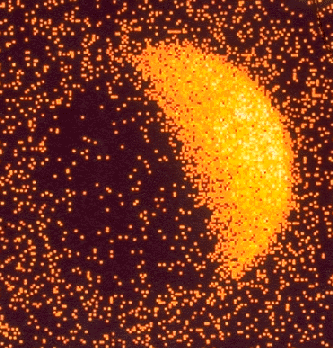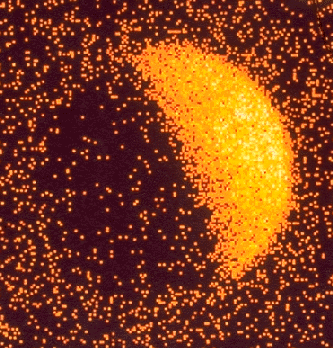
This X-Ray image of the Moon was made by the orbiting Roentgen Observatory Satellite (ROSAT) in 1990. It shows three distinct regions: a bright X-ray sky, a bright part of the Moon, and a relatively dark part of the Moon. The bright X-ray sky is due to the diffuse cosmic X-ray background. The bright lunar crescent shines because it reflects X-rays emitted by the Sun. The dark lunar face is in shadow and so stands stands out from the relatively bright background - but, surprisingly it is not completely dark! Where do those X-rays from? They are currently thought to result from energetic particles from the solar wind bombarding the lunar surface.
Esta imagen de rayos X de la Luna fue obtenida por el satélite en órbita Roentgen Observatory Satellite (ROSAT) en 1990. Muestra tres regiones claramente diferenciadas: un fondo de cielo brillante en rayos X, una parte iluminada de la Luna y una parte relativamente oscura de la misma. El brillo del fondo en rayos X se debe a la radiación cósmica de fondo difusa en rayos X. El creciente lunar brillante resplandece porque refleja los rayos X emitidos por el Sol. La cara oscura de la Luna se encuentra en sombra y, por ello, se distingue del fondo relativamente luminoso; sin embargo, ¡sorprendentemente no está completamente oscura! ¿Cuál es el origen de esos rayos X? Se cree actualmente que son el resultado del bombardeo de la superficie lunar por partículas energéticas procedentes del viento solar.