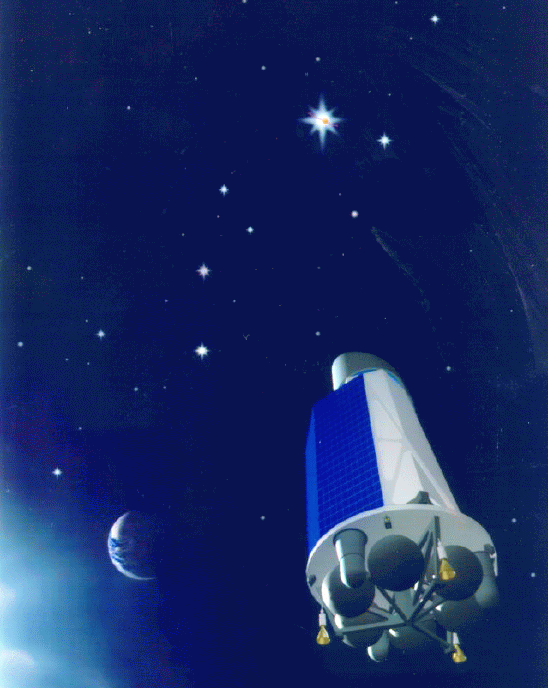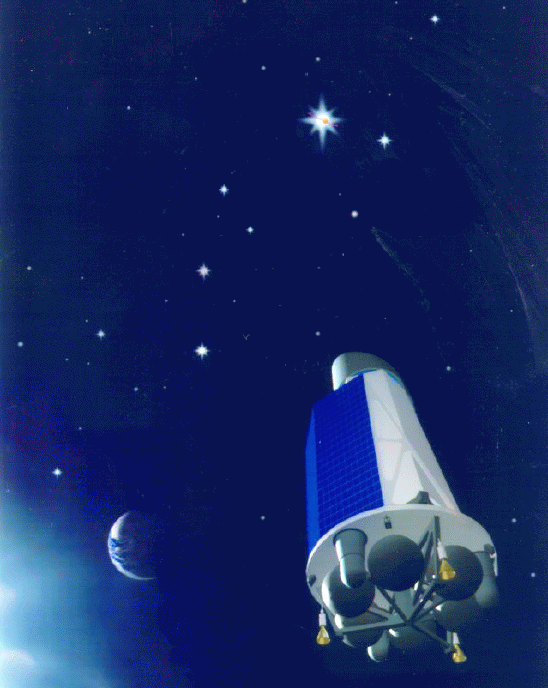
Observational astronomy has recently provided evidence of the existence of massive Jupiter-sized planets orbiting distant suns, protoplanetary disks of gas and dust surrounding newly formed stars, and planetary bodies orbiting exotic stellar corpses known as pulsars. Indeed, the formation of planets seems to be a broader and more varied phenomenon than previously imagined. Are there nearby solar systems with Earth-sized planets as well? Many would answer yes, but small, relatively low mass planets orbiting sunlike stars - which might be capable of supporting life - are extremely difficult to detect. One possible approach to this daunting observational problem is to regularly monitor the light from many solar-type stars, searching for the slight decrease in brightness which signals the transit of a small planet in front of the stellar disk. A proposal for a space-based instrument to engage in such a program, the Kepler Mission, is illustrated above. In this concept, the monitoring space telescope orbits the Sun, slowly drifting away from Earth. The goal of this mission would be to discover Earth-sized planets in the habitable zone of solar-type stars, taking a step toward answering the profound question - Does life exist on other worlds beyond our Solar System? Watch the Leonid Meteor Shower this weekend!
La astronomía observacional ha proporcionado recientemente evidencia de la existencia de planetas masivos del tamaño de Júpiter orbitando soles distantes, discos protoplanetarios de gas y polvo que rodean estrellas recién formadas, y cuerpos planetarios orbitando exóticos remanentes estelares conocidos como púlsares. De hecho, la formación de planetas parece ser un fenómeno más amplio y variado de lo que se imaginaba anteriormente. ¿Existen también sistemas solares cercanos con planetas del tamaño de la Tierra? Muchos responderían que sí, pero los planetas pequeños y de masa relativamente baja que orbitan estrellas similares al Sol —que podrían ser capaces de albergar vida— son extremadamente difíciles de detectar. Un posible enfoque para este intimidante problema observacional consiste en monitorear regularmente la luz de muchas estrellas de tipo solar, buscando la ligera disminución en brillo que señala el tránsito de un pequeño planeta frente al disco estelar. Una propuesta para un instrumento espacial destinado a llevar a cabo dicho programa, la Misión Kepler, se ilustra arriba. En este concepto, el telescopio espacial de monitoreo orbita el Sol, alejándose lentamente de la Tierra. El objetivo de esta misión sería descubrir planetas del tamaño de la Tierra en la zona habitable de estrellas de tipo solar, dando un paso hacia la respuesta de la profunda pregunta: ¿Existe vida en otros mundos más allá de nuestro Sistema Solar? ¡Observe la lluvia de meteoros de las Leónidas este fin de semana!