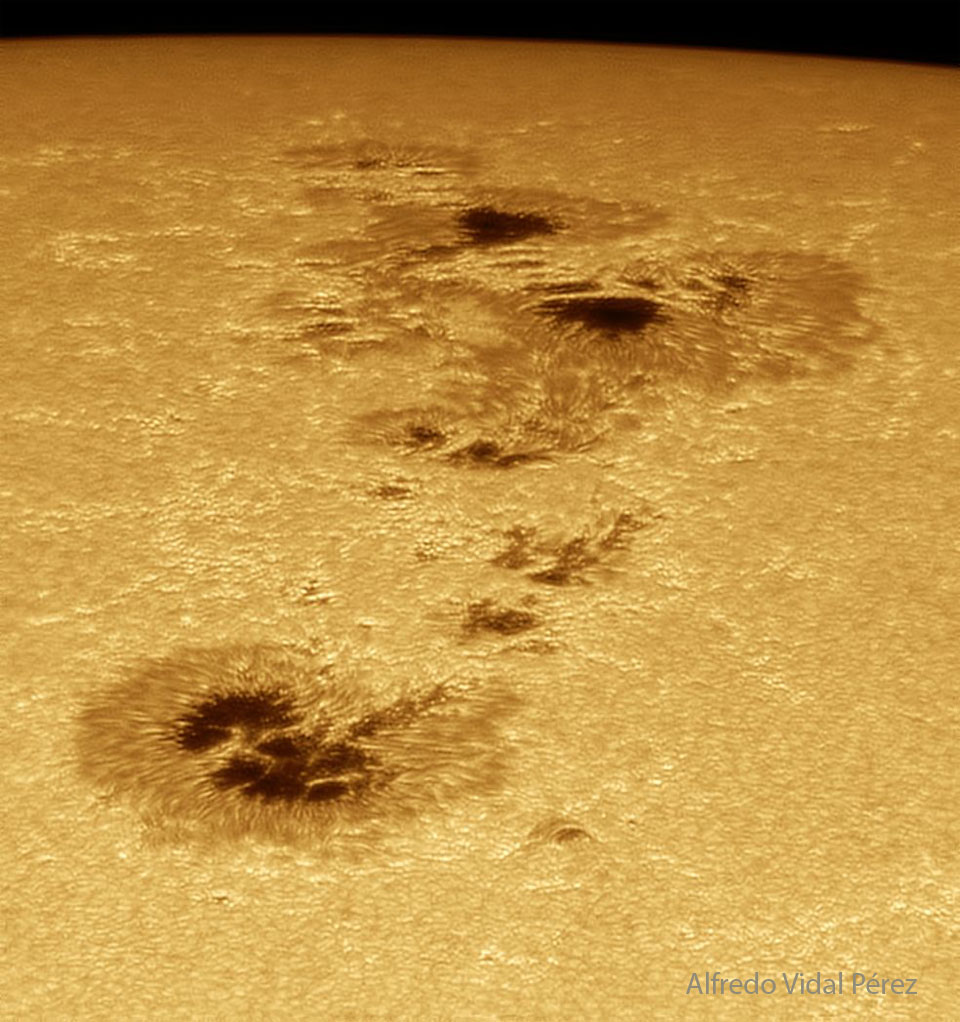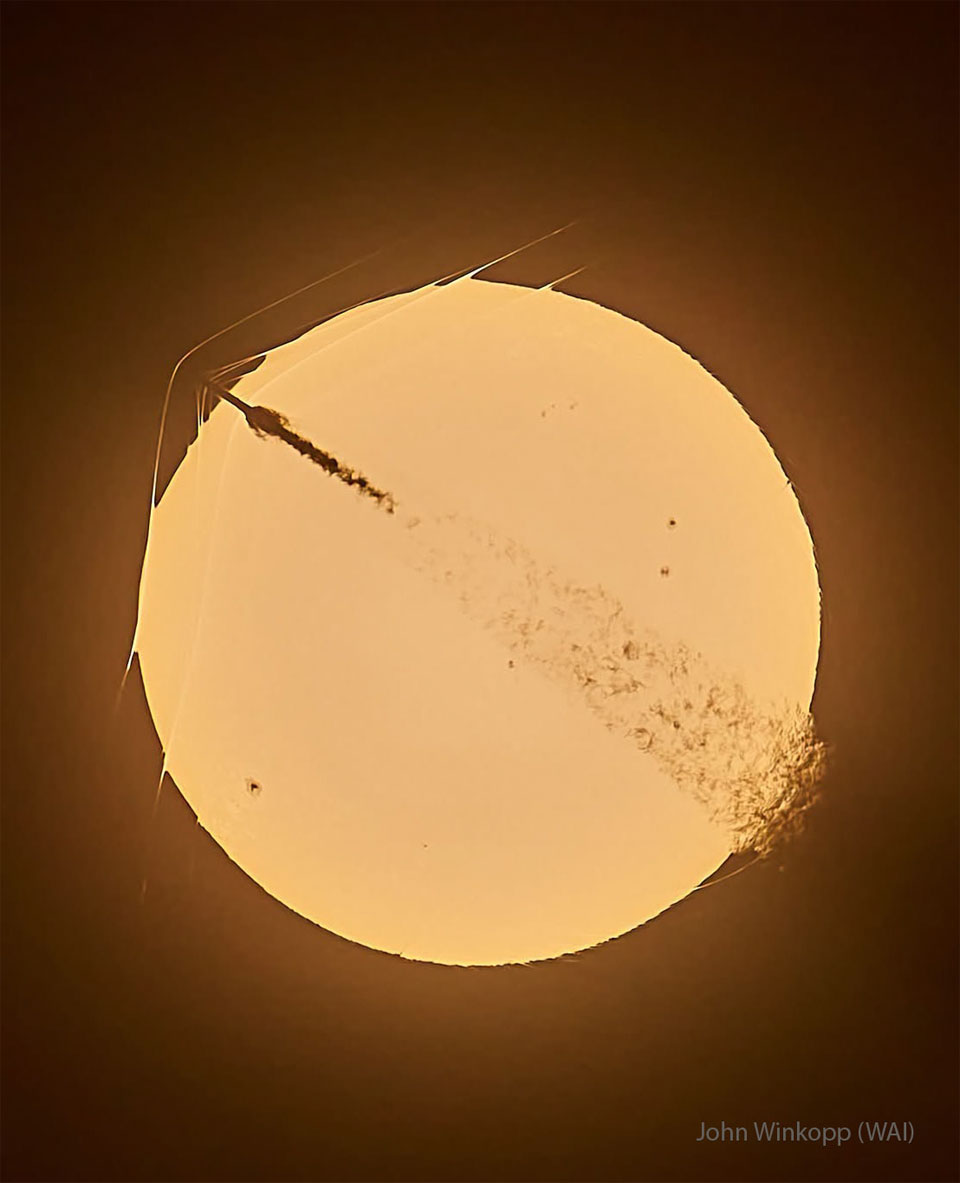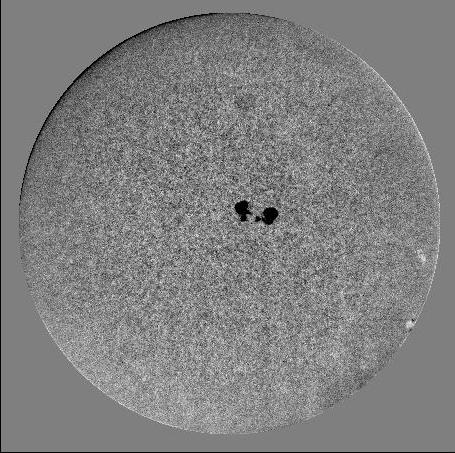
The Sun's surface is not smooth. It has thousands of bumps called granules and usually a few dark depressions called sunspots. Each of the numerous granules is the size of an Earth continent, but much shorter lived. A granule can only be expected to last a few minutes before dissipating and being replaced by a newly rising granule. In this way a granule acts much like a rising bubble in boiling water. The above black and white, visible-light picture is quite unusual because the usual relative darkening visible near the edges of the Solar disk have been digitally removed. Visible near the center are two large sunspots while the computer enhancement brings out two bright plages close to the right solar limb.
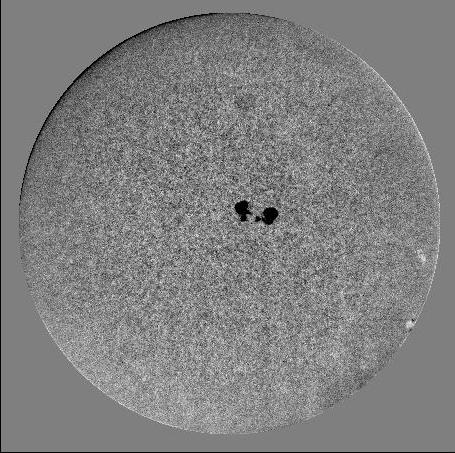
La superficie del Sol no es lisa. Posee miles de protuberancias denominadas gránulos y, generalmente, algunas depresiones oscuras llamadas manchas solares. Cada uno de los numerosos gránulos tiene el tamaño de un continente terrestre, pero su vida es mucho más breve. Se espera que un gránulo dure solo unos pocos minutos antes de disiparse y ser reemplazado por un nuevo gránulo ascendente. De este modo, un gránulo actúa de manera muy similar a una burbuja ascendente en agua hirviendo. La imagen en blanco y negro de luz visible que se presenta aquí es bastante inusual, porque el oscurecimiento relativo que normalmente se observa cerca de los bordes del disco solar ha sido eliminado digitalmente. Cerca del centro se aprecian dos grandes manchas solares, mientras que el procesamiento computacional resalta dos brillantes plages próximas al limbo solar derecho.