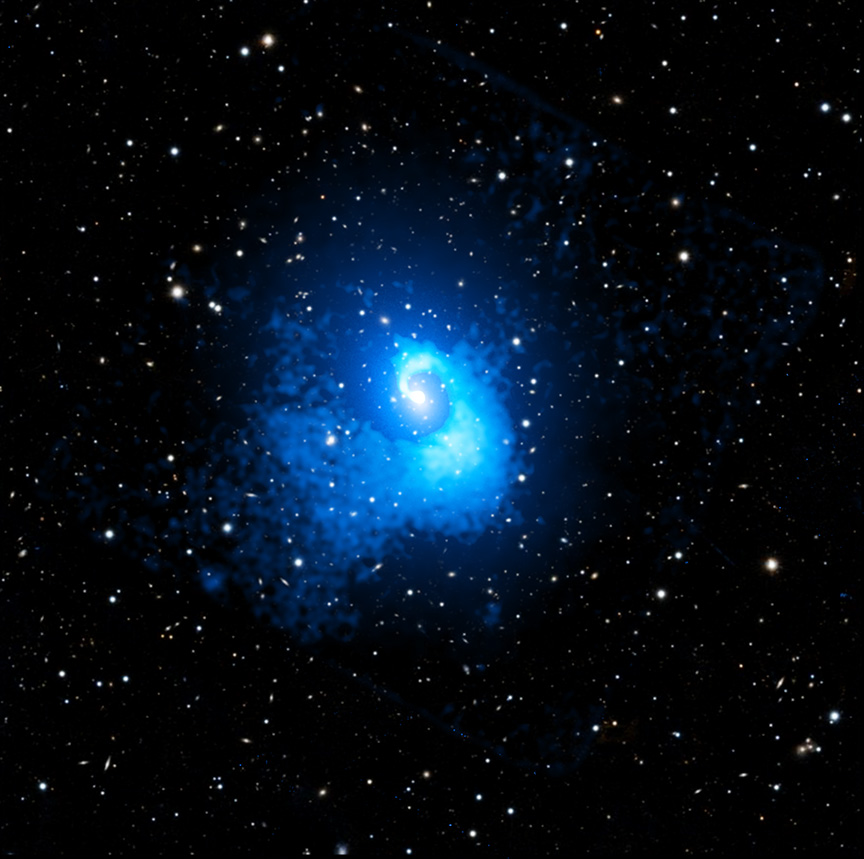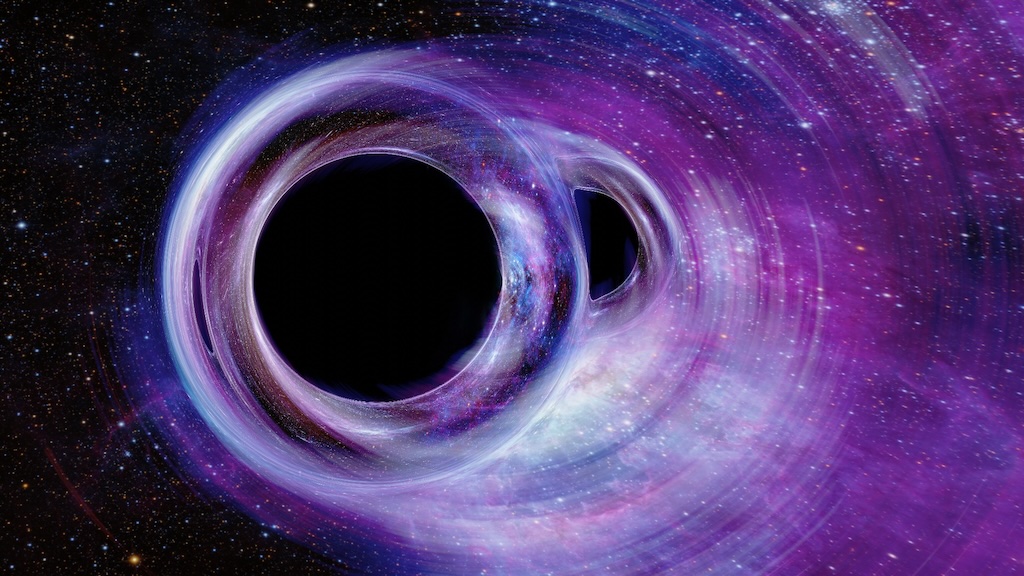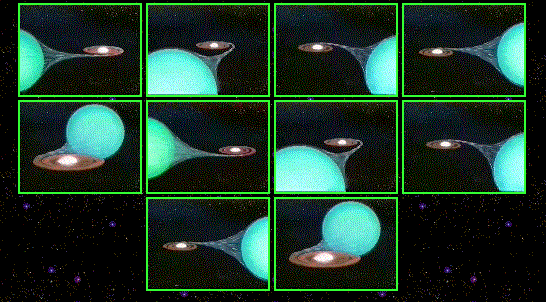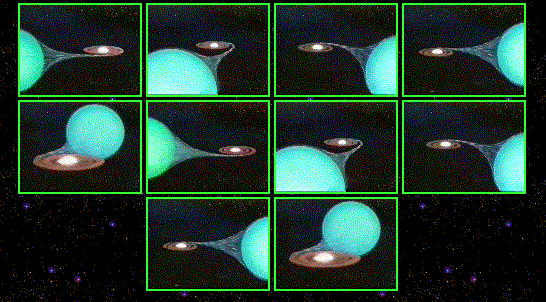
What does a black hole look like? If alone, a black hole would indeed appear quite black, but many black hole candidates are part of binary star systems. So how does a black hole binary system look different from a neutron star binary system? The above drawings indicate it is difficult to tell! Recent theoretical work, however, has provided a new way to tell them apart: advective accretion flows (ADAFs). A black hole system so equipped would appear much darker than a similar neutron star system. The difference is caused by the hot gas from the ADAF disk falling through the event horizon of the black hole and disappearing - gas that would have emitted much light were the central object only a neutron star. Recent observations of the soft X-ray transient V404 Cyg has yielded a spectrum much like an ADAF onto a black hole - and perhaps brighter than allowable from an ADAF onto a neutron star.
¿Cómo es un agujero negro? Si estuviera aislado, un agujero negro parecería verdaderamente oscuro, pero muchos candidatos a agujero negro forman parte de sistemas binarios de estrellas. Entonces, ¿en qué se diferencia visualmente un sistema binario con agujero negro de uno con estrella de neutrones? Los dibujos anteriores indican que ¡es difícil saberlo! Sin embargo, trabajos teóricos recientes han proporcionado una nueva forma de distinguirlos: los flujos de acreción advectivos (ADAFs, por sus siglas en inglés). Un sistema con agujero negro dotado de este mecanismo parecería mucho más oscuro que un sistema similar con estrella de neutrones. La diferencia se debe a que el gas caliente del disco ADAF cae a través del horizonte de sucesos del agujero negro y desaparece, gas que habría emitido una gran cantidad de luz si el objeto central fuera únicamente una estrella de neutrones. Observaciones recientes de la transitoria de rayos X blandos V404 Cyg han arrojado un espectro muy similar al de un ADAF sobre un agujero negro, y quizás más brillante de lo que permitiría un ADAF sobre una estrella de neutrones.