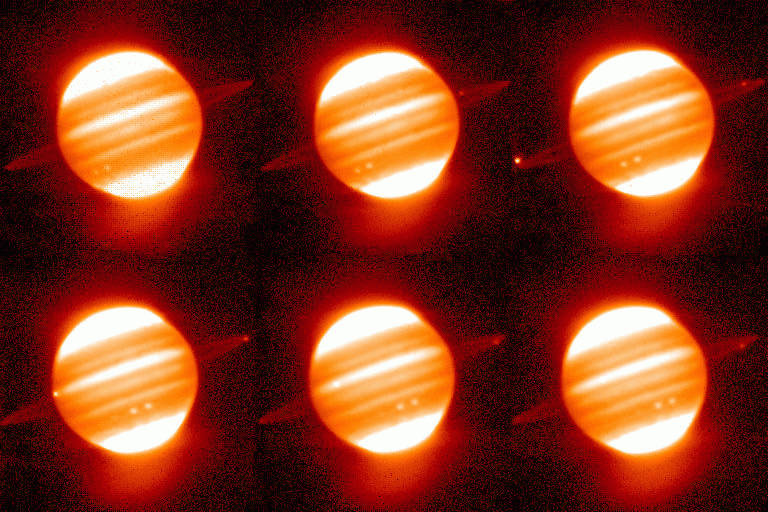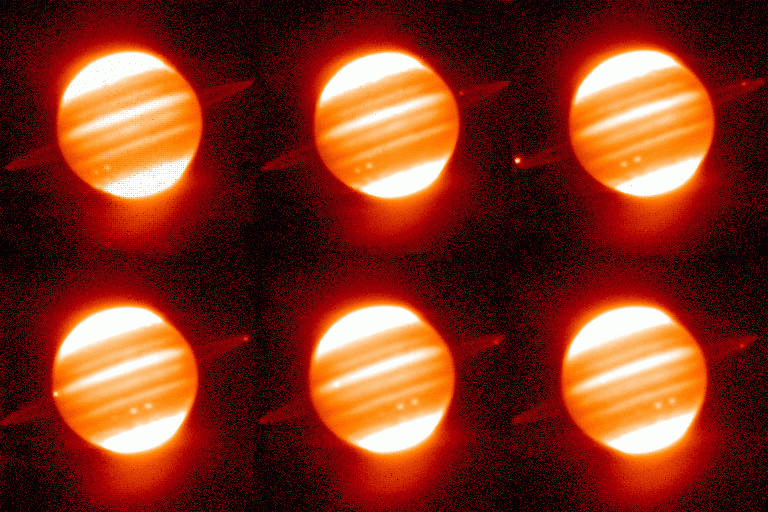
Jupiter has rings, too. Unlike Saturn's bright rings which are composed of chunks of ice, Jupiter's rings are darker and appear to consist of fine particles of rock. The six pictures above were taken in infrared light from the Infrared Telescope Facility in Hawaii in 1994, and cover a time span of two hours. Quite visible are Jupiter's rings, bands and spots in the outer atmosphere. Also visible in the photos, however, are two small Jovian moons. Metis, only 40 kilometers across, appears in the second picture as a dim spot on the rings to the right of Jupiter. Amalthea, much larger and brighter, appears in the third frame on the far left, and can be seen to pass across the face of Jupiter in frames four and five. The origin of Jupiter's rings remains unknown, although hypothesized to be created by material scattered from meteorite impacts onto Jupiter's moons.
Júpiter también tiene anillos. A diferencia de los brillantes anillos de Saturno, compuestos por fragmentos de hielo, los anillos de Júpiter son más oscuros y parecen estar formados por finas partículas de roca. Las seis imágenes anteriores fueron tomadas en luz infrarroja desde el Infrared Telescope Facility en Hawái en 1994, y abarcan un período de dos horas. Son claramente visibles los anillos de Júpiter, así como bandas y manchas en la atmósfera exterior del planeta. Sin embargo, en las fotografías también se pueden apreciar dos pequeñas lunas jovianas. Metis, de apenas 40 kilómetros de diámetro, aparece en la segunda imagen como un tenue punto sobre los anillos, a la derecha de Júpiter. Amaltea, considerablemente más grande y brillante, aparece en el tercer fotograma en el extremo izquierdo, y puede observarse cómo cruza la superficie visible de Júpiter en los fotogramas cuarto y quinto. El origen de los anillos de Júpiter sigue siendo desconocido, aunque se hipotetiza que fueron creados por material dispersado durante impactos de meteoritos sobre las lunas de Júpiter.