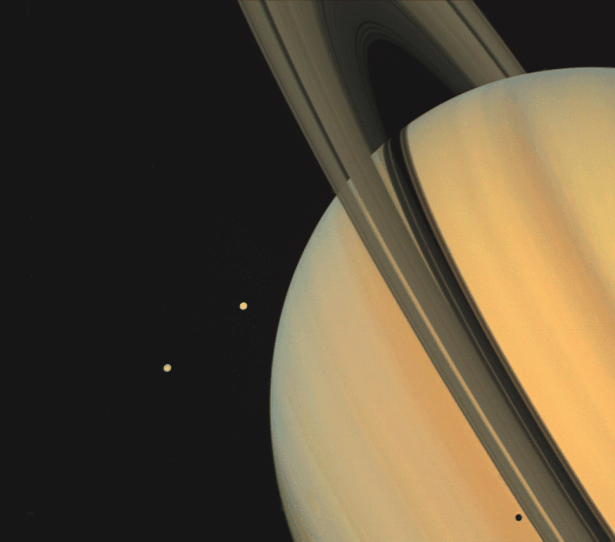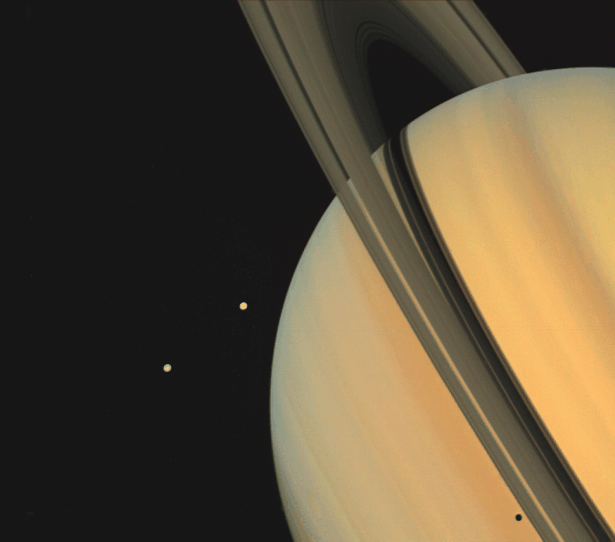
Saturn and two of its larger moons - Tethys and Dione - were photographed by the Voyager 1 spacecraft which flew by the planet in November of 1980. This picture gives an indication of Saturn's extensive ring system, which can be seen casting a shadow on the planet, as does Tethys. Saturn's rings are composed of many chunks of ice ranging in size from a pebble to a car. The rings have several large gaps, the largest of which is clearly visible in the picture and is named the Cassini Division, after its discoverer. Saturn appears brighter than most stars in the sky, and its rings can be discerned with a small telescope. A new spacecraft - Cassini - will visit Saturn and is currently scheduled for launch later in 1997.
Saturno y dos de sus lunas más grandes —Tetis y Dione— fueron fotografiados por la sonda Voyager 1, que sobrevoló el planeta en noviembre de 1980. Esta imagen ofrece una muestra del extenso sistema de anillos de Saturno, que puede verse proyectando una sombra sobre el planeta, al igual que Tetis. Los anillos de Saturno están compuestos por numerosos fragmentos de hielo cuyo tamaño varía desde una piedra pequeña hasta un automóvil. Los anillos presentan varias brechas de gran tamaño; la más grande de ellas es claramente visible en la imagen y recibe el nombre de División de Cassini, en honor a su descubridor. Saturno aparece más brillante que la mayoría de las estrellas en el cielo, y sus anillos pueden distinguirse con un pequeño telescopio. Una nueva sonda espacial —Cassini— visitará Saturno y está programada para ser lanzada a finales de 1997.