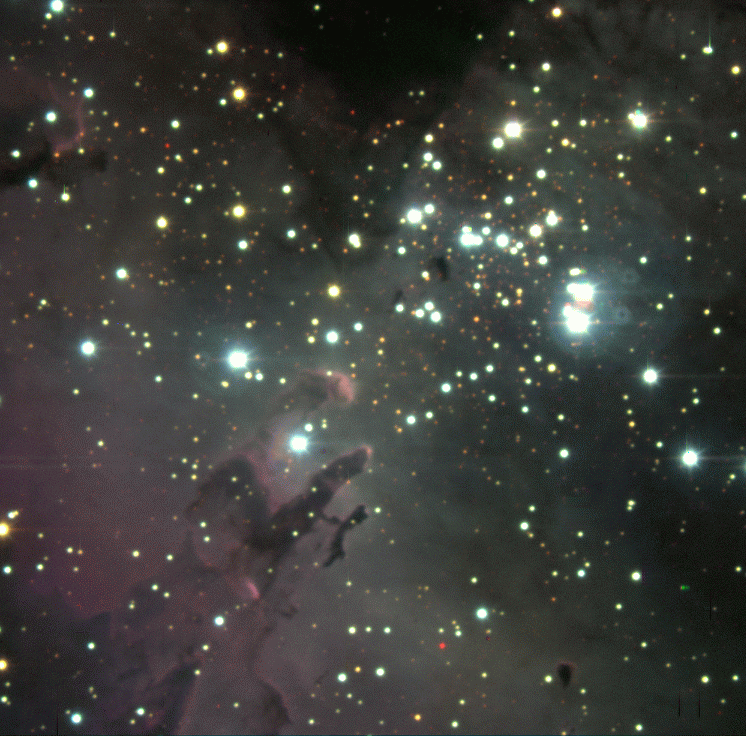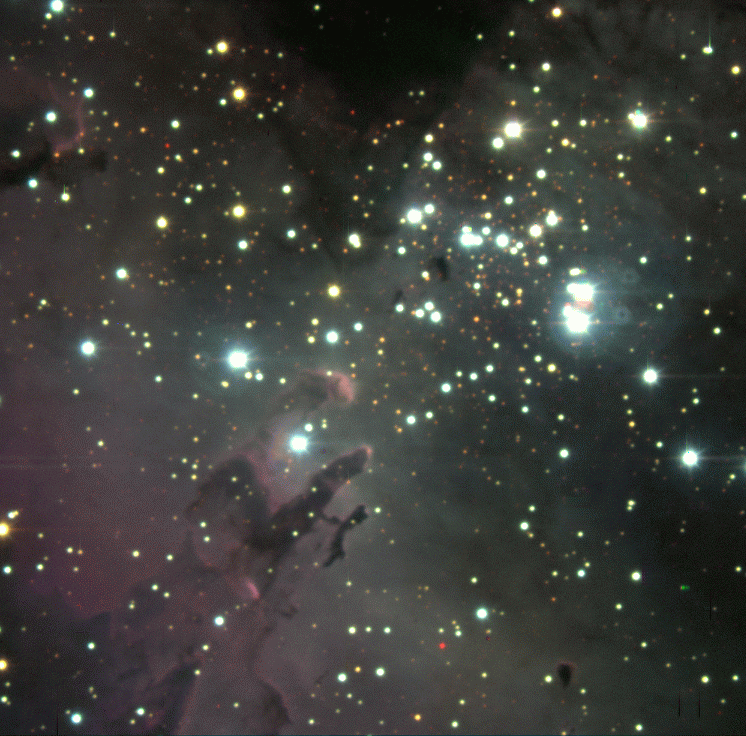
Bright blue stars are still forming in the red pillars of the Eagle Nebula. Made famous by a picture from the Hubble Space Telescope in 1995, the Eagle Nebula shows the dramatic process of star formation. To the upper right of the nebula in the above picture lies the heart of the open cluster M16. This picture closely depicts the true colors of the stars and nebula. The bright blue stars of M16 are continually forming from the Eagle Nebula gas, most recently in the famous gas and dust pillars seen below the photo's center. Of all the young stars in M16, the most massive shine the brightest and the bluest. A typical age for a star in this cluster is about 5 million years, making them only 1/1000 the age of our Sun. Light takes about 7000 years to reach us from M16.
Brillantes estrellas azules continúan formándose en los rojos pilares de la Nebulosa del Águila. Hecha famosa por una imagen del Telescopio Espacial Hubble en 1995, la Nebulosa del Águila muestra el dramático proceso de formación estelar. En la parte superior derecha de la nebulosa en la imagen anterior se encuentra el corazón del cúmulo abierto M16. Esta imagen reproduce fielmente los colores reales de las estrellas y la nebulosa. Las brillantes estrellas azules de M16 se forman continuamente a partir del gas de la Nebulosa del Águila, más recientemente en los famosos pilares de gas y polvo visibles por debajo del centro de la fotografía. De todas las estrellas jóvenes en M16, las más masivas son las que brillan con mayor intensidad y con tonos más azules. La edad típica de una estrella en este cúmulo es de aproximadamente 5 millones de años, lo que las hace apenas 1/1000 de la edad de nuestro Sol. La luz tarda unos 7000 años en llegar hasta nosotros desde M16.