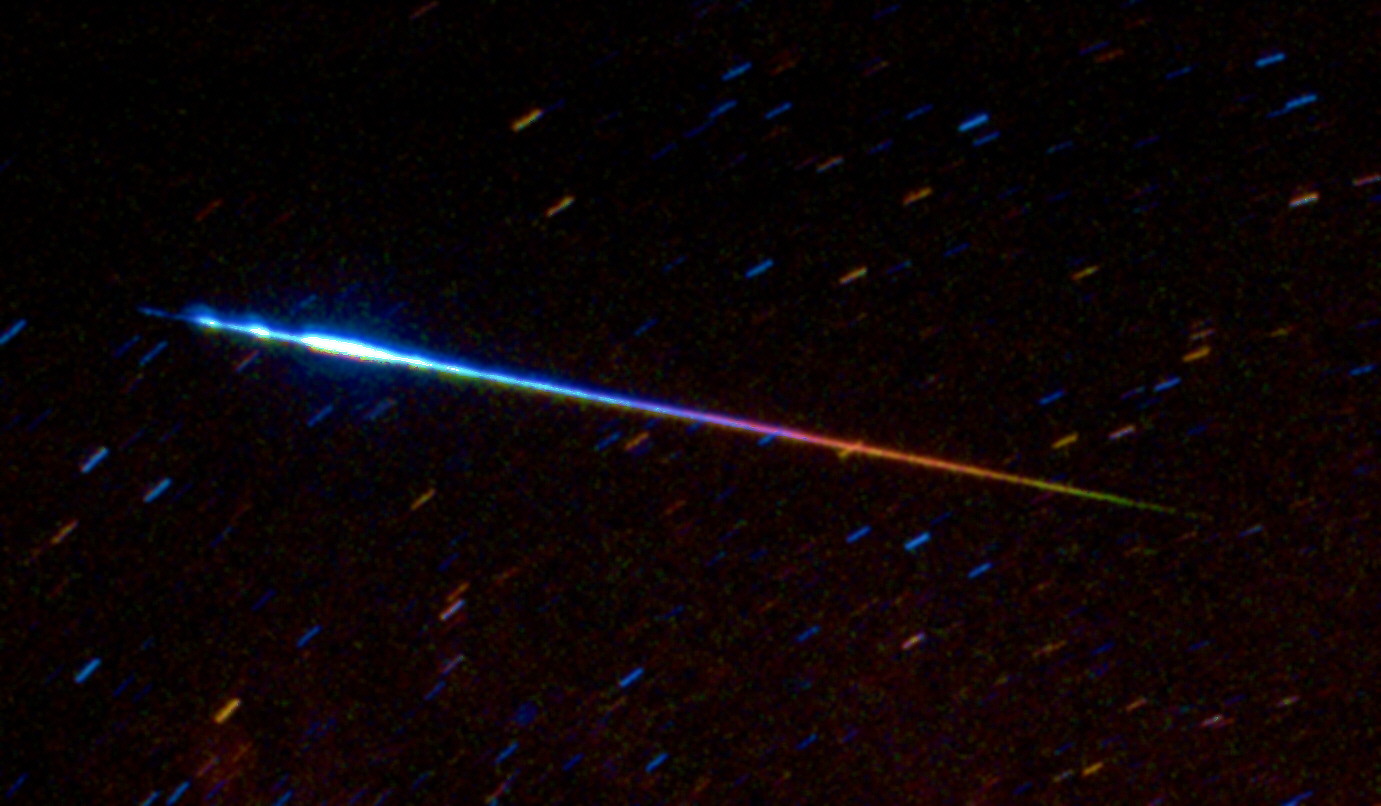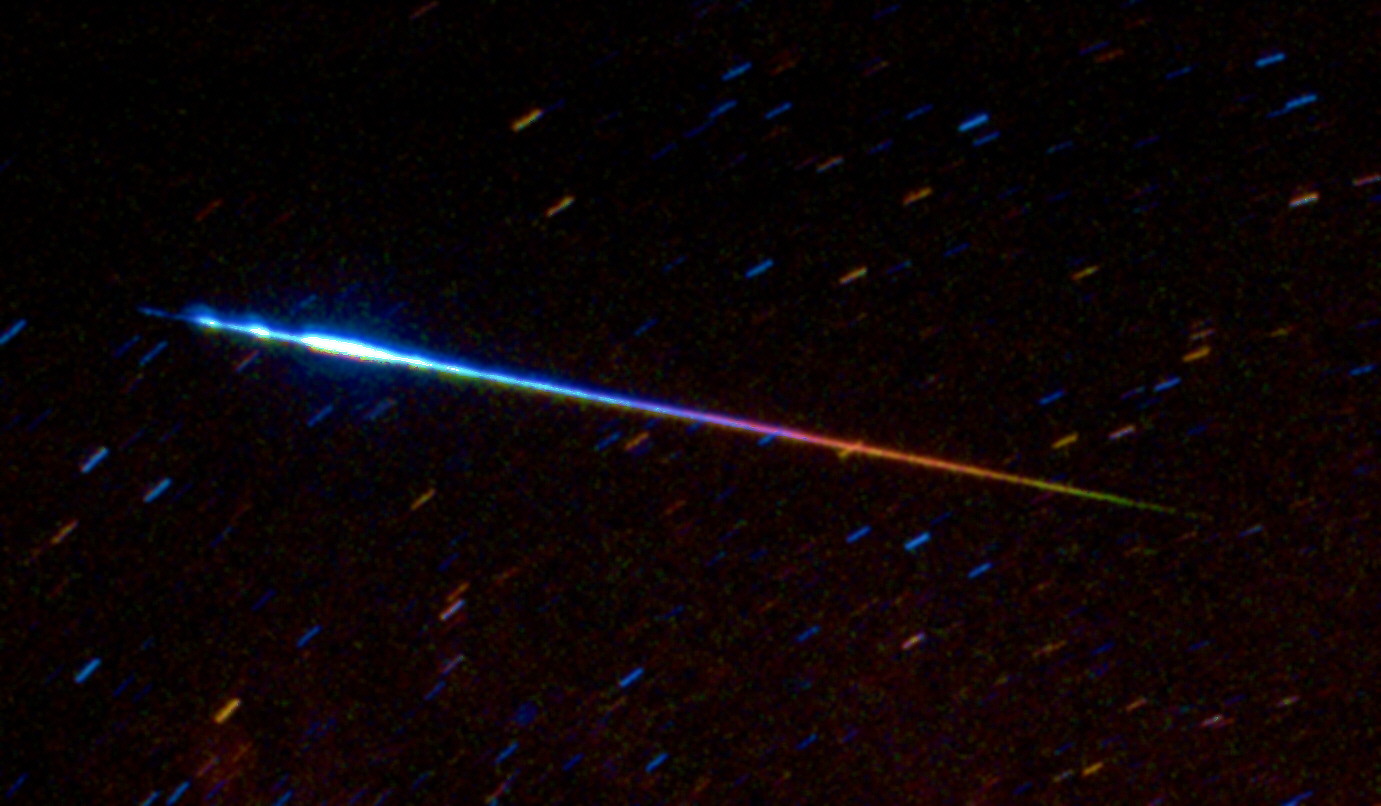
Tonight the Perseid Meteor Shower reaches its maximum. Grains of rocky ice will streak across the sky as they evaporate during entry into Earth's atmosphere. These ice chips were shed from Comet Swift-Tuttle. The Perseids result from the annual crossing of the Earth through Comet Swift-Tuttle's orbit. The Perseids are typically the most active meteor shower of the year. In a clear dark sky, an observer might see a meteor a minute. Pictured above is a Perseid meteor from 1993. The colors are representative but digitally enhanced. As the meteor streaked across the night sky, different excited atoms emitted different colors of light. The origin of the green tinge visible at the right is currently unknown, however, and might result from oxygen in Earth's atmosphere. Perseid meteors can best be seen from a relaxing position, away from lights.
Esta noche la Lluvia de Meteoros Perseidas alcanza su máximo. Granos de hielo rocoso surcarán el cielo al evaporarse durante su entrada en la atmósfera terrestre. Estos fragmentos de hielo fueron desprendidos del Cometa Swift-Tuttle. Las Perseidas son el resultado del cruce anual de la Tierra a través de la órbita del Cometa Swift-Tuttle. Las Perseidas son típicamente la lluvia de meteoros más activa del año. En un cielo oscuro y despejado, un observador podría ver un meteoro por minuto. En la imagen se muestra un meteoro Pérside de 1993. Los colores son representativos pero han sido realzados digitalmente. A medida que el meteoro surcaba el cielo nocturno, diferentes átomos excitados emitían distintos colores de luz. El origen del tinte verdoso visible a la derecha es actualmente desconocido, aunque podría deberse al oxígeno presente en la atmósfera terrestre. Los meteoros Perseidas se pueden observar mejor desde una posición cómoda, alejada de las luces.