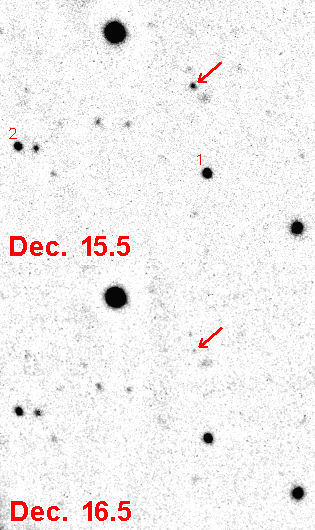
Gamma-ray bursts seem to be the most powerful explosions in the Universe. Yet their sources continue to elude researchers who stand in awe and frustration at the bursts' transient, enigmatic behavior. The blinking gif above illustrates the latest hard-won result in the quest to identify and understand the nature of the bursters. These Apache Point Observatory optical images from Monday and Tuesday this week have helped identify a faint, fading object (red arrow) near the position of a gamma-ray burst. The gamma-ray burst triggered satellite observatories on Sunday, December 14th. Faint stars near the constellation Ursa Major (the Big Dipper) also appear in these "negative" images of the sky. Though thousands of bursts have been detected by satellites sensitive to gamma rays, it is likely that this object represents only the third known optical counterpart to a gamma-ray burst.
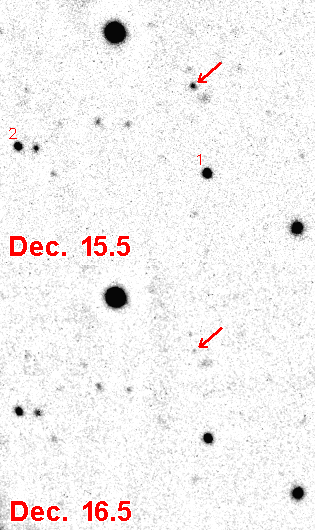
Los destellos de rayos gamma parecen ser las explosiones más poderosas del Universo. Sin embargo, sus fuentes continúan eludiendo a los investigadores, quienes observan con asombro y frustración el comportamiento transitorio y enigmático de estos destellos. La imagen GIF animada que se muestra ilustra el último resultado obtenido con gran esfuerzo en la búsqueda por identificar y comprender la naturaleza de las fuentes de estos destellos. Estas imágenes ópticas del Observatorio Apache Point, tomadas el lunes y el martes de esta semana, han ayudado a identificar un objeto tenue y en proceso de desvanecimiento (flecha roja) cercano a la posición de un destello de rayos gamma. Dicho destello activó los observatorios satelitales el domingo 14 de diciembre. Estrellas tenues cercanas a la constelación de Ursa Major (la Osa Mayor, también conocida como el Gran Carro) aparecen también en estas imágenes en "negativo" del cielo. Aunque miles de destellos han sido detectados por satélites sensibles a los rayos gamma, es probable que este objeto represente solo el tercer contraparte óptico conocido de un destello de rayos gamma.