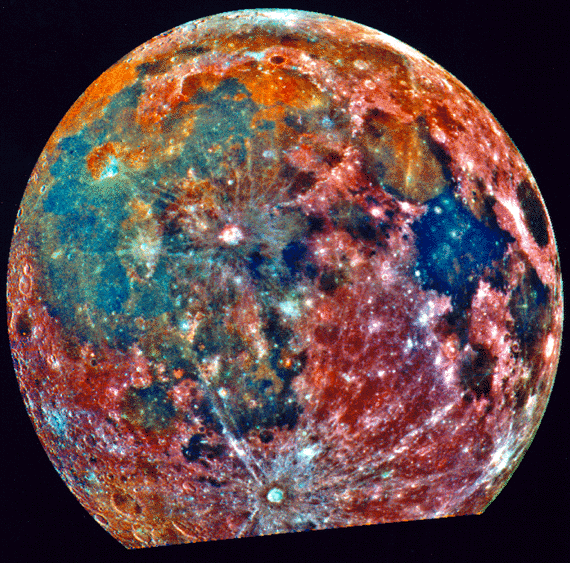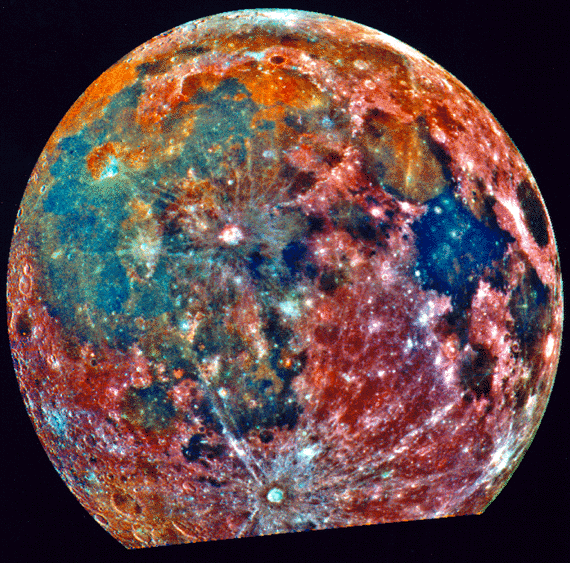
Do you recognize the Earth's Moon when you see it? The crazy, patchwork appearance of this false color image makes this nearly full view of our Moon's familiar nearside look very strange. The image was taken in 1992 by the Galileo spacecraft enroute to Jupiter. The Sea of Tranquillity (Mare Tranquillitatis) is the blue area at right, the Ocean of Storms (Oceanus Procellarum) is the extensive blue and orange area on the left, and white lines radiate from the crater Tycho at bottom center. Three filters were used to make three separate exposures, combined in an exaggerated color scheme to emphasize composition differences - blue hues reveal titanium rich areas while orange and purple colors show regions relatively poor in titanium and iron. NASA soon plans to conduct an extensive remote exploration of the lunar surface, including a search for water ice near the lunar South Pole, with the Lunar Prospector spacecraft.
¿Reconoce usted la Luna de la Tierra cuando la ve? El aspecto abigarrado y fragmentado de esta imagen en falso color hace que esta vista casi llena del lado visible de nuestra Luna nos resulte muy extraña. La imagen fue tomada en 1992 por la sonda Galileo en su camino hacia Júpiter. El Mar de la Tranquilidad (Mare Tranquillitatis) es la zona azul a la derecha, el Océano de las Tormentas (Oceanus Procellarum) es la extensa área azul y naranja a la izquierda, y líneas blancas irradian desde el cráter Tycho en el centro inferior. Se utilizaron tres filtros para realizar tres exposiciones separadas, combinadas en un esquema de color exagerado para resaltar las diferencias en composición: los tonos azules revelan áreas ricas en titanio, mientras que los colores naranja y púrpura muestran regiones relativamente pobres en titanio y hierro. La NASA tiene previsto llevar a cabo en breve una extensa exploración remota de la superficie lunar, incluida la búsqueda de hielo de agua cerca del Polo Sur lunar, con la sonda espacial Lunar Prospector.