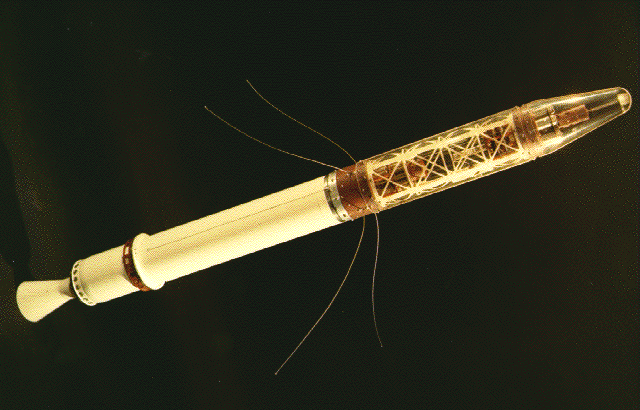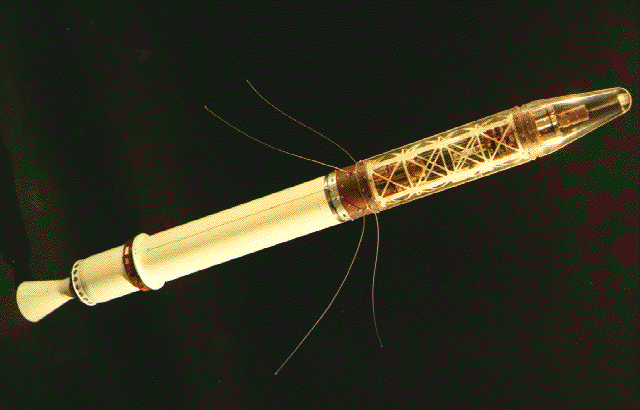
Inaugurating the era of space exploration for the US, the First Explorer was launched into Earth orbit forty years ago (February 1, 1958) by the Army Ballistic Missle Agency. The Explorer I satellite weighed about 30 pounds, was 6 feet long, 6 inches in diameter and consisted of batteries, transmitters, and scientific instrumentation built into the fourth stage of a Jupiter-C rocket. Foreshadowing NASA and the adventurous and successful Explorer Program, Explorer I bolstered national prestige in the wake of Sputnik. The satellite also contributed to a spectacular scientific bonanza - the discovery of Earth-girdling belts of magnetically trapped charged particles now known as the Van Allen Radiation Belts.
Inaugurando la era de la exploración espacial para los Estados Unidos, el primer Explorer fue lanzado a la órbita terrestre hace cuarenta años (1 de febrero de 1958) por la Agencia de Misiles Balísticos del Ejército. El satélite Explorer I pesaba aproximadamente 14 kilogramos, medía 1,8 metros de longitud y 15 centímetros de diámetro, y consistía en baterías, transmisores e instrumentación científica integrados en la cuarta etapa de un cohete Jupiter-C. Anticipando la creación de la NASA y el exitoso Programa Explorer, el Explorer I fortaleció el prestigio nacional tras el lanzamiento del Sputnik. El satélite también contribuyó a un espectacular avance científico: el descubrimiento de los cinturones de partículas cargadas atrapadas magnéticamente que rodean la Tierra, conocidos actualmente como los Cinturones de Radiación de Van Allen.