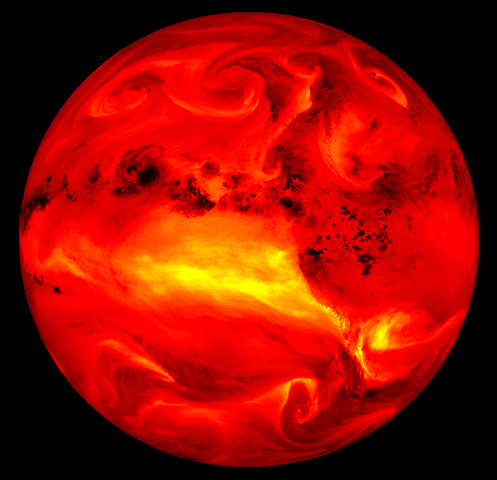
What alien planet's bizarre landscape lurks below these fiery-looking clouds? It's only Planet Earth, of course ... as seen on the Water Vapor Channel. Hourly, images like this one (an infrared image shown in false color) are brought to you by the orbiting Geostationary Operational Environmental Satellites' (GOES) multi-channel imagers. These instruments can produce images at the infrared wavelength of 6.7 microns or about 10 times the wavelength of visible light, recording radiation emitted by water vapor in the upper troposphere. Bright regions correspond to high concentrations of water vapor while dark spots are relatively dry areas. Atmospheric water vapor is invisible to the eye and produced by evaporation from the oceans. Convected upward in the tropical zones it affects the climate by contributing substantially to the greenhouse effect.
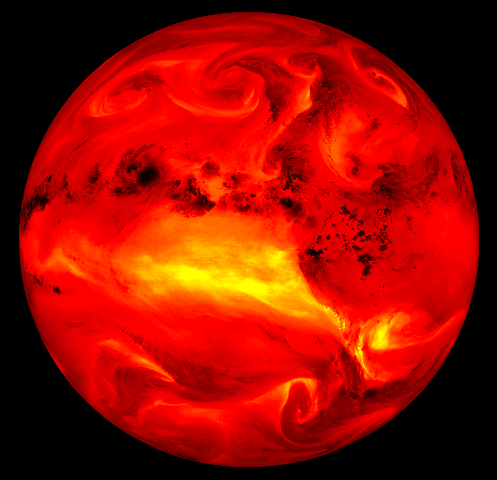
¿El extraño paisaje de qué planeta alienígena se oculta bajo estas nubes de aspecto ígneo? Es simplemente el planeta Tierra, por supuesto... tal como se ve en el Canal del Vapor de Agua. De manera horaria, imágenes como esta (una imagen infrarroja mostrada en falso color) son captadas por los imagers multicanal de los satélites geoestacionarios operacionales ambientales (GOES, por sus siglas en inglés) en órbita. Estos instrumentos pueden producir imágenes en la longitud de onda infrarroja de 6,7 micrones, o aproximadamente 10 veces la longitud de onda de la luz visible, registrando la radiación emitida por el vapor de agua en la troposfera superior. Las regiones brillantes corresponden a altas concentraciones de vapor de agua, mientras que las zonas oscuras son áreas relativamente secas. El vapor de agua atmosférico es invisible al ojo humano y se produce por la evaporación de los océanos. Al ser convectado hacia arriba en las zonas tropicales, afecta el clima al contribuir de manera sustancial al efecto invernadero.