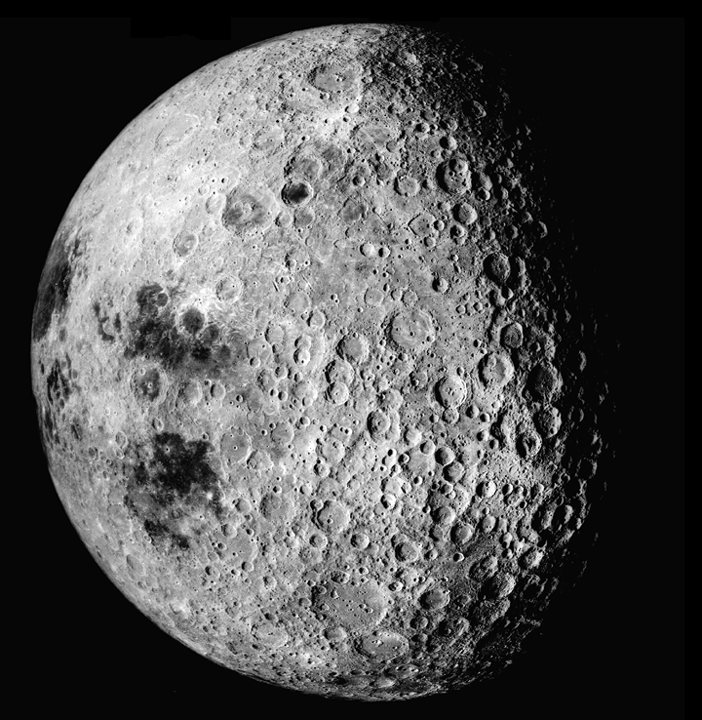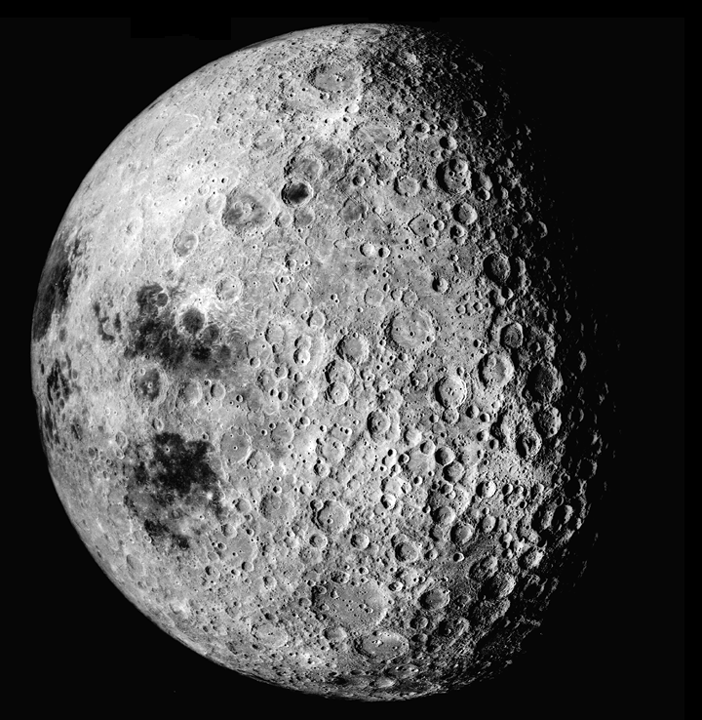
Locked in synchronous rotation, the Moon always presents its well-known near side to Earth. But from lunar orbit, Apollo astronauts also grew to know the Moon's far side. This sharp picture from Apollo 16's mapping camera shows the eastern edge of the familiar near side (left) and the strange and heavily cratered far side of the Moon. Surprisingly, the rough and battered surface of the far side looks very different from the near side which is covered with smooth dark lunar maria. The likely explanation is that the far side crust is thicker, making it harder for molten material from the interior to flow to the surface and form the smooth maria.
Bloqueada en rotación sincrónica, la Luna siempre presenta su bien conocida cara visible hacia la Tierra. Sin embargo, desde la órbita lunar, los astronautas del programa Apolo también llegaron a conocer el lado lejano de la Luna. Esta nítida imagen, tomada por la cámara cartográfica del Apollo 16, muestra el borde oriental de la conocida cara visible (izquierda) y la extraña y densamente craterizada cara oculta de la Luna. Sorprendentemente, la superficie rugosa y deteriorada del lado lejano luce muy diferente del lado cercano, el cual está cubierto por las suaves y oscuras marias lunares. La explicación más probable es que la corteza del lado lejano es más gruesa, lo que dificulta que el material fundido del interior fluya hacia la superficie y forme las suaves marias.