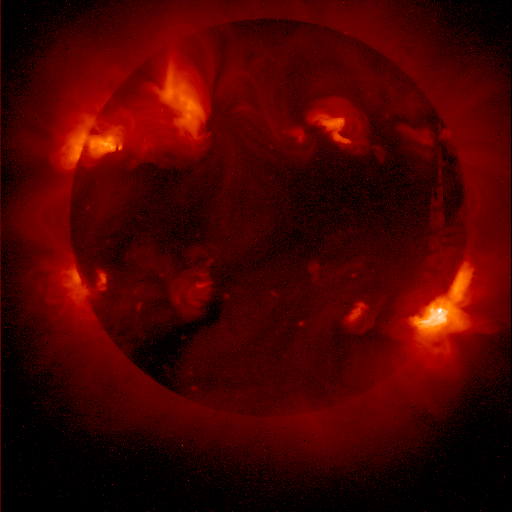
The solstice occurs today at 8:56 PM Eastern Standard Time. At the solstice the sun reaches its most southerly position in the sky and winter begins for the Northern Hemisphere while summer starts South of the Equator. This false-color image of the sun was made about 48 hours before the solstice in the light of soft (lower energy) X-rays by a telescope on board the space-based Yohkho solar observatory. The normally bright, visible solar surface or photosphere appears dark in X-ray light while active regions in the solar corona which lie above the photosphere are particularly X-ray bright. Solar photospheric temperatures are about 6,000 degrees C. but the X-ray bright coronal regions have temperatures of millions of degrees. Why is the sun's corona so hot?
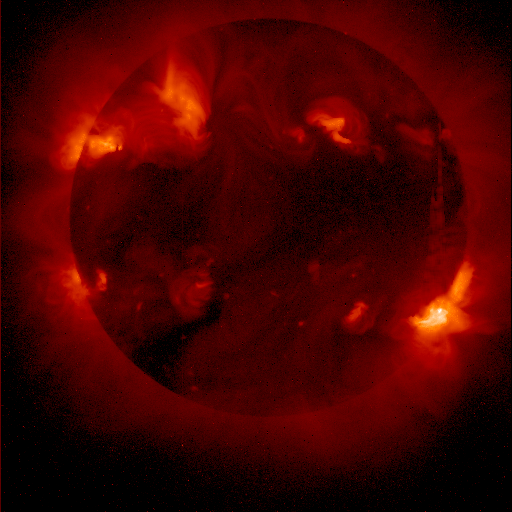
El solsticio ocurre hoy a las 8:56 PM, hora estándar del Este. En el solsticio, el Sol alcanza su posición más austral en el cielo y el invierno comienza para el Hemisferio Norte, mientras que el verano se inicia al sur del Ecuador. Esta imagen en falso color del Sol fue obtenida aproximadamente 48 horas antes del solsticio, en la luz de rayos X suaves (de menor energía), mediante un telescopio a bordo del observatorio solar espacial Yohkho. La superficie solar visible en condiciones normales, o fotosfera, aparece oscura en luz de rayos X, mientras que las regiones activas en la corona solar que se encuentran por encima de la fotosfera son particularmente brillantes en rayos X. Las temperaturas de la fotosfera solar son de aproximadamente 6.000 grados Celsius, pero las regiones coronales brillantes en rayos X alcanzan temperaturas de millones de grados. ¿Por qué es tan caliente la corona del Sol?