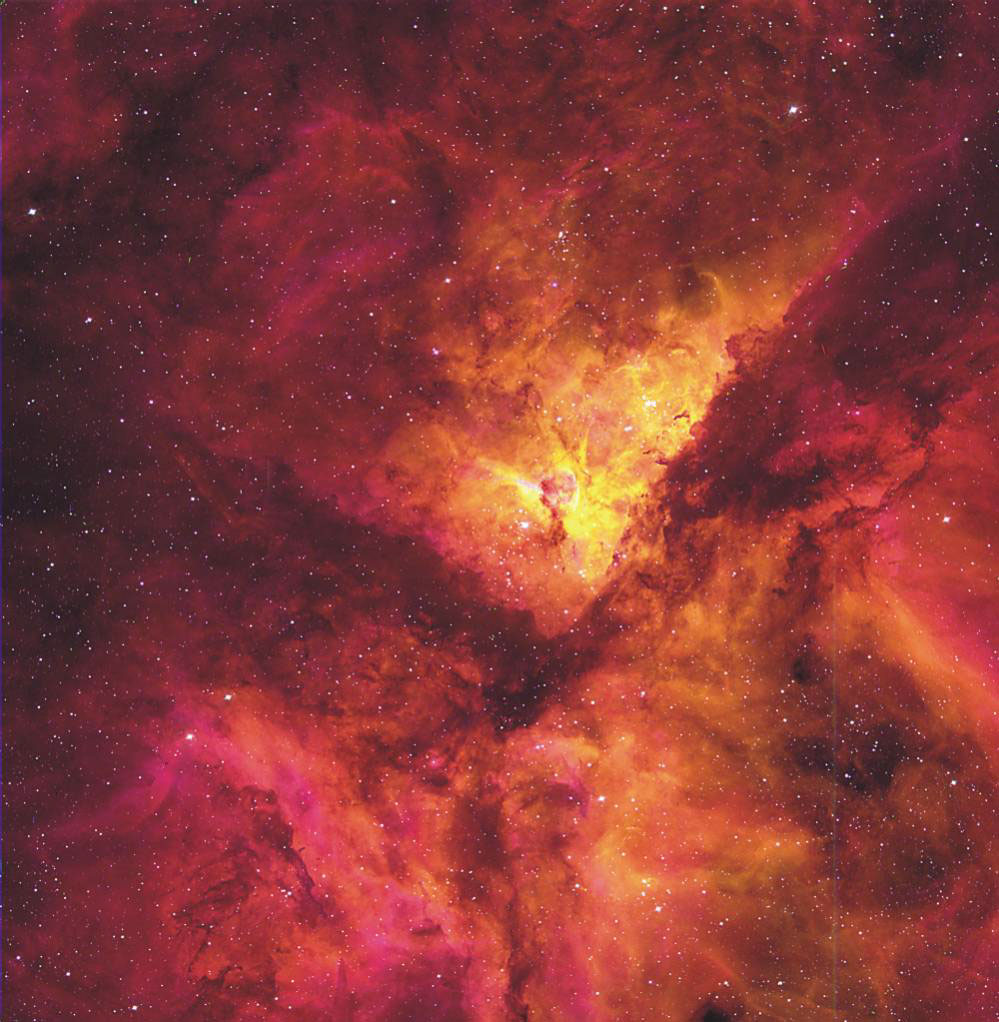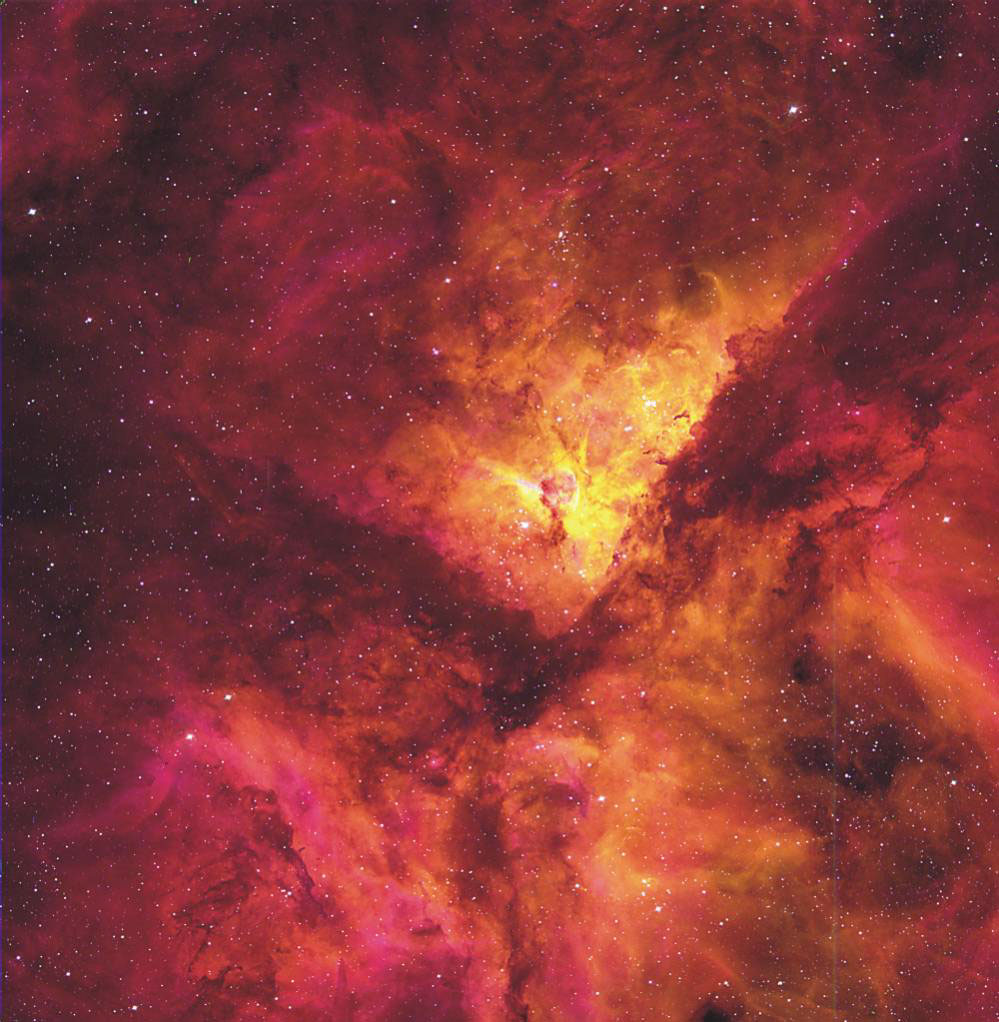
In one of the brightest parts of the Milky Way lies a nebula where some of the oddest things occur. NGC 3372, known as the Great Nebula in Carina, is home to massive stars and changing nebula. Eta Carina, the most energetic star in the nebula was one of the brightest stars in the sky in the 1830s, but then faded dramatically. The Keyhole Nebula, visible near the center, houses several of the most massive stars known and has also changed its appearance. The Carina Nebula is about 7000 light-years away in the constellation of Carina. The CTIO Curtis-Schmidt Telescope in Chile, South America took the above photograph. Eta Carina might explode in a dramatic supernova within the next thousand years, and has even flared in brightness over just the past two years.
En una de las partes más brillantes de la Vía Láctea se encuentra una nebulosa donde ocurren algunos de los fenómenos más extraordinarios. NGC 3372, conocida como la Gran Nebulosa de Carina, alberga estrellas masivas y nebulosas en constante cambio. Eta Carinae, la estrella más energética de la nebulosa, fue una de las estrellas más brillantes del cielo en la década de 1830, pero luego se desvaneció dramáticamente. La Nebulosa del Ojo de la Cerradura, visible cerca del centro, aloja varias de las estrellas más masivas conocidas y también ha modificado su apariencia. La Nebulosa de Carina se encuentra a unos 7000 años-luz de distancia, en la constelación de Carina. El Telescopio CTIO Curtis-Schmidt en Chile, América del Sur, tomó la fotografía anterior. Eta Carinae podría explotar en una dramática supernova dentro de los próximos mil años, e incluso ha experimentado destellos de brillo a lo largo de los últimos dos años.