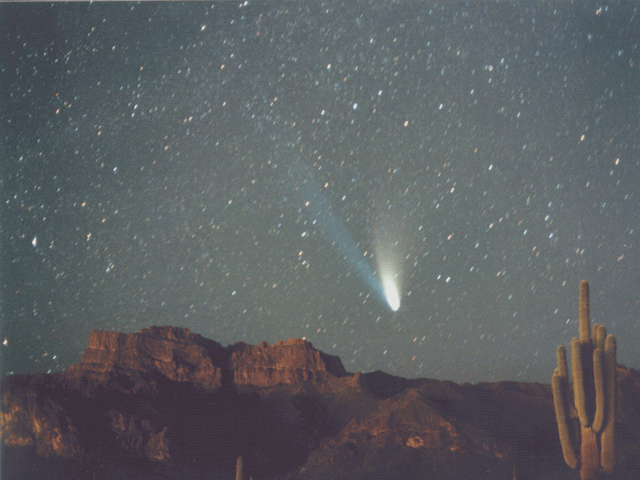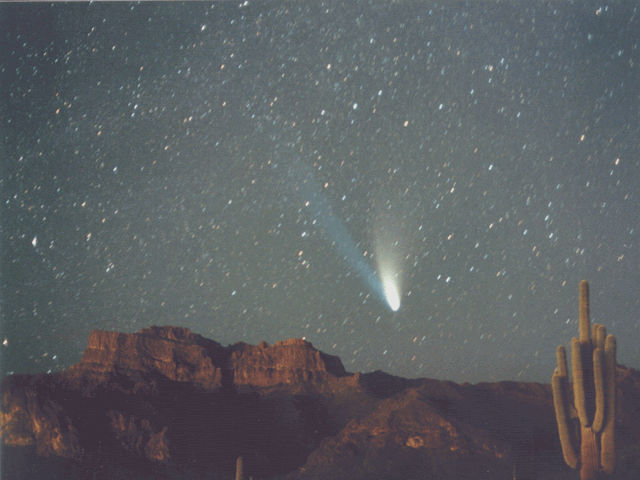
Four years ago, Comet Hale-Bopp was discovered out near Jupiter falling toward the inner Solar System. Two years ago, it provided spectacular pictures as it neared its closest approach to the Sun. Still today, spectacular pictures of the brightest comet of the 1990s are surfacing. Above, Comet Hale-Bopp was photographed in 1997 behind the Superstition Mountains in Arizona. Clearly visible are the comets white dust tail that shines by reflected sunlight, and the blue ion tail that shines by glowing gas. Currently, there are several comets visible from the proper location with a small telescope. A comet visible to the unaided eye appears about once every five years.
Hace cuatro años, el cometa Hale-Bopp fue descubierto cerca de Júpiter cuando se dirigía hacia el Sistema Solar interior. Hace dos años, ofreció imágenes espectaculares al aproximarse al punto más cercano al Sol. Aún hoy siguen apareciendo imágenes impresionantes del cometa más brillante de la década de 1990. En la imagen superior, el cometa Hale-Bopp fue fotografiado en 1997 tras las Montañas Superstition en Arizona. Son claramente visibles la cola de polvo blanca del cometa, que brilla por la luz solar reflejada, y la cola iónica azul, que resplandece por la emisión de gas ionizado. Actualmente, varios cometas son visibles desde ubicaciones adecuadas con un pequeño telescopio. Un cometa visible a simple vista aparece aproximadamente una vez cada cinco años.