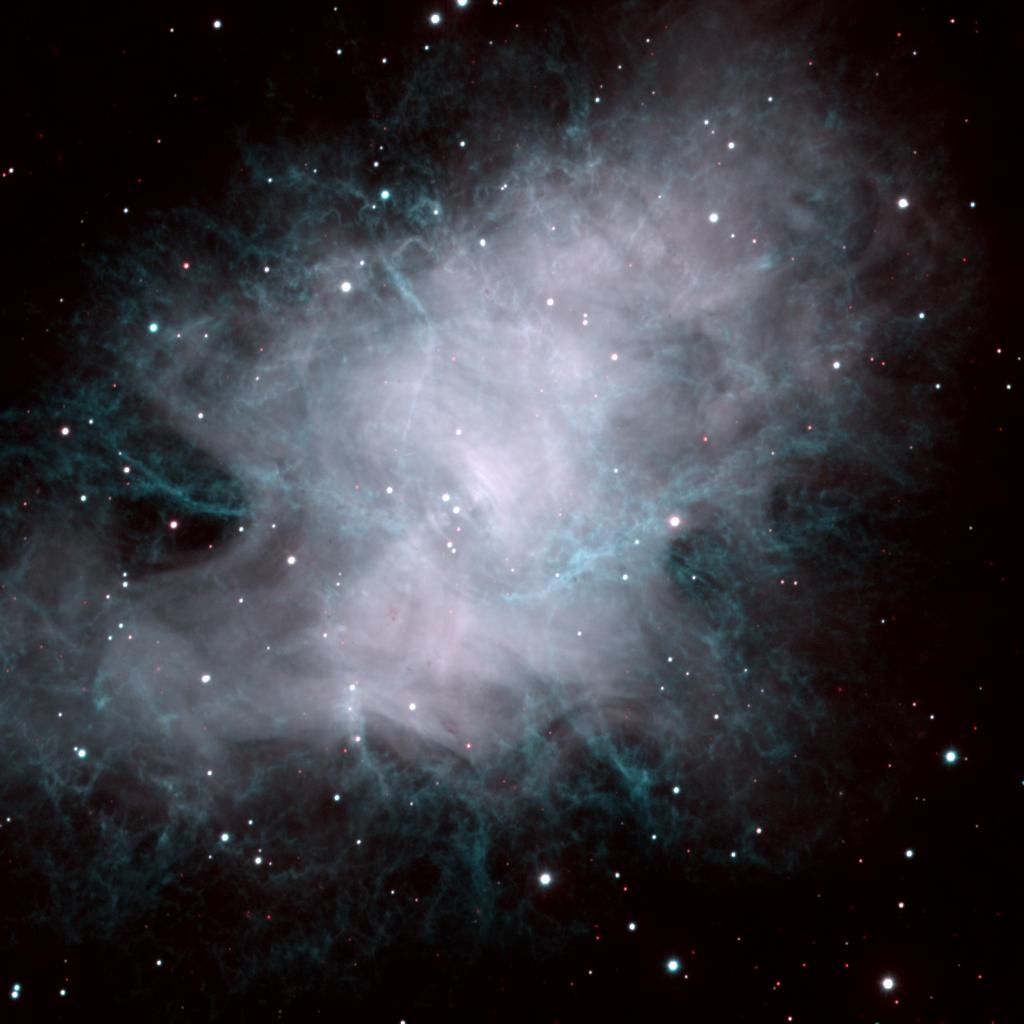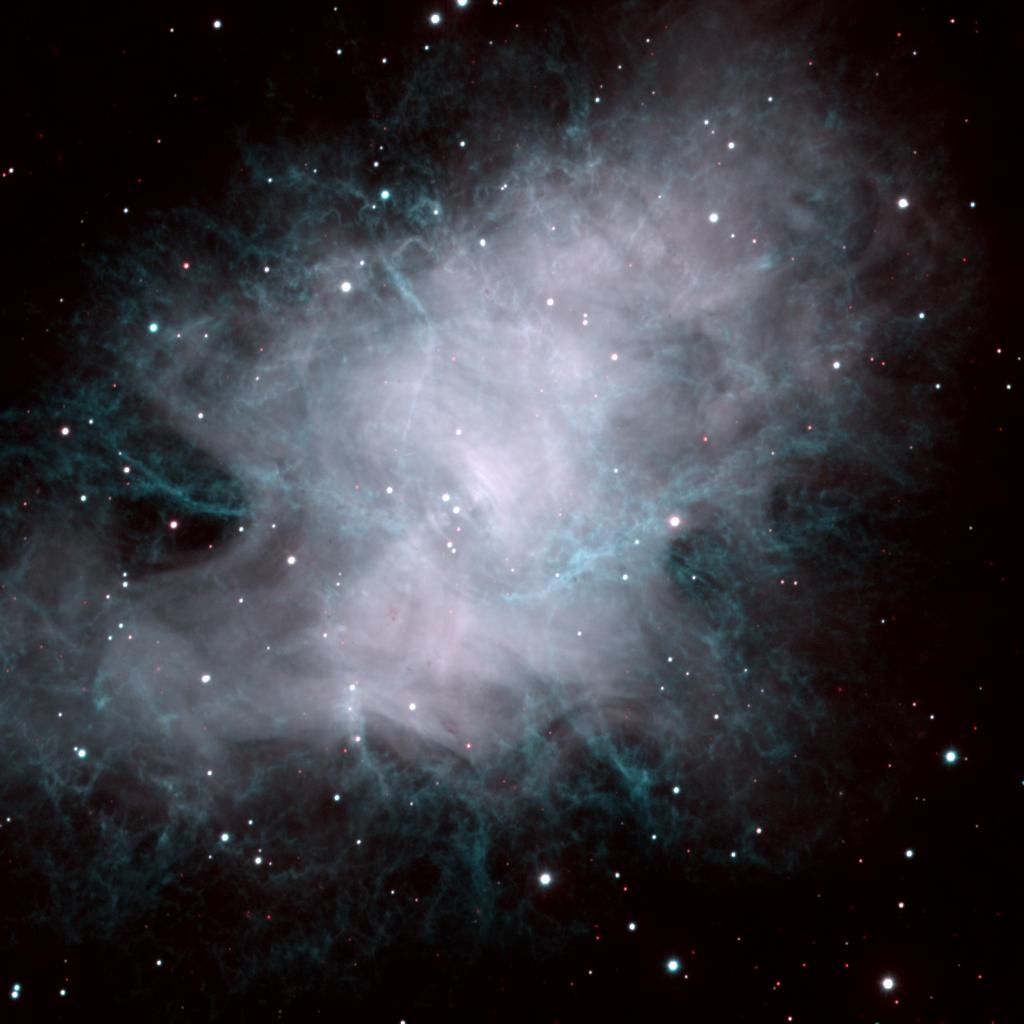
The Crab Nebula is a complex shell of expanding gas. The Crab Nebula formed from a star that was seen to explode in a supernova about 1000 years ago. This two color composite image taken with the WIYN 3.5-meter telescope shows in great detail filamentary structure of the glowing hydrogen gas. Also known as M1, the center is home to a dense neutron star, a star as massive as our Sun but only the size of a city. The neutron star is a pulsar that spins thirty times a second and spits out energy that powers the nebula. The nebula is named from its likeness to a crab in an early drawing. The Crab Nebula still presents mysteries today as the total mass of the nebula and pulsar appears much less than the mass of the original pre-supernova star!
La Nebulosa del Cangrejo es una compleja envoltura de gas en expansión. Se formó a partir de una estrella que se observó explotar en una supernova hace aproximadamente 1000 años. Esta imagen compuesta de dos colores, tomada con el telescopio WIYN de 3,5 metros, muestra en gran detalle la estructura filamentaria del gas de hidrógeno luminiscente. También conocida como M1, su centro alberga una densa estrella de neutrones, una estrella tan masiva como nuestro Sol pero del tamaño de una ciudad. La estrella de neutrones es un púlsar que gira treinta veces por segundo y libera energía que alimenta la nebulosa. La nebulosa recibe su nombre por su semejanza con un cangrejo en un dibujo antiguo. La Nebulosa del Cangrejo aún presenta misterios en la actualidad, ya que la masa total de la nebulosa y el púlsar parece ser mucho menor que la masa de la estrella original anterior a la supernova.