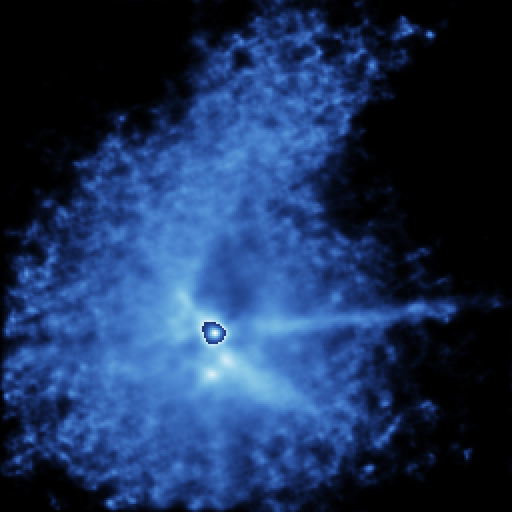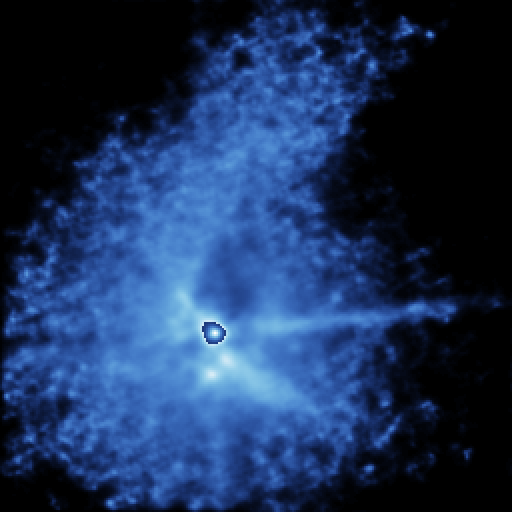
What did the Sun look like before there were planets? A prototype laboratory for the formation of low mass stars like our Sun is the T Tauri system, one of the brighter star systems toward the constellation of Taurus. In young systems, gravity causes a gas cloud to condense. The situation then usually becomes quite complex, as some of the infalling gas is heated so much by collisions that it is immediately expelled as an outgoing wind. Complex geometries including jets and disks form as the infalling and outflowing gas collide and interact with a changing magnetic field. Pictured above is a false-color image of the T Tauri system itself, which turns out to be a binary. In a few million years, the central condensate will likely become hot enough to ignite nuclear fusion, by which time much of the surrounding circumstellar material will either have fallen in or have been driven off by the stellar wind. At that time, a new star will shine.
¿Cómo se veía el Sol antes de que existieran los planetas? Un laboratorio prototípico para la formación de estrellas de baja masa como nuestro Sol es el sistema T Tauri, uno de los sistemas estelares más brillantes en la constelación de Tauro. En sistemas jóvenes, la gravedad hace que una nube de gas se condense. La situación suele volverse bastante compleja, ya que parte del gas que cae es calentado tanto por colisiones que es expulsado inmediatamente como un viento saliente. Geometrías complejas, incluyendo chorros y discos, se forman cuando el gas que cae y el que fluye hacia afuera colisionan e interactúan con un campo magnético en constante cambio. La imagen en falso color mostrada arriba es del sistema T Tauri mismo, que resulta ser un sistema binario. En unos pocos millones de años, el condensado central probablemente se calentará lo suficiente como para iniciar la fusión nuclear, para entonces gran parte del material circunestelar habrá caído o será expulsado por el viento estelar. En ese momento, brillará una nueva estrella.