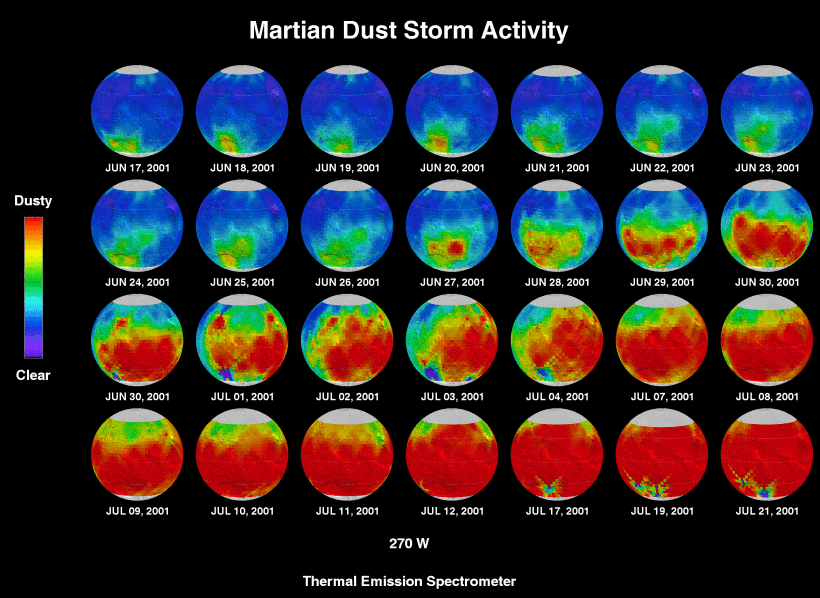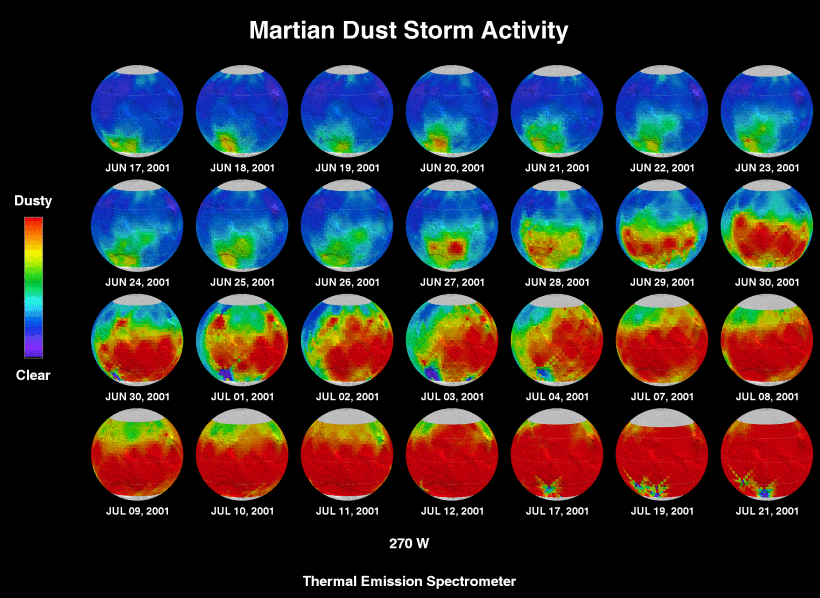
If you've been unhappy with the weather on Earth, check out Mars, now in the grip of a planet-wide dust storm. Above, observations from the orbiting Mars Global Surveyor (MGS) spacecraft illustrate the storm's progress through July 21. The series of dated frames show measurements from the MGS Thermal Emission Spectrometer which can determine both temperature and amount of atmospheric dust. Dust data has been plotted on maps of the martian surface with blue representing relatively clear atmosphere and red colors indicating increasing concentrations of dust. In mid June, scientists first noticed the beginnings of the storm in Mars' southern hemisphere and have watched it grow to obscure most of the planet. Unfortunately for Mars-watchers, the timing of the storm has hidden the Red Planet's surface from view during its period of close approach to planet Earth.
Si no estás contento con el clima en la Tierra, echa un vistazo a Marte, ahora atrapado en una tormenta de polvo a escala planetaria. Arriba, observaciones del orbitador Mars Global Surveyor (MGS) ilustran el progreso de la tormenta hasta el 21 de julio. La serie de imágenes con fechas muestra mediciones del Espectrómetro de Emisión Térmica del MGS, que puede determinar tanto la temperatura como la cantidad de polvo atmosférico. Los datos de polvo se han representado en mapas de la superficie marciana, con el azul representando una atmósfera relativamente clara y los colores rojos indicando concentraciones crecientes de polvo. A mediados de junio, los científicos notaron por primera vez los inicios de la tormenta en el hemisferio sur de Marte y han observado su crecimiento hasta ocultar la mayor parte del planeta. Desafortunadamente para los observadores de Marte, la tormenta ha ocultado la superficie del Planeta Rojo durante su periodo de acercamiento máximo a la Tierra.