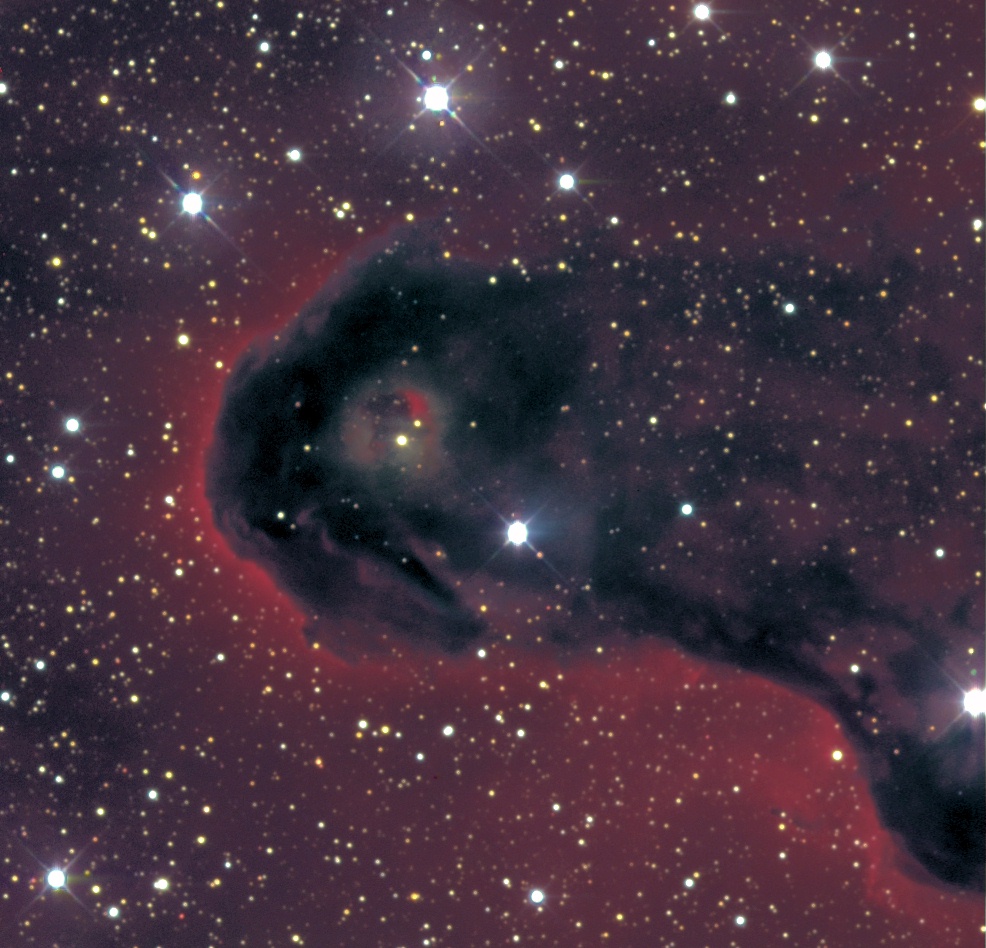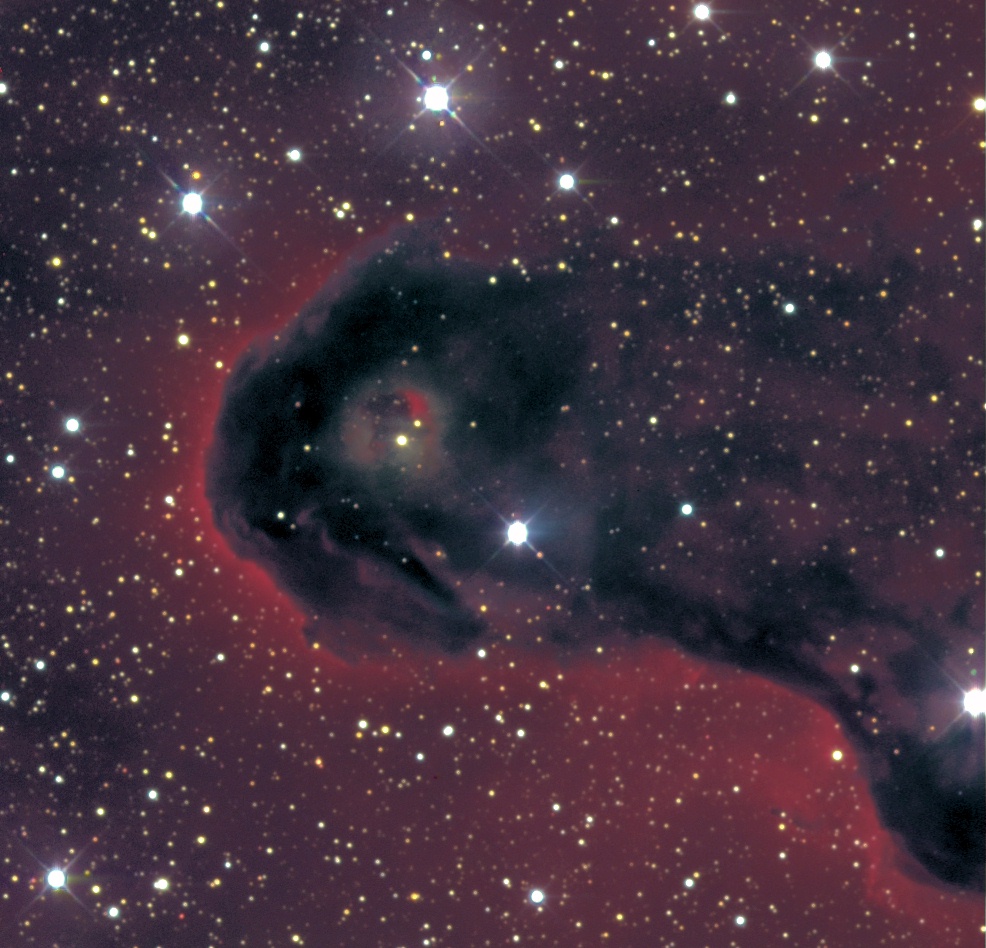
A gorgeous collection of dust and gas nebulae in the Northern Milky Way graces the high and far off constellation of Cepheus. With colors based on astronomical filters, this close up of the region highlights stars embedded in curiously shaped cosmic clouds. Near the central faint (9th magnitude) star in the image, dust clouds reflect the starlight, creating a bluish reflection nebula cataloged in 1966 as VDB 142. The area's bright reddish emission nebulae indicate the presence of clouds of atomic hydrogen gas. Stripped of electrons by invisible ultraviolet light, the hydrogen atoms emit their characteristic visible red light as electrons and atoms recombine. Sweptback clouds of obscuring dust, dark nebulae, are silhouetted against the bright background. Representing the stuff stars are made of, all these nebulae lie within the large young star cluster complex IC 1396, 3,000 light years from Earth.
Una hermosa colección de nubes de gas y polvo en la Vía Láctea norteña adorna la constelación elevada y distante de Cefeo. Con colores basados en filtros astronómicos, esta imagen detallada de la región resalta estrellas incrustadas en nubes cósmicas de formas curiosas. Cerca de la estrella central tenue (de magnitud 9) en la imagen, las nubes de polvo reflejan la luz estelar, creando una nebulosa de reflexión azulada catalogada en 1966 como VDB 142. Las nebulosas emisoras brillantes de color rojizo en la zona indican la presencia de nubes de gas hidrógeno atómico. Los electrones son arrancados por la luz ultravioleta invisible, y los átomos de hidrógeno emiten su característica luz roja visible al recombinarse los electrones con los átomos. Nubes oscuras de polvo, conocidas como nebulosas oscuras, se siluetean contra el fondo brillante. Representando la materia de la cual se forman las estrellas, todas estas nebulosas se encuentran dentro del complejo de cúmulo estelar joven y extenso IC 1396, a 3000 años luz de la Tierra.