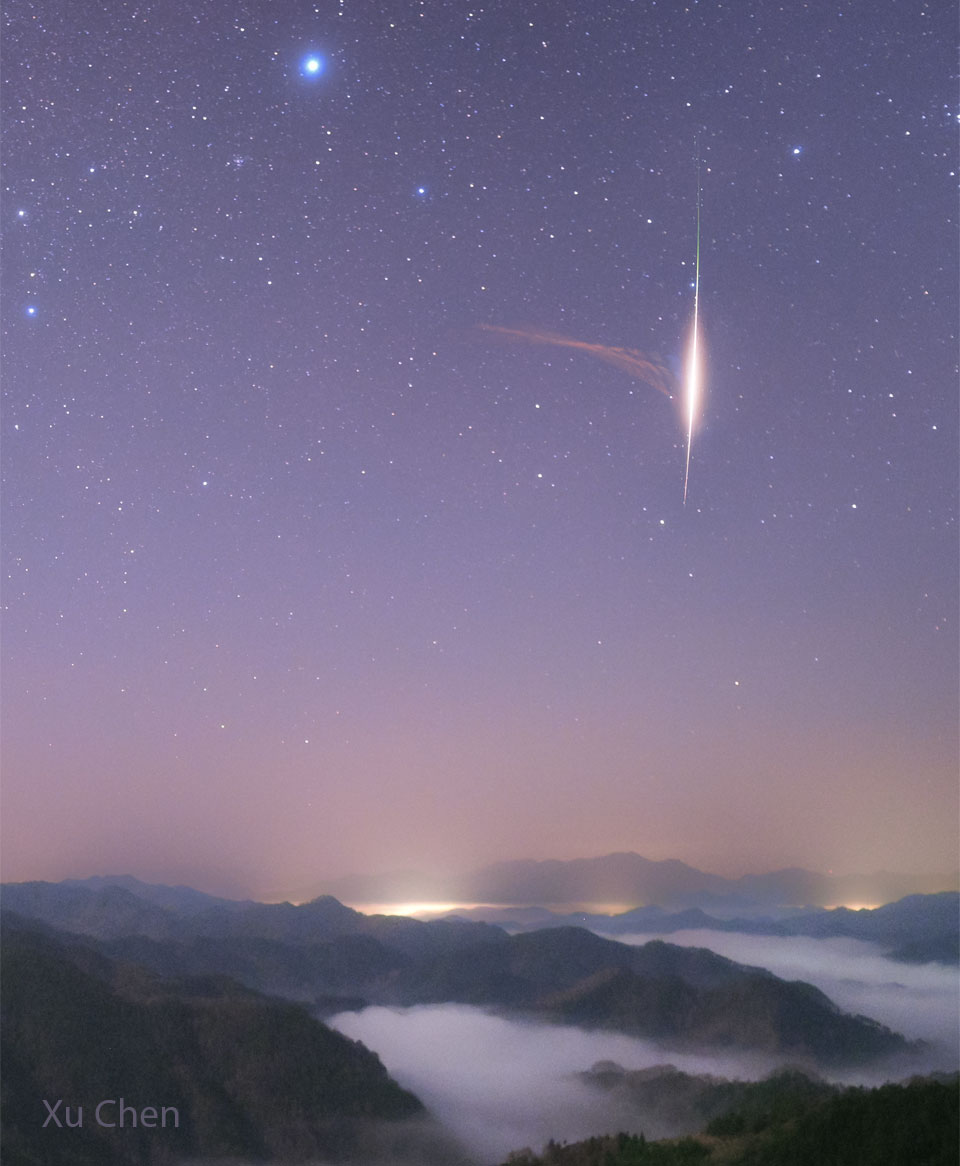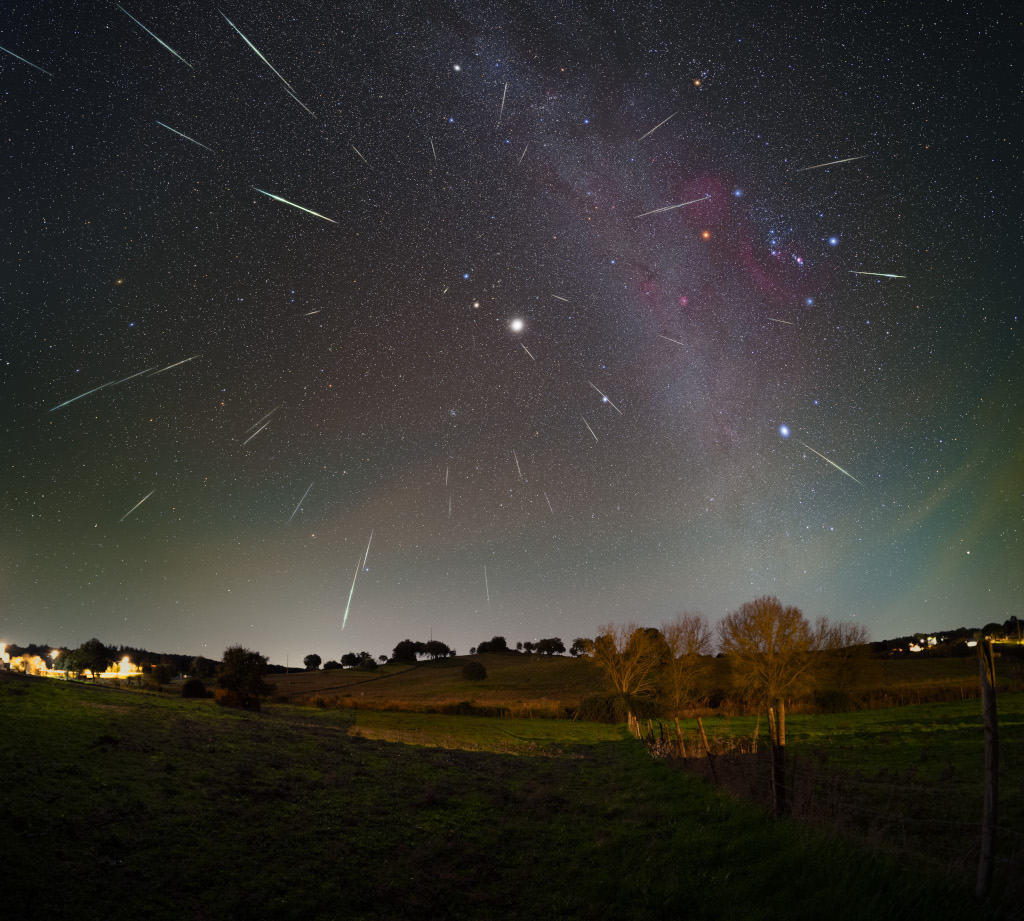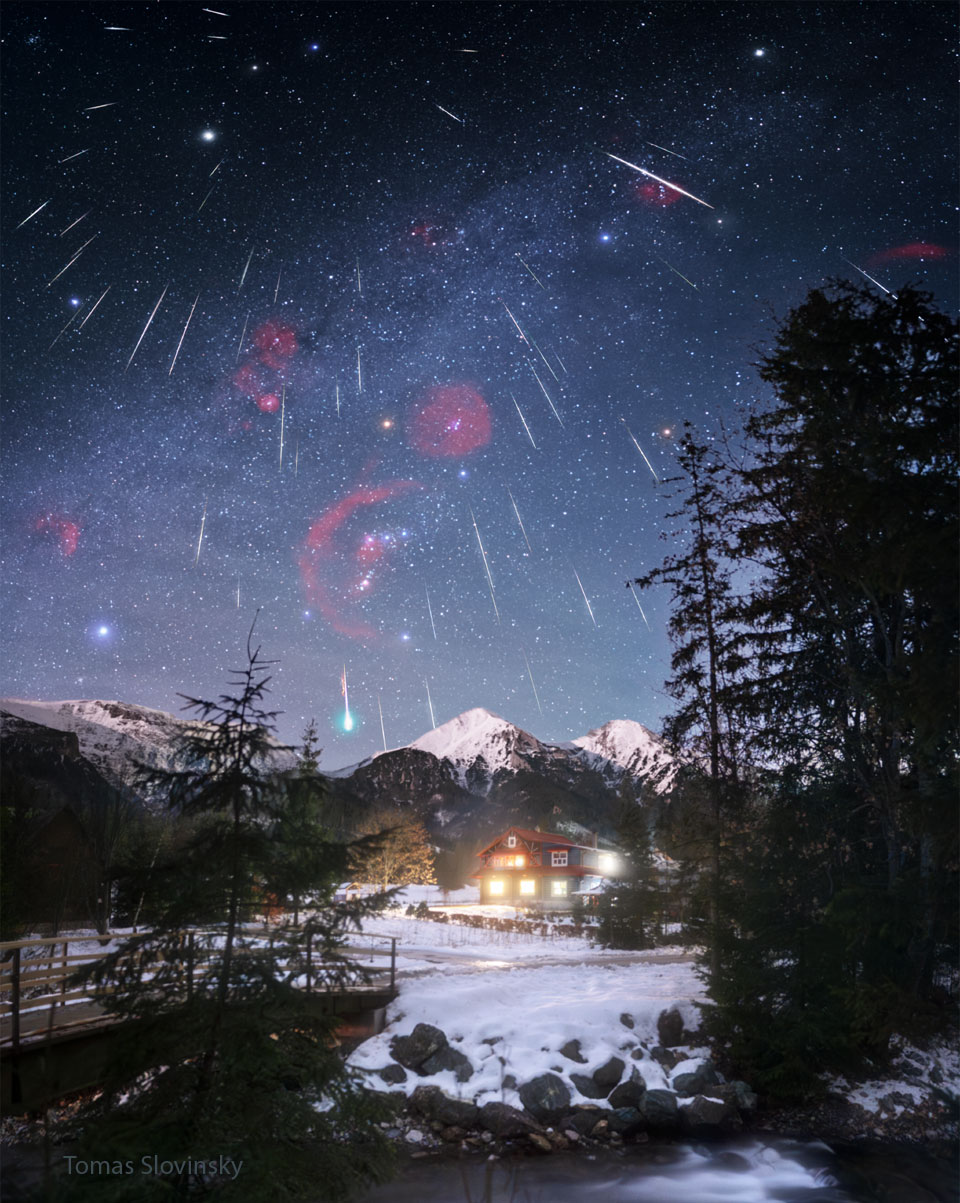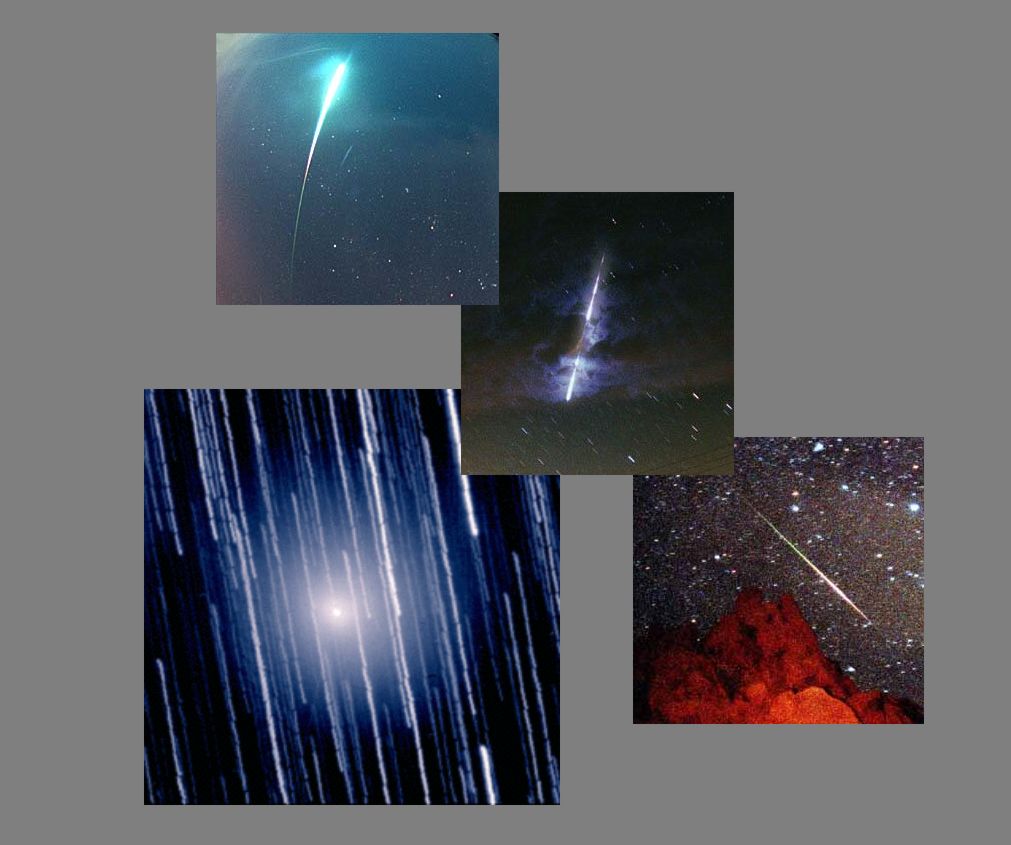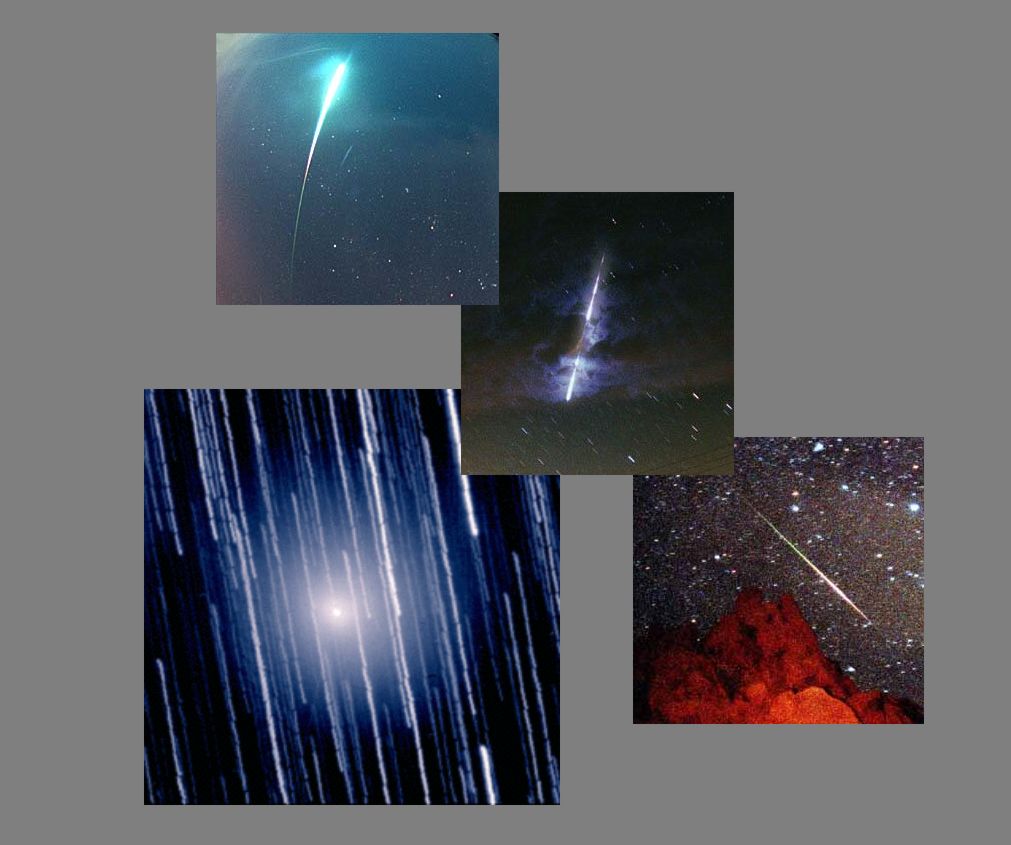
Will the Leonids storm this year? The annual Leonid meteor shower should peak this weekend and some predictions suggest that "storm" rates of a thousand or more meteors per hour are possible for observers located in eastern North and Central America during the early morning hours of Sunday, November 18. Similar high rates are also anticipated for the western Pacific region on the morning of November 19th. In any event, the 2001 Leonid shower should be dramatic and easy to watch, as were the Leonids of recent years. From top left to bottom right above are spectacular examples of bright fireball meteors from the 1998 Leonid shower as recorded by V. Winter and J. Dudley, Lorenzo Lovato, and Wally Pacholka. A 1998 image from the Puckett Observatory at lower left features the source of the debris stream which supplies the Leonid meteors, comet Tempel-Tuttle.
¿Los Leonidas causarán una tormenta este año? La lluvia anual de meteoros Leonidas debería alcanzar su máximo este fin de semana, y algunas predicciones sugieren que podrían observarse tasas de 'tormenta' de mil o más meteoros por hora para observadores ubicados en el este de Norteamérica y América Central durante las primeras horas de la mañana del domingo 18 de noviembre. Se anticipan tasas similares en la región del Pacífico occidental durante la mañana del 19 de noviembre. En cualquier caso, la lluvia de Leonidas de 2001 debería ser espectacular y fácil de observar, al igual que las lluvias de Leonidas de los años recientes. Arriba, de la esquina superior izquierda a la esquina inferior derecha, se muestran ejemplos asombrosos de meteoros brillantes de la lluvia de Leonidas de 1998, registrados por V. Winter y J. Dudley, Lorenzo Lovato y Wally Pacholka. Una imagen de 1998 del Observatorio Puckett en la esquina inferior izquierda muestra la fuente del flujo de escombros que suministra los meteoros Leonidas, el cometa Tempel-Tuttle.