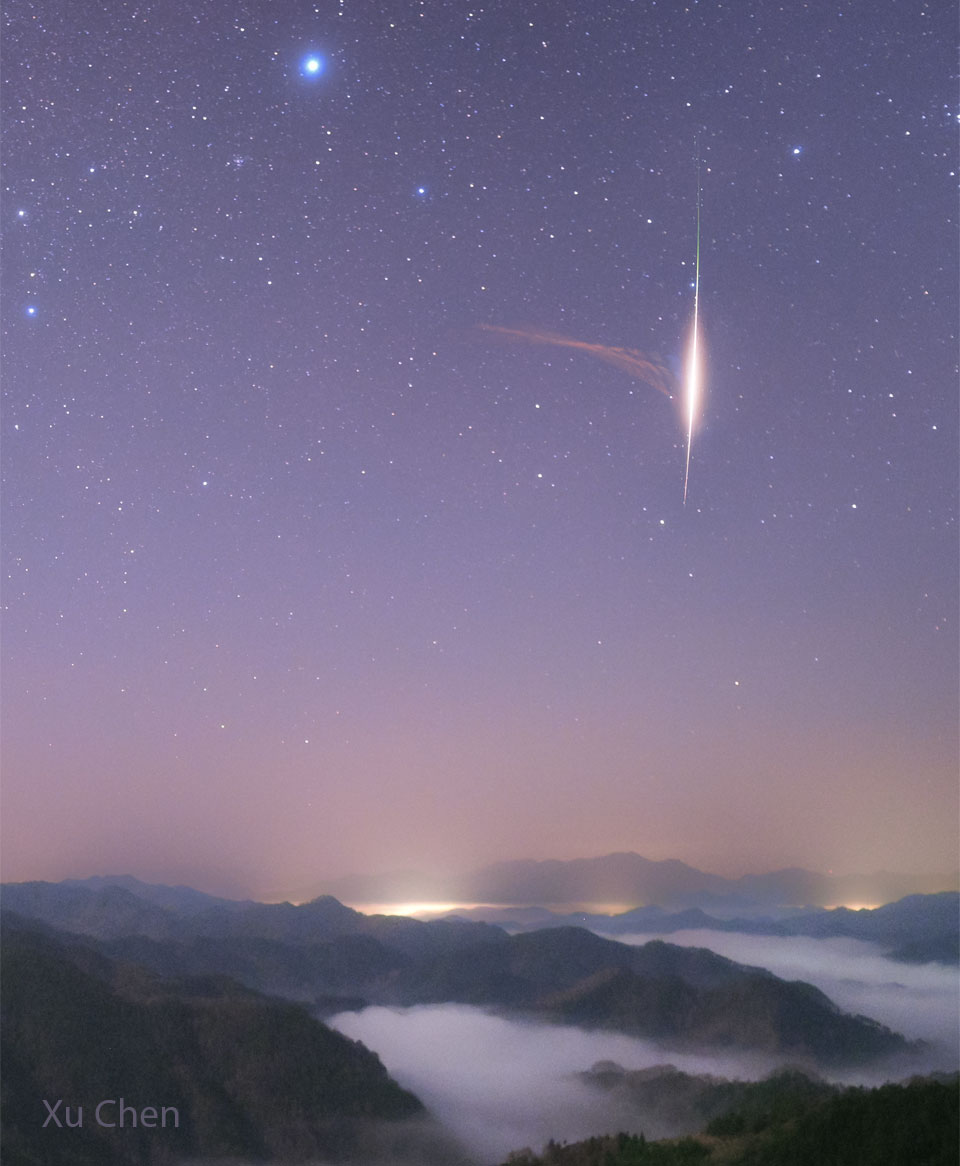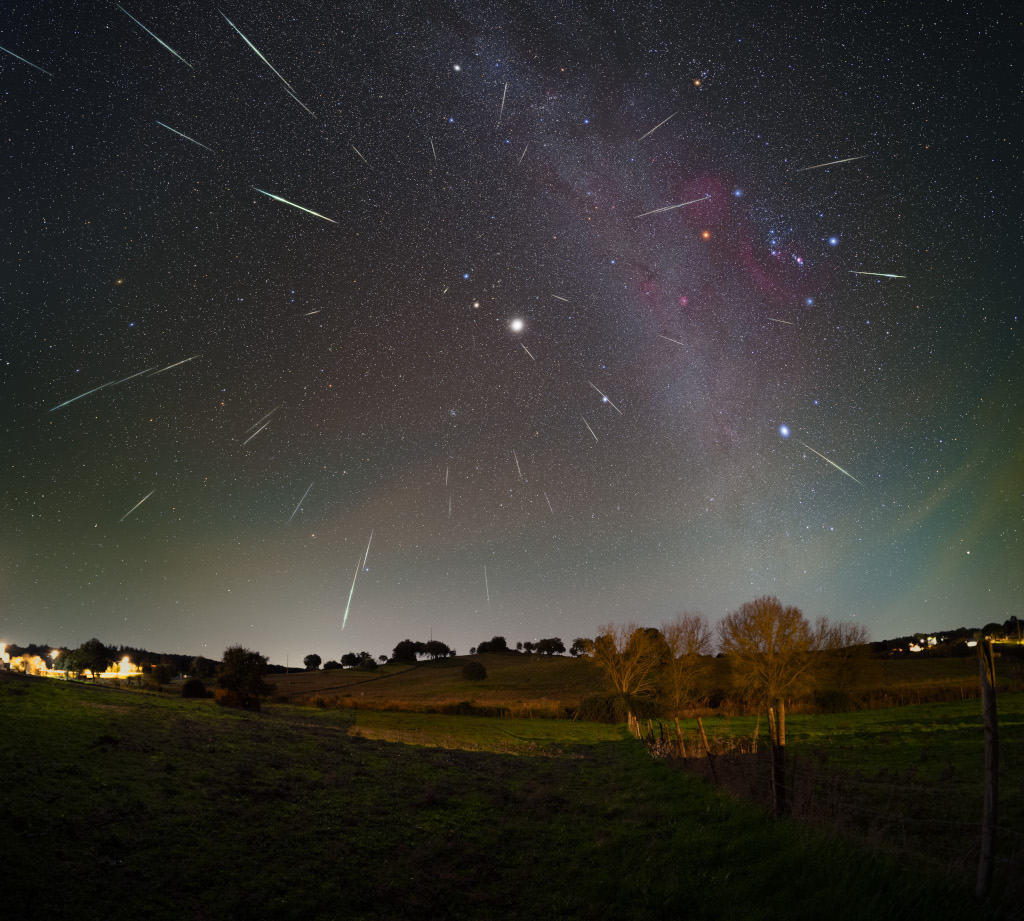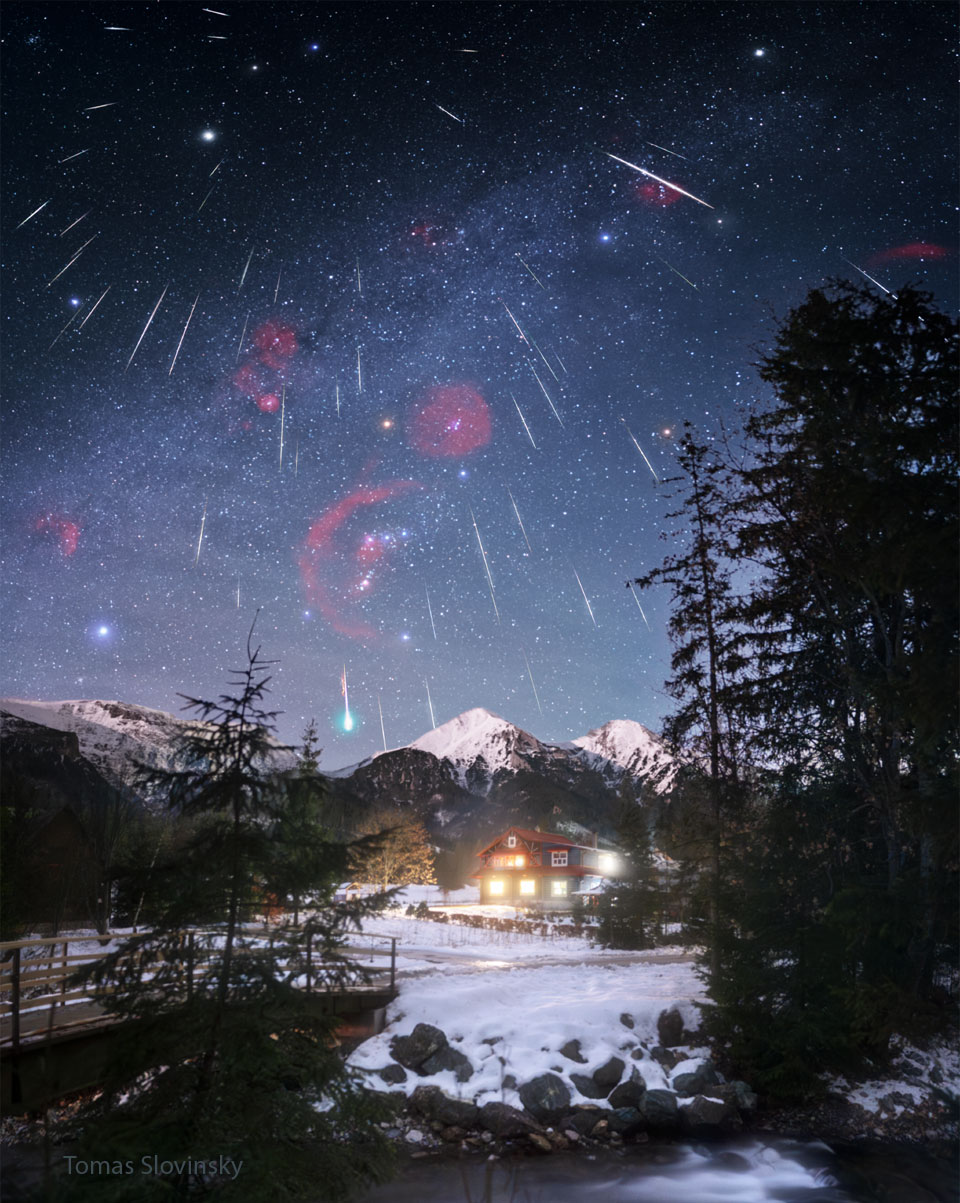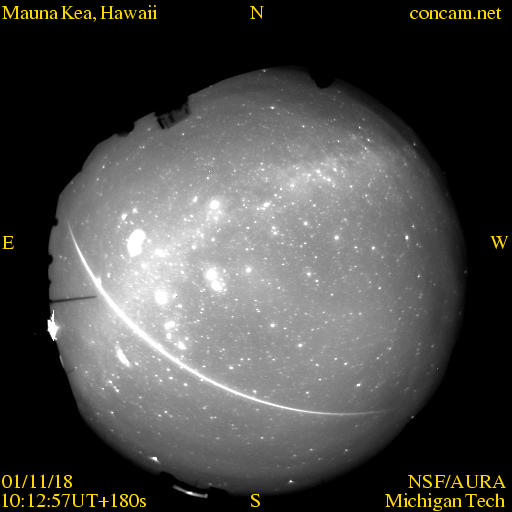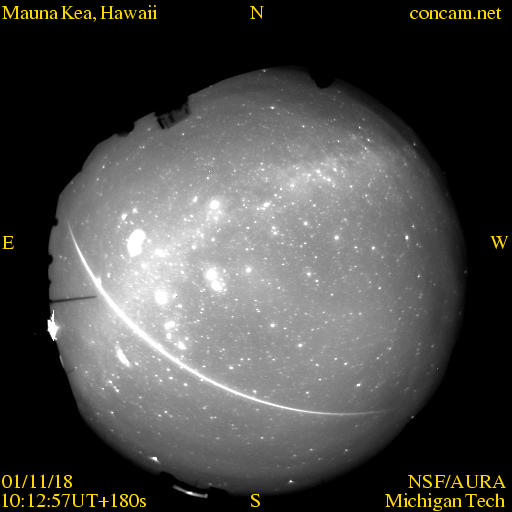
The 2001 Leonids Meteor Shower gave quite a show to many parts of the world yesterday during the early morning hours. Many sleepy observers venturing into their own backyards were treated to several bright meteors per minute streaking across the sky. This rate made the 2001 Leonids the most active meteor shower in over three decades. Pictured above is a bright Leonid fireball that briefly lit up Hawaii yesterday morning. A CONCAM nighttime all-sky monitor on Mauna Kea, a dormant volcano, caught the bright meteor, seen as the very bright streak across the lower part of the fisheye image. The meteor track crossed the Galactic plane (the faint glow that runs from the lower left to upper right), passed below the planet Jupiter, and through the constellation Orion. CONCAMs in Hawaii, Arizona, and California all recorded numerous bright meteors during this year's Leonids.
La lluvia de meteoros de los Leónidas de 2001 ofreció un espectáculo notable a muchas partes del mundo ayer durante las primeras horas de la mañana. Muchos observadores somnolientos que salieron a sus propios jardines fueron recompensados con varios meteoros brillantes por minuto cruzando el cielo. Esta tasa convirtió a los Leónidas de 2001 en la lluvia de meteoros más activa en más de tres décadas. En la imagen de arriba se muestra una bola de fuego leonídea que iluminó brevemente Hawái ayer por la mañana. Un monitor nocturno de todo el cielo CONCAM en Mauna Kea, un volcán dormido, capturó el meteoro brillante, visible como el rastro muy luminoso en la parte inferior de la imagen de tipo pez globo. La trayectoria del meteoro cruzó el plano galáctico (el tenue resplandor que se extiende desde la esquina inferior izquierda hasta la superior derecha), pasó por debajo del planeta Júpiter y atravesó la constelación de Orión. Los CONCAM en Hawái, Arizona y California registraron numerosos meteoros brillantes durante los Leónidas de este año.