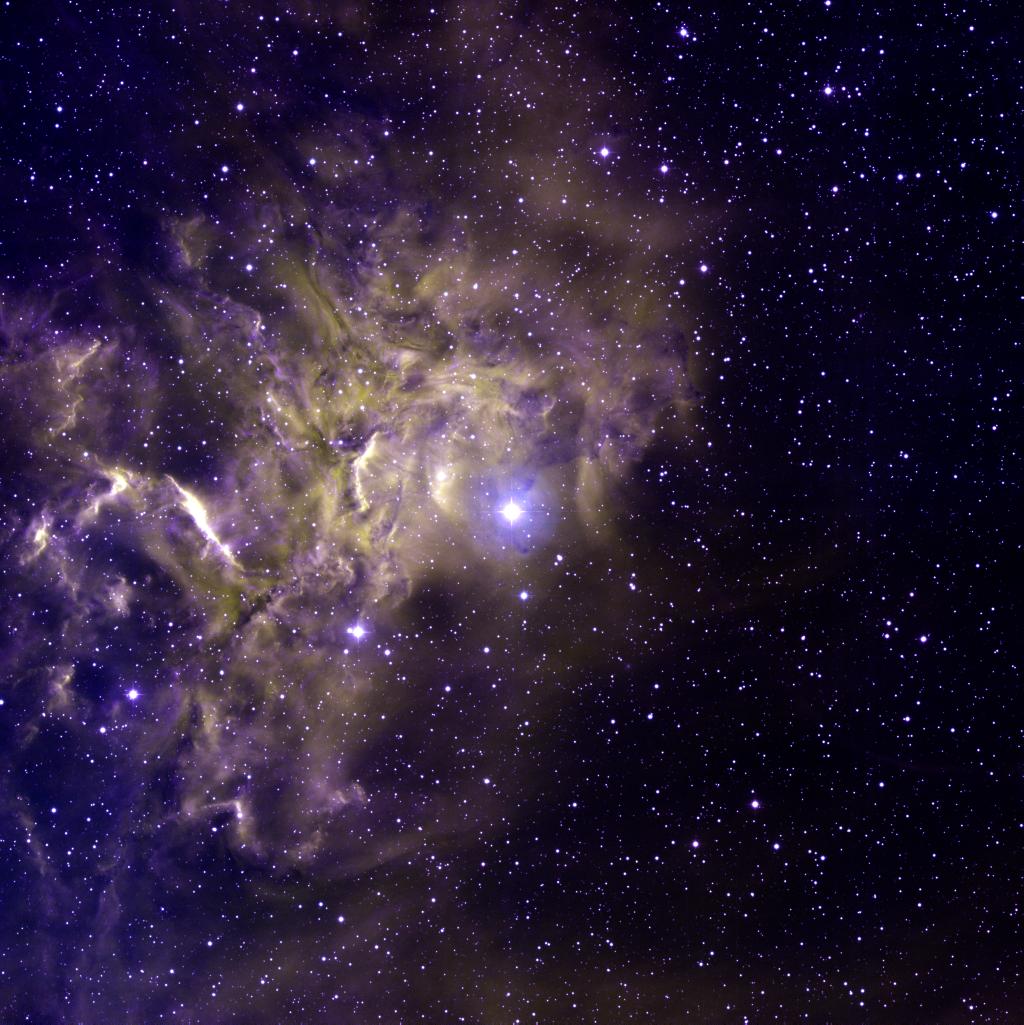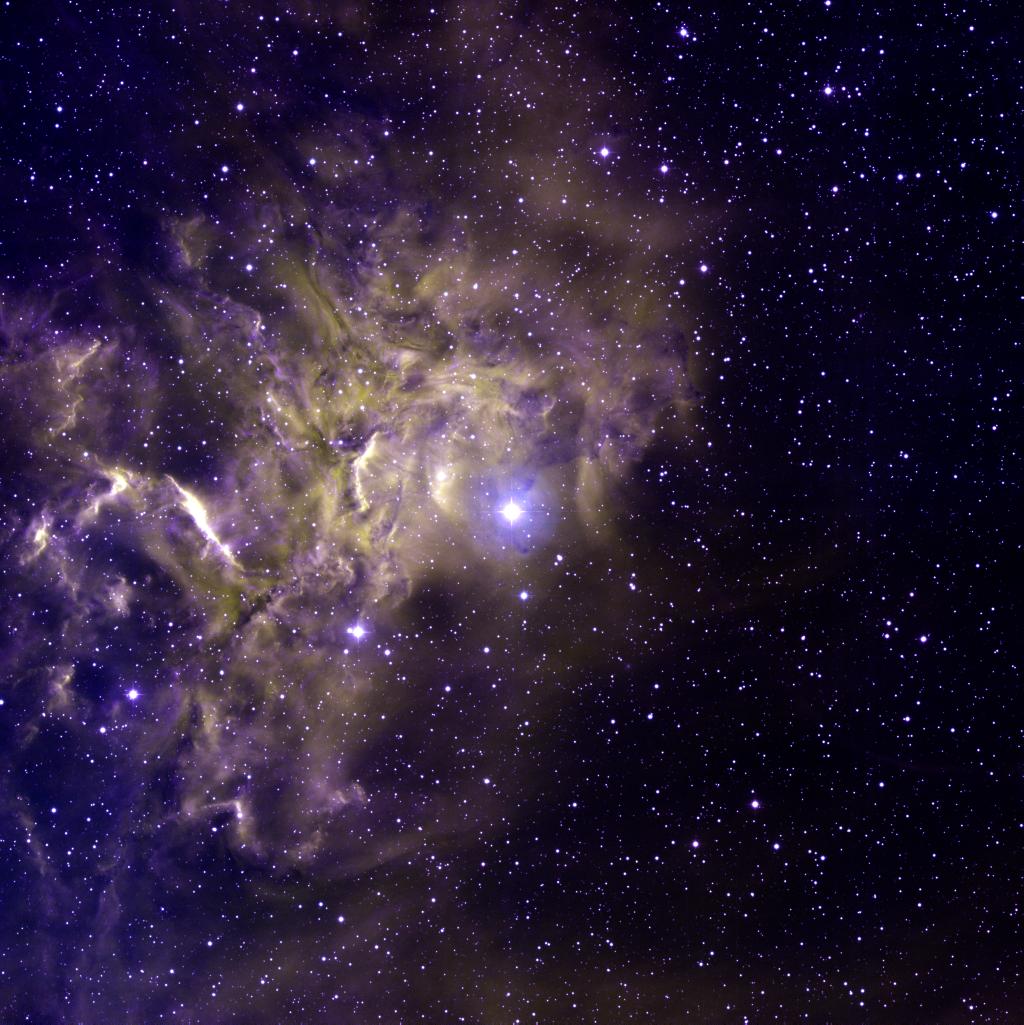
Is star AE Aurigae on fire? Although surrounded by what may look like smoke, the object known as the "flaming star" creates energy primarily by nuclear fusion, like other stars. Fire, typically defined as the rapid molecular acquisition of oxygen, happens only when sufficient oxygen is present and is not important in such high-energy, low-oxygen environments such as stars. The material that appears as smoke is mostly interstellar hydrogen, but does contain smoke-like dark filaments of carbon-rich dust grains. The AE Aurigae region was imaged by the KPNO 0.9-meter telescope and is shown above in false but representative colors. The star AE Aurigae itself is very bright, young, blue, and known as a runaway star since it appears to have been ejected from the Orion Nebula region about 2.7 million years ago.
¿Está en llamas la estrella AE Aurigae? Aunque rodeada por lo que podría parecer humo, el objeto conocido como la 'estrella flameante' genera energía principalmente mediante fusión nuclear, al igual que otras estrellas. El fuego, definido típicamente como la rápida adquisición molecular de oxígeno, ocurre solo cuando hay suficiente oxígeno presente y no es importante en entornos de alta energía y bajo oxígeno como los de las estrellas. El material que aparece como humo es en su mayoría hidrógeno interestelar, pero contiene filamentos oscuros similares a humo compuestos por partículas de polvo ricas en carbono. La región de AE Aurigae fue fotografiada por el telescopio KPNO de 0.9 metros y se muestra arriba en colores falsos pero representativos. La estrella AE Aurigae en sí es muy brillante, joven, azul y conocida como una estrella fugitiva, ya que parece haber sido expulsada de la región de la Nebulosa de Orión hace aproximadamente 2.7 millones de años.