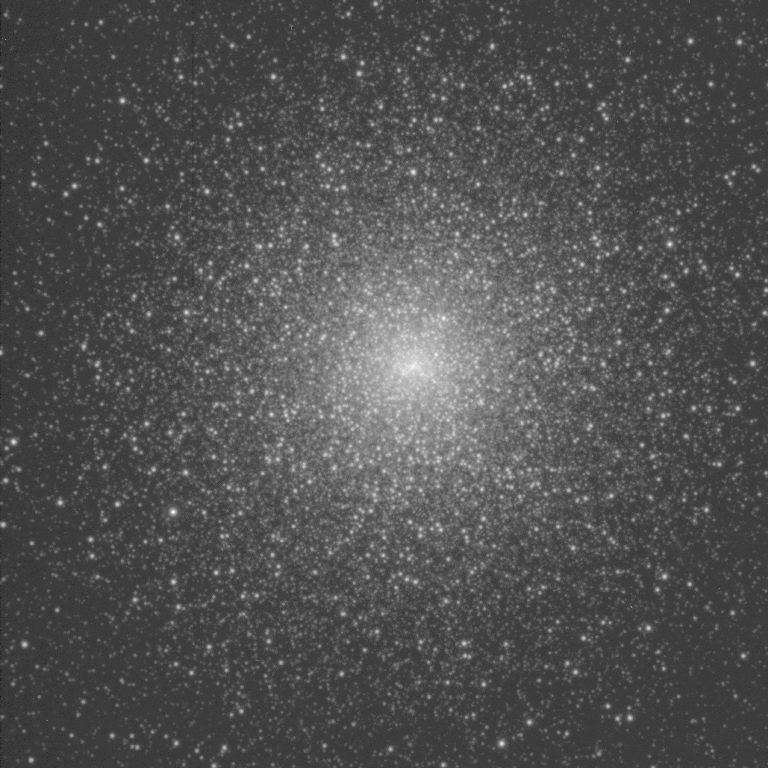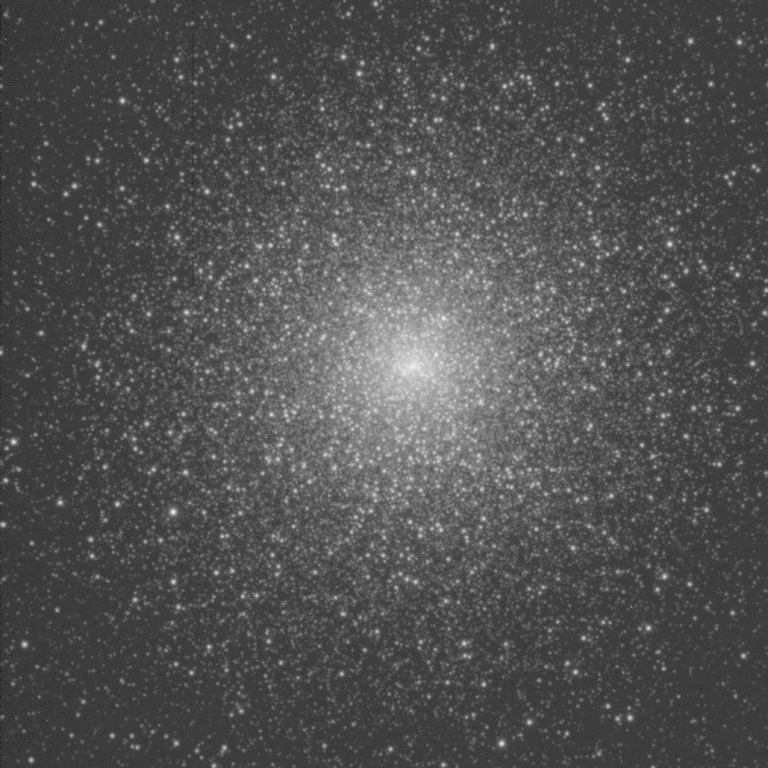
Stars, like bees, swarm around the center of bright globular cluster M15. This ball of over 100,000 stars is a relic from the early years of our Galaxy, and continues to orbit the Milky Way's center. M15, one of about 150 globular clusters remaining, is noted for being easily visible with only binoculars, having at its center one of the densest concentrations of stars known, and containing a high abundance of unusual variable stars and pulsars. The above image, taken in ultraviolet light with the WIYN Telescope, spans about 120 light years and shows the gradual increase in stars toward the cluster's center. M15 lies about 35,000 light years away toward the constellation of Pegasus. Recent evidence indicates that a massive black hole might reside as the center of M15.
Las estrellas, como abejas, se agrupan alrededor del centro del brillante aglomerado globular M15. Esta bola de más de 100 000 estrellas es un vestigio de los primeros años de nuestra galaxia y continúa orbitando el centro de la Vía Láctea. M15, uno de los aproximadamente 150 aglomerados globulares restantes, destaca por ser fácilmente visible con solo binoculares, por tener en su centro una de las concentraciones más densas de estrellas conocidas y por contener una alta abundancia de estrellas variables y púlsares inusuales. La imagen superior, tomada en luz ultravioleta con el telescopio WIYN, abarca unos 120 años luz y muestra el aumento progresivo de estrellas hacia el centro del aglomerado. M15 se encuentra a unos 35 000 años luz de distancia, en dirección a la constelación de Pegaso. Evidencia reciente indica que podría existir un agujero negro masivo en el centro de M15.