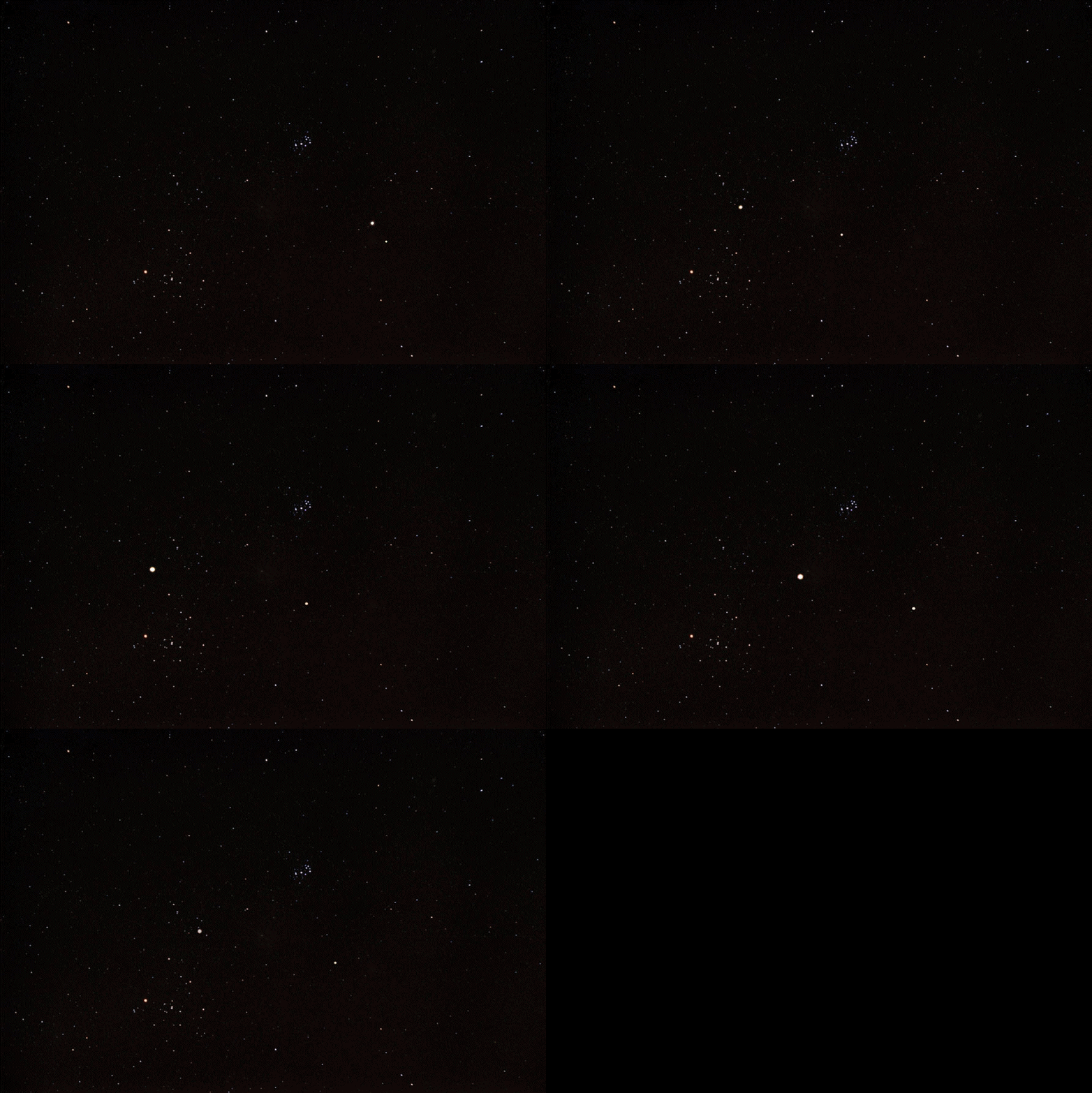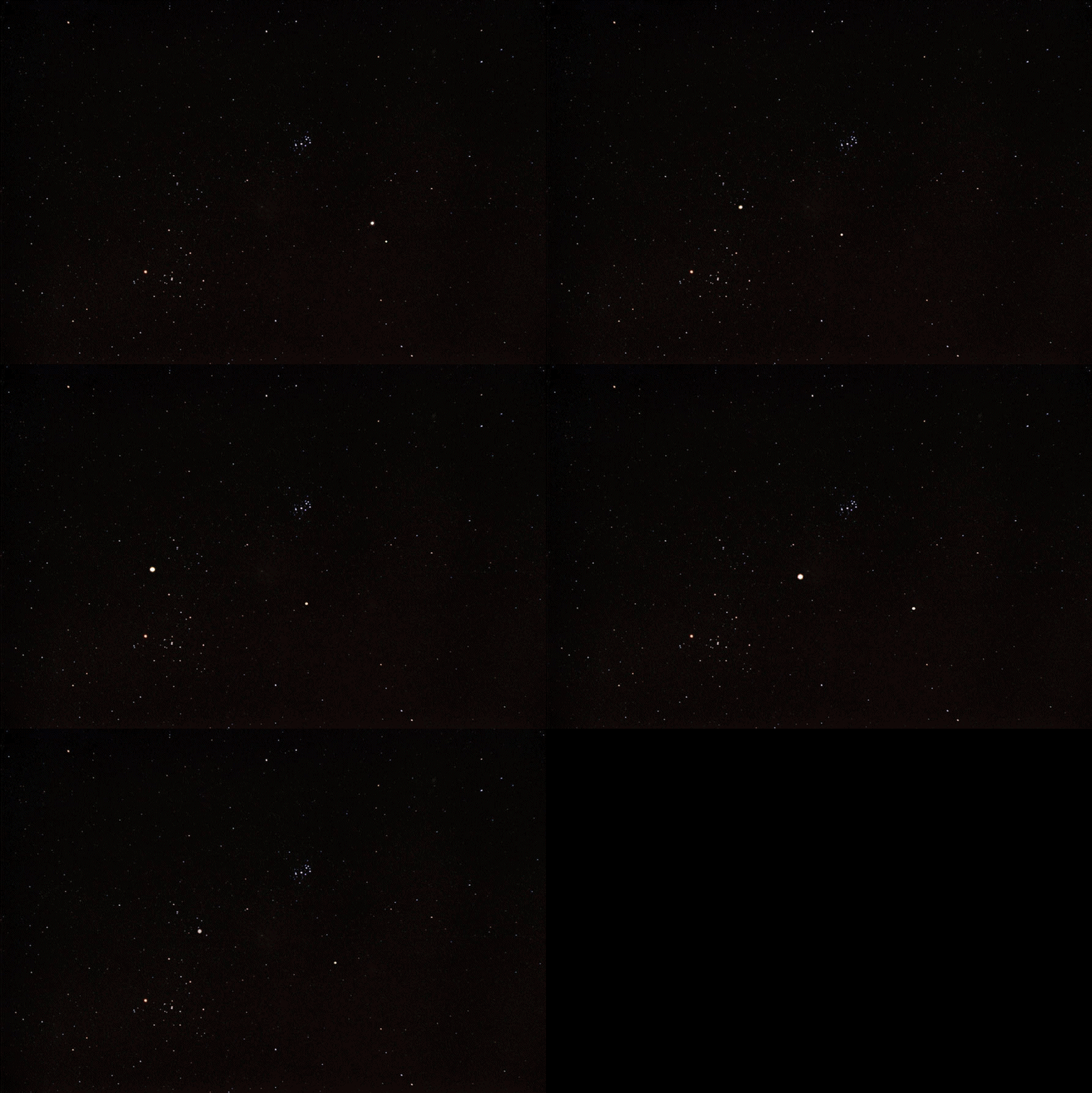
Viewed from Earth, the solar system's planets do a cosmic dance that is hard to appreciate on any single night. But consider this well planned animated sequence combining 23 pictures taken at approximately 2 week intervals from June 2000 through May 2001. It reveals the graceful looping or retrograde motion of bright wanderers Jupiter (leftmost) and Saturn. Loitering among the background stars are the familiar Pleiades (above right) and V-shaped Hyades (below left) star clusters. The planets didn't actually loop by reversing the direction of their orbits, though. Their apparent retrograde motion is a reflection of the motion of the Earth itself. Retrograde motion can be seen each time Earth overtakes and laps planets orbiting farther from the Sun, Earth moving more rapidly through its own relatively close-in orbit. Astronomer Tunc Tezel captured Jupiter and Saturn's "paired" retrograde loop in this remarkable series made after the close alignment of these gas giants in May 2000. The next opportunity to see these two planets dance such a pas de deux will be in the year 2020.
Vistos desde la Tierra, los planetas del sistema solar realizan una danza cósmica que es difícil de apreciar en cualquier noche individual. Pero considere esta secuencia animada bien planificada que combina 23 imágenes tomadas a intervalos de aproximadamente dos semanas desde junio de 2000 hasta mayo de 2001. Revela el movimiento en bucle elegante o movimiento retrógrado de los brillantes planetas errantes Júpiter (el más a la izquierda) y Saturno. Entre las estrellas de fondo se encuentran las conocidas Pléyades (arriba a la derecha) y el grupo estelar en forma de V de las Híades (abajo a la izquierda). Los planetas no realmente realizaron un bucle al invertir la dirección de sus órbitas, sin embargo. Su movimiento retrógrado aparente es una reflexión del movimiento de la Tierra misma. El movimiento retrógrado se puede observar cada vez que la Tierra rebasa y da una vuelta a los planetas que orbitan más lejos del Sol, ya que la Tierra se mueve más rápidamente a través de su órbita relativamente cercana. El astrónomo Tunc Tezel capturó el bucle retrógrado