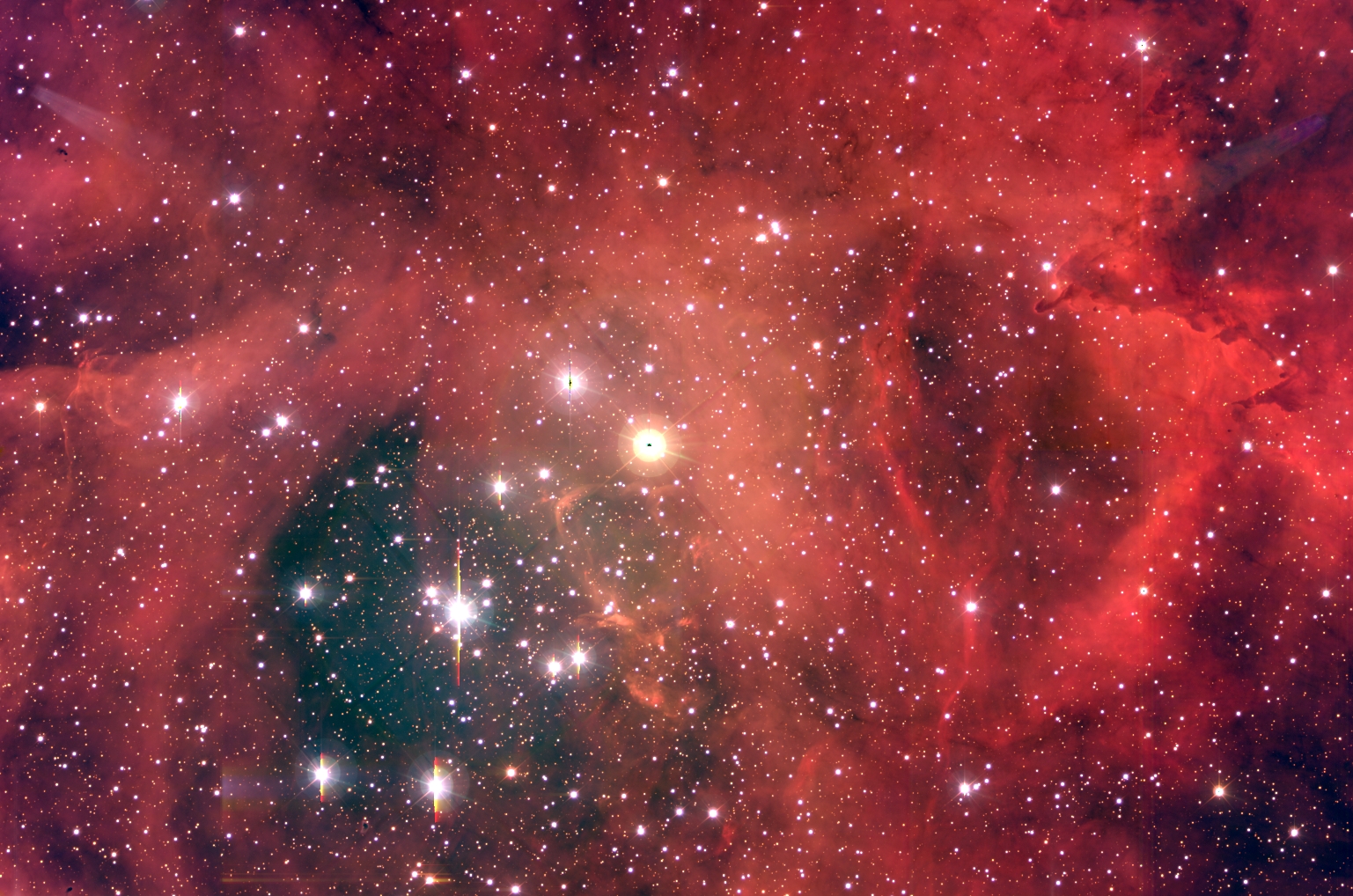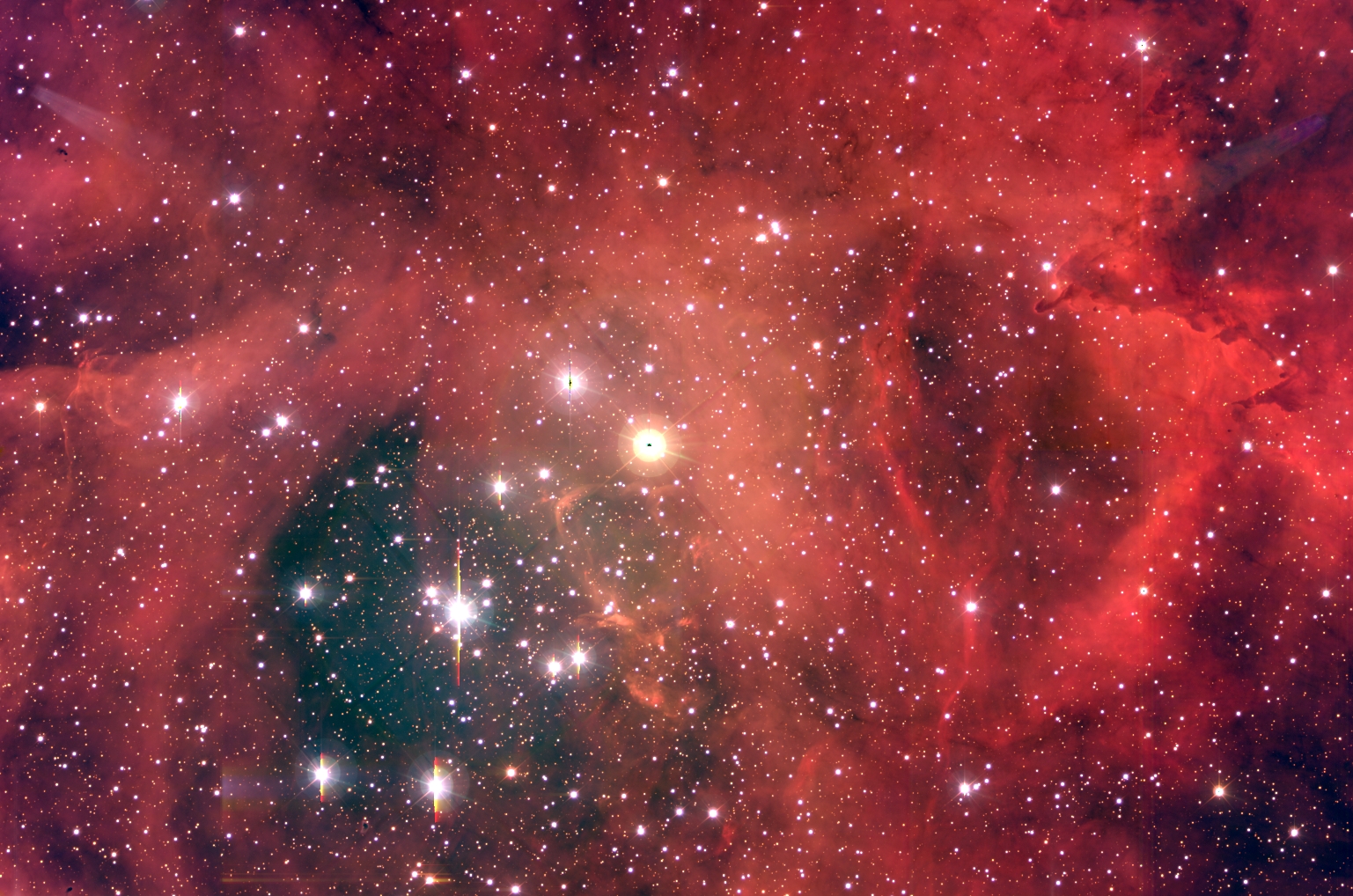
In the heart of the Rosette Nebula lies a bright open cluster of stars that lights up the nebula. The stars of NGC 2244 formed from the surrounding gas only four million years ago and emit light and wind that define the nebula's appearance today. High energy light from the bright young stars of NGC 2244 ionizes the surrounding hydrogen gas clouds to create the red emission nebula appearance. The hot wind of particles that streams away from the cluster stars contributes to an already complex menagerie of gas and dust filaments while slowly evacuating the cluster center. NGC 2244 measures about 50 light-years across, lies about 4500 light-years away, and is visible with binoculars towards the constellation of Monoceros.
En el corazón de la Nebulosa de la Roseta se encuentra un brillante cúmulo abierto de estrellas que ilumina la nebulosa. Las estrellas de NGC 2244 se formaron a partir del gas circundante hace solo cuatro millones de años y emiten luz y viento que definen la apariencia de la nebulosa en la actualidad. La luz de alta energía de las jóvenes y brillantes estrellas de NGC 2244 ioniza las nubes de gas hidrógeno circundante para crear la apariencia de nebulosa de emisión roja. El viento caliente de partículas que fluye desde las estrellas del cúmulo contribuye a una compleja variedad de filamentos de gas y polvo, mientras evacúa lentamente el centro del cúmulo. NGC 2244 mide aproximadamente 50 años luz de diámetro, se encuentra a unos 4500 años luz de distancia y es visible con binoculares hacia la constelación de Monoceros.