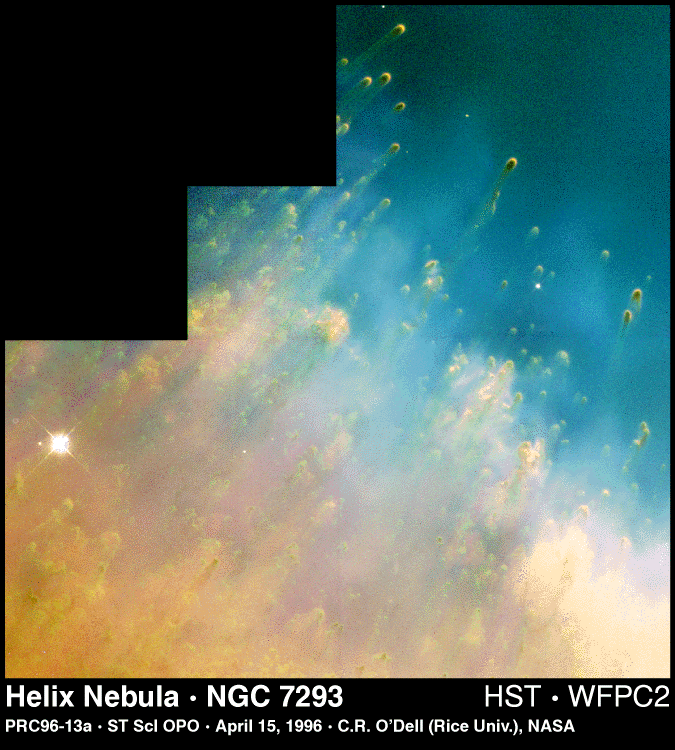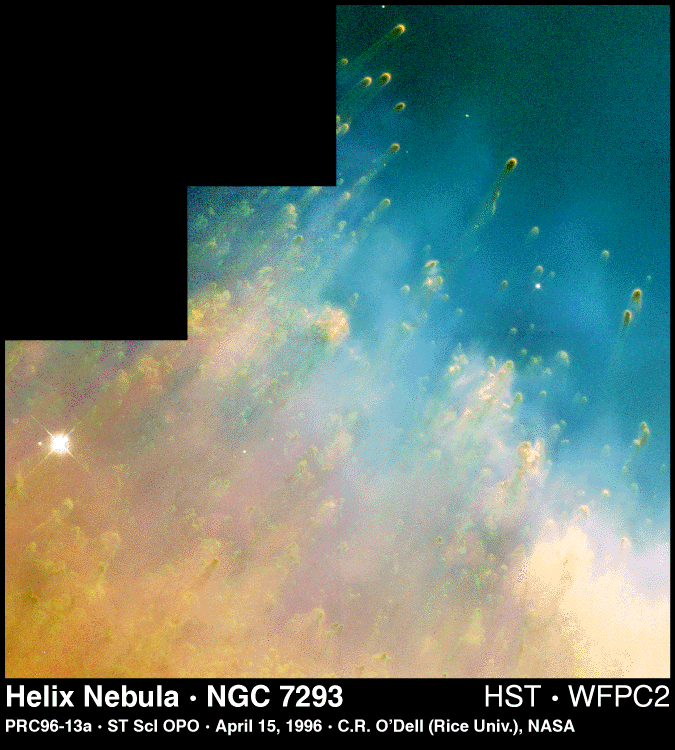
While exploring the inner edge of the Helix Nebula with the Hubble Space Telescope's Wide Field Planetary Camera 2, astronomers were able to produce this striking image - rich in details of an exotic environment. This planetary nebula, created near the final phase of a sun-like star's life, is composed of tenuous shells of gas ejected by the hot central star. The atoms of gas, stripped of electrons by ultraviolet radiation from the central star, radiate light at characteristic energies allowing specific chemical elements to be identified. In this image, emission from nitrogen is represented as red, hydrogen emission as green, and oxygen as blue. The inner edge of the Helix Nebula, also known as NGC 7293, is in the direction toward the central star, which is toward the upper right. Clearly visible near the inner edge are finger shaped cometary knots.
Al explorar el borde interior de la Nebulosa Hélice con la Cámara Planetaria de Campo Amplio 2 del Telescopio Espacial Hubble, los astrónomos fueron capaces de producir esta imagen sorprendente, rica en detalles de un ambiente exótico. Esta nebulosa planetaria, creada cerca de la fase final de la vida de una estrella similar al Sol, está compuesta de capas tenues de gas expulsadas por la estrella central caliente. Los átomos de gas, despojados de electrones por la radiación ultravioleta de la estrella central, emiten luz a energías características que permiten identificar elementos químicos específicos. En esta imagen, la emisión del nitrógeno se representa en rojo, la emisión del hidrógeno en verde y el oxígeno en azul. El borde interior de la Nebulosa Hélice, también conocida como NGC 7293, se encuentra en la dirección hacia la estrella central, que está hacia la esquina superior derecha. Claramente visibles cerca del borde interior hay nudos cometarios en forma de dedo.