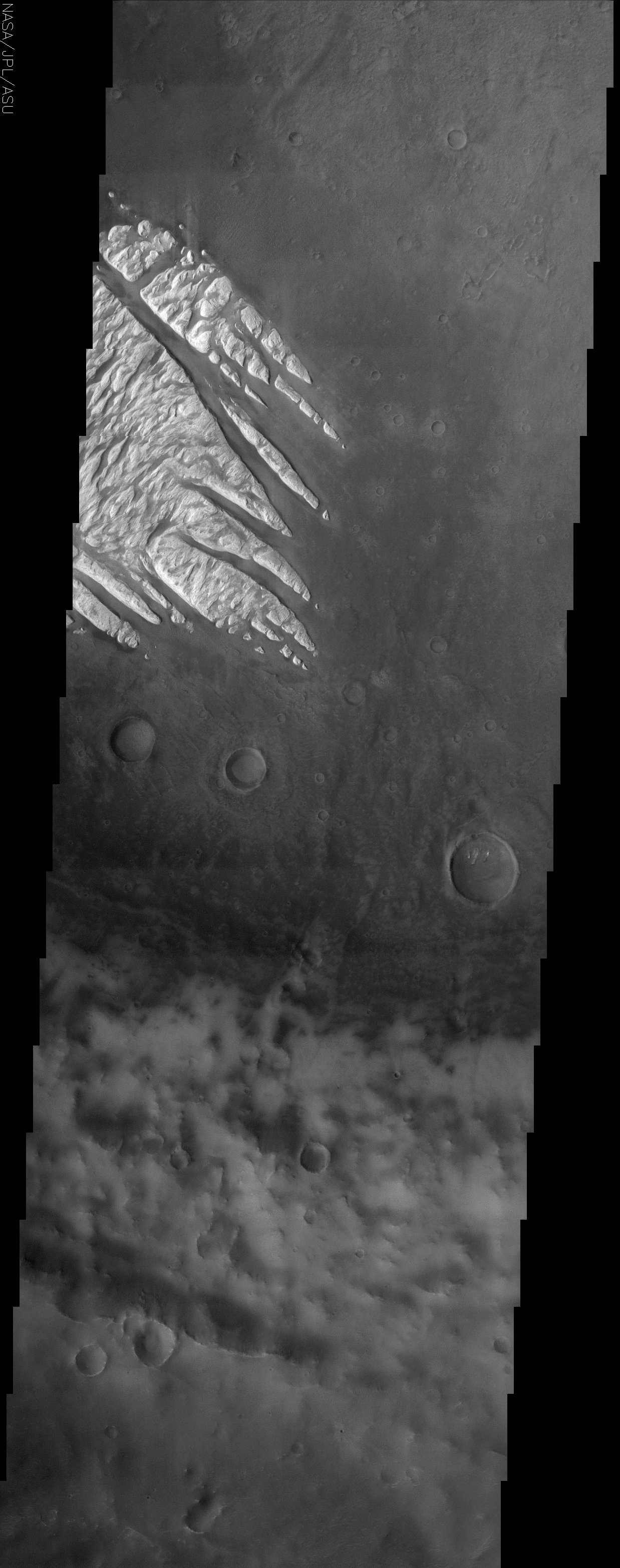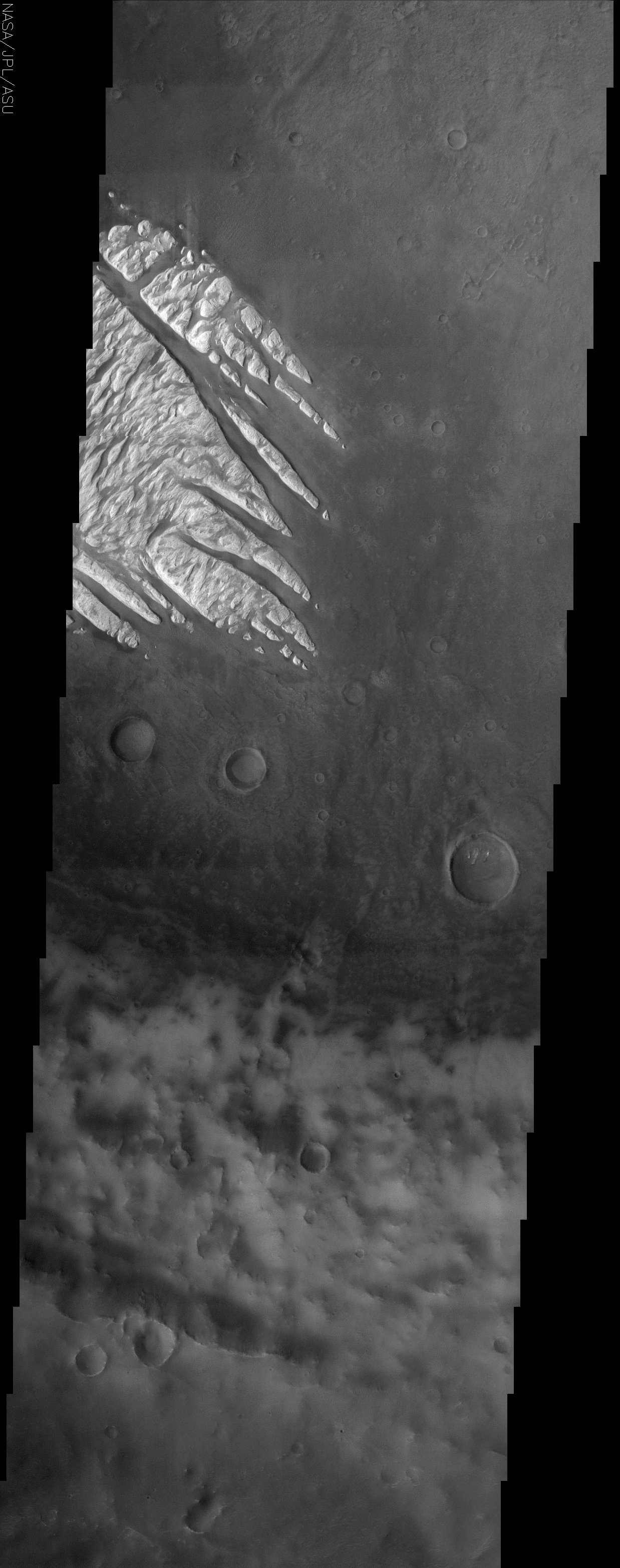
What caused this unusual white rock formation on Mars? Intrigued by the possibility that they could be salt deposits left over as an ancient lakebed dried-up, detailed studies of these fingers now indicate a more mundane origin: volcanic ash. Studying the exact color of the formation indicated the volcanic origin. The light material appears to have eroded away from surrounding area, indicating a very low-density substance consistent with the ash hypothesis. The stark contrast between the rocks and the surrounding sand is compounded by the unusual darkness of the sand. The above picture was taken with the Thermal Emission Imaging System on the Mars Odyssey spacecraft currently orbiting Mars. The image spans about 10 kilometers inside a much larger crater.
¿Qué causó esta inusual formación de roca blanca en Marte? Intrigados por la posibilidad de que pudieran ser depósitos de sal dejados por un antiguo lecho lacustre desecado, estudios detallados de estos dedos ahora indican un origen más mundano: ceniza volcánica. El estudio del color exacto de la formación indicó el origen volcánico. El material claro parece haberse erosionado del área circundante, indicando una sustancia de muy baja densidad consistente con la hipótesis de ceniza. El contraste marcado entre las rocas y la arena circundante se ve agravado por la inusual oscuridad de la arena. La imagen anterior fue tomada con el Sistema de Imágenes por Emisión Térmica a bordo de la nave espacial Mars Odyssey actualmente en órbita alrededor de Marte. La imagen abarca aproximadamente 10 kilómetros dentro de un cráter mucho más grande.