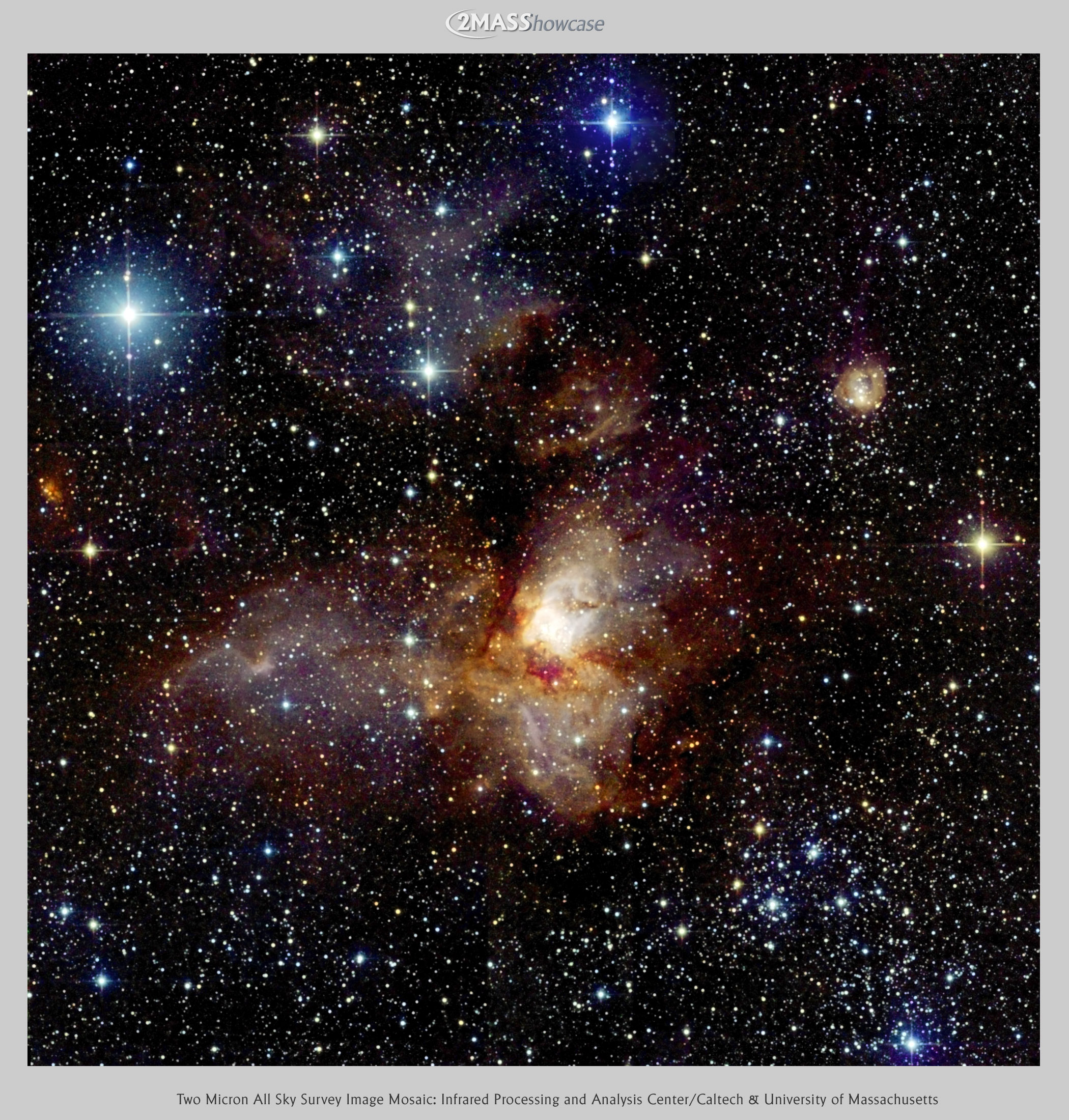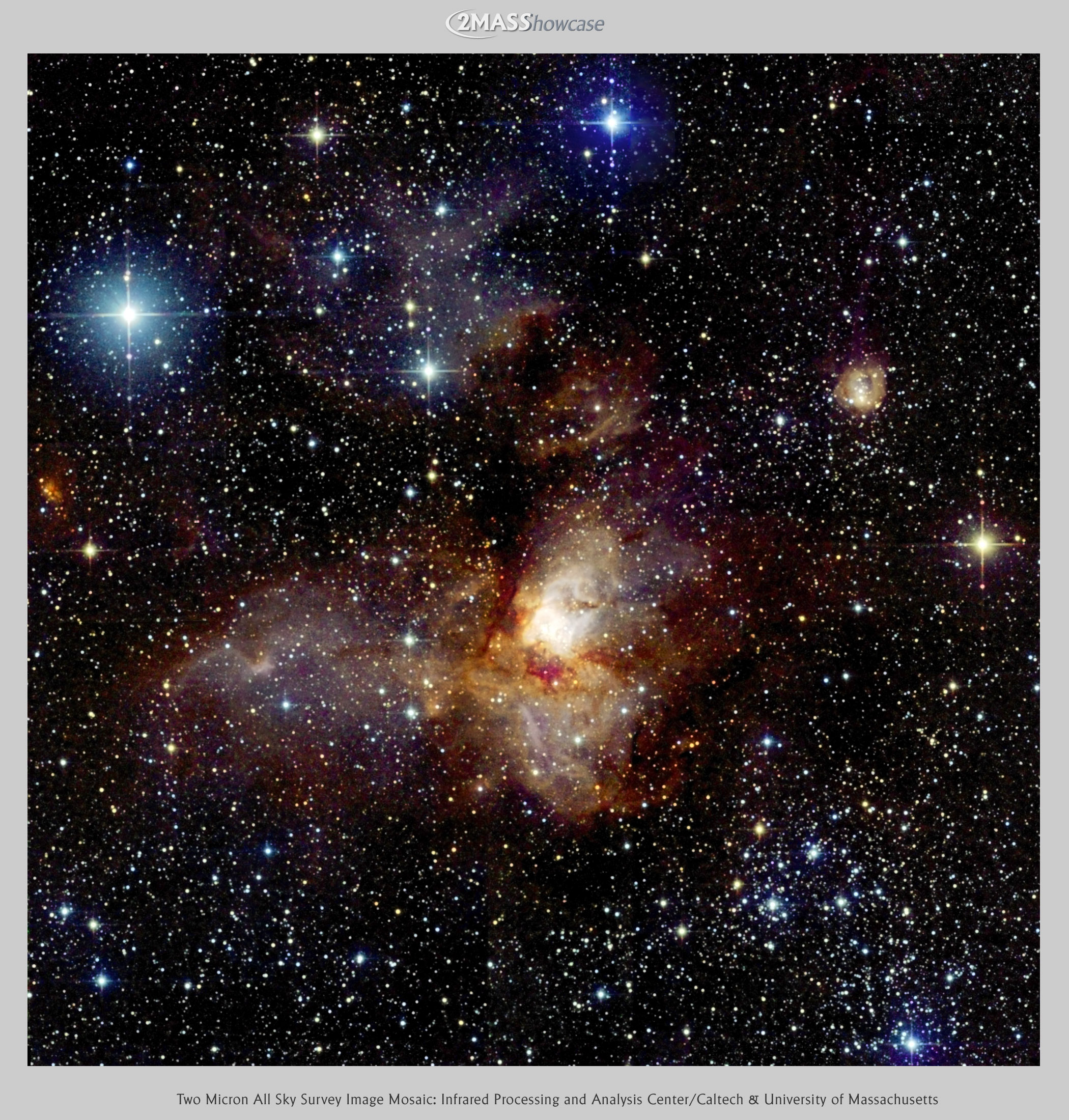
The star cluster in RCW38 was hiding. Looking at the star forming region RCW38 will not normally reveal most of the stars in this cluster. The reason is that the open cluster is so young that it is still shrouded in thick dust that absorbs visible light. This dust typically accompanies the gas that condenses to form young stars. When viewed in infrared light, however, many stars in RCW38 are revealed, because dust is less effective at absorbing infrared light. The above representative-color image mosaic of RCW38 taken by the 2MASS sky survey in infrared light shows not only many bright blue stars from the star cluster but clouds of brightly emitting gas and dramatic lanes of dark dust. RCW38 spans about 10 light-years and is located about 5500 light years away towards the constellation of Vela.
El cúmulo estelar en RCW38 estaba oculto. La observación de la región de formación estelar RCW38 normalmente no revela la mayoría de las estrellas en este cúmulo. La razón es que el cúmulo abierto es tan joven que aún está envuelto en polvo espeso que absorbe la luz visible. Este polvo típicamente acompaña al gas que se condensa para formar estrellas jóvenes. Sin embargo, cuando se observa en luz infrarroja, muchas estrellas en RCW38 se revelan, porque el polvo es menos efectivo absorbiendo luz infrarroja. El mosaico de imagen en color representativo de RCW38 tomado por el sondeo celeste 2MASS en luz infrarroja muestra no solo muchas estrellas azules brillantes del cúmulo estelar, sino también nubes de gas que emite brillantemente y dramáticos carriles de polvo oscuro. RCW38 abarca aproximadamente 10 años luz y se localiza a unos 5500 años luz de distancia hacia la constelación de Vela.