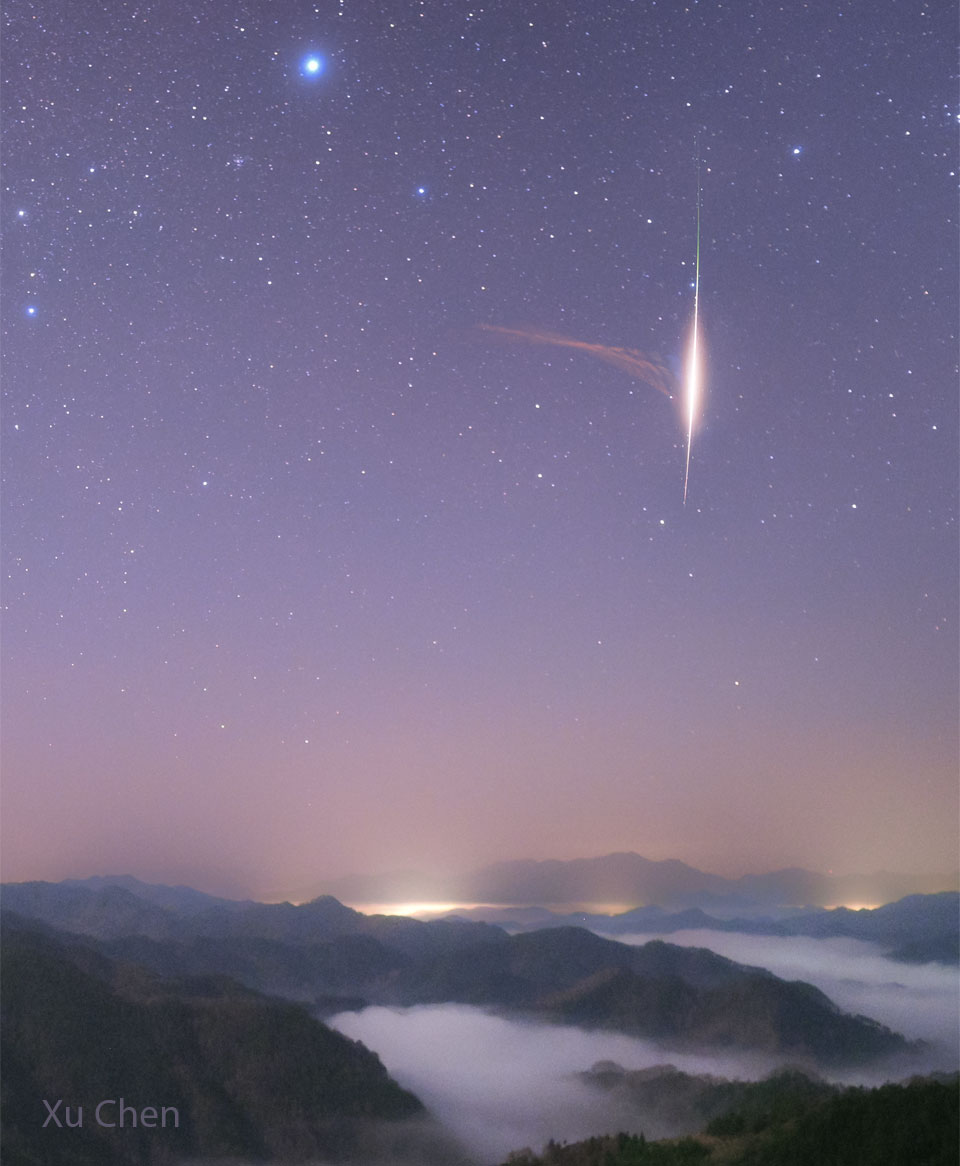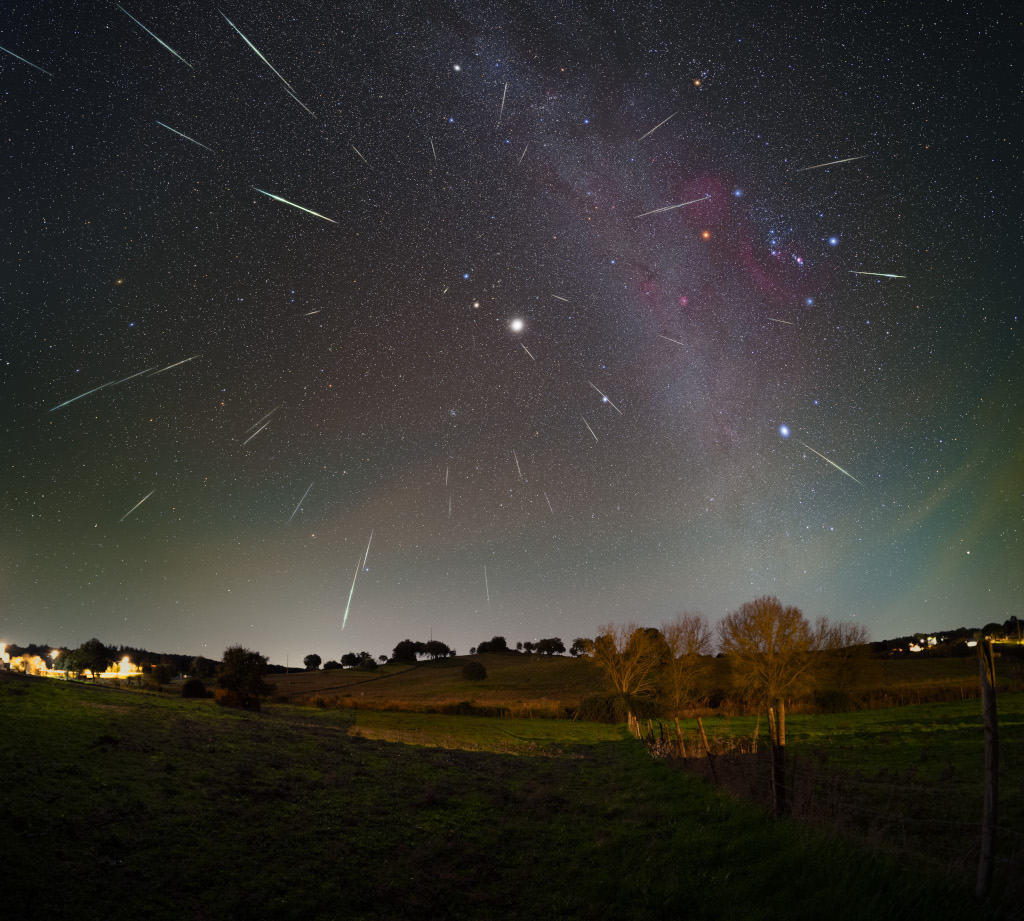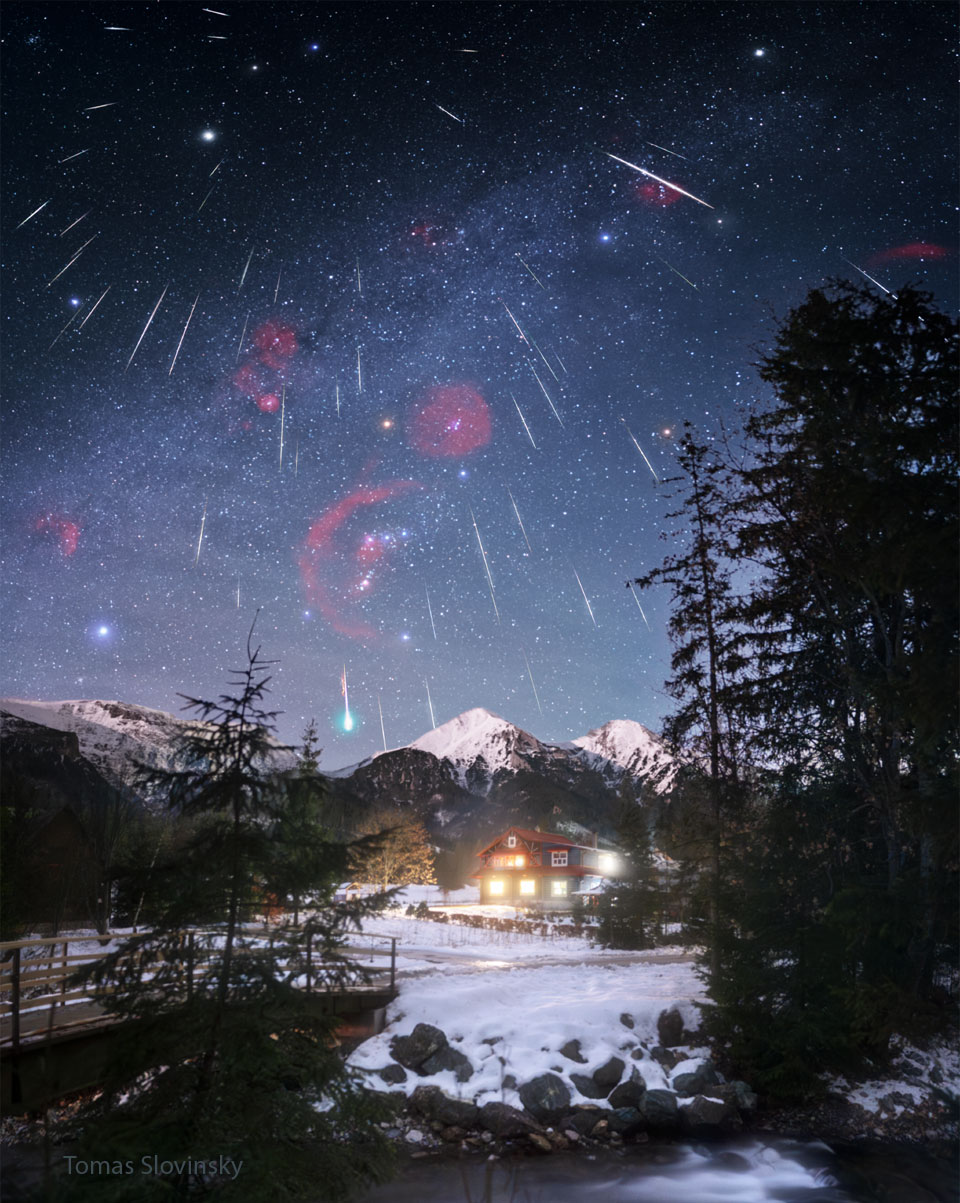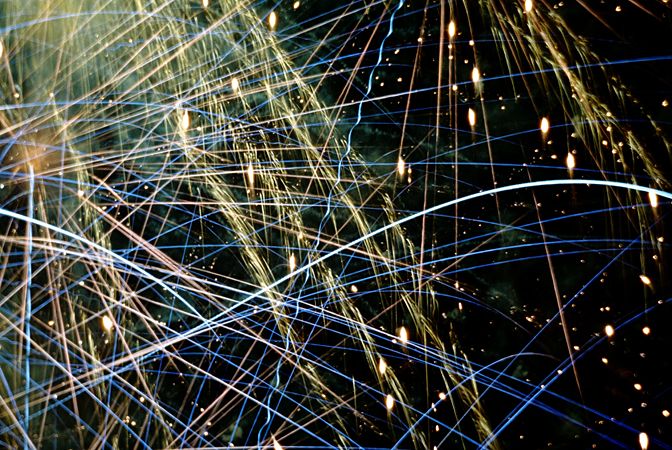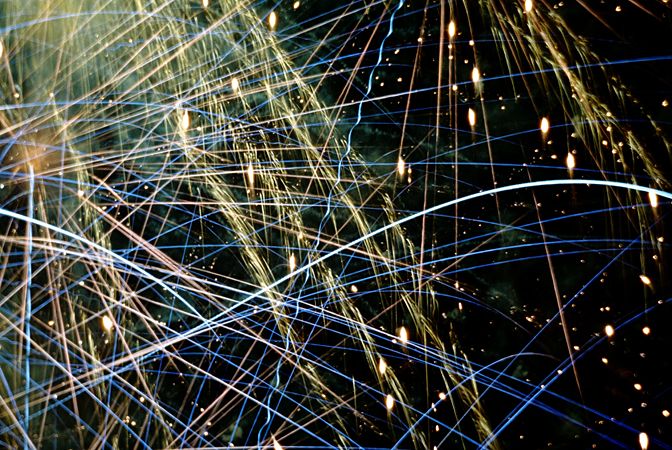
erimenting with a new telescope and camera, photographer Jim Steele captured this surreal but festive image of fireworks in the night sky above Ashland, Oregon. The date was July 4th and the fiery streaks were part of the traditional annual celebration of independence day in the United States. Fiery streaks from another annual event will revisit dark skies this weekend, as shooting stars arc through the night during the much anticipated Perseid Meteor Shower. Perseid meteors are actually bits of dust from the periodic Comet Swift-Tuttle and once each year planet Earth orbits through Swift-Tuttle's cometary dust stream. As the comet dust enters Earth's atmosphere traveling at tens of kilometers per second, the particles are vaporized leaving bright and sometimes colorful trails. While Perseid meteors can be viewed over the next few nights, this year's shower is expected to peak on August 12 and 13 with a rate of dozens or more meteors per hour visible in moonless early morning skies.
Experimentando con un nuevo telescopio y cámara, el fotógrafo Jim Steele capturó esta imagen surrealista pero festiva de fuegos artificiales en el cielo nocturno sobre Ashland, Oregon. La fecha fue el 4 de julio y los resplandecientes trazos fueron parte de la celebración anual tradicional del Día de la Independencia en los Estados Unidos. Trazos ardientes de otro evento anual revisitarán los cielos oscuros este fin de semana, mientras que las estrellas fugaces surcan la noche durante la muy anticipada Lluvia de Meteoros Perseidas. Los meteoros Perseidas son en realidad partículas de polvo del Cometa periódico Swift-Tuttle y una vez cada año el planeta Tierra orbita a través de la corriente de polvo cometario de Swift-Tuttle. Cuando el polvo cometario entra en la atmósfera terrestre viajando a decenas de kilómetros por segundo, las partículas se vaporizan dejando rastros brillantes y a veces coloridos. Aunque los meteoros Perseidas pueden observarse durante las próximas noches, se espera que la lluvia de este año alcance su máximo el 12 y 13 de agosto con una tasa de docenas o más meteoros por hora visibles en cielos sin luna al amanecer.