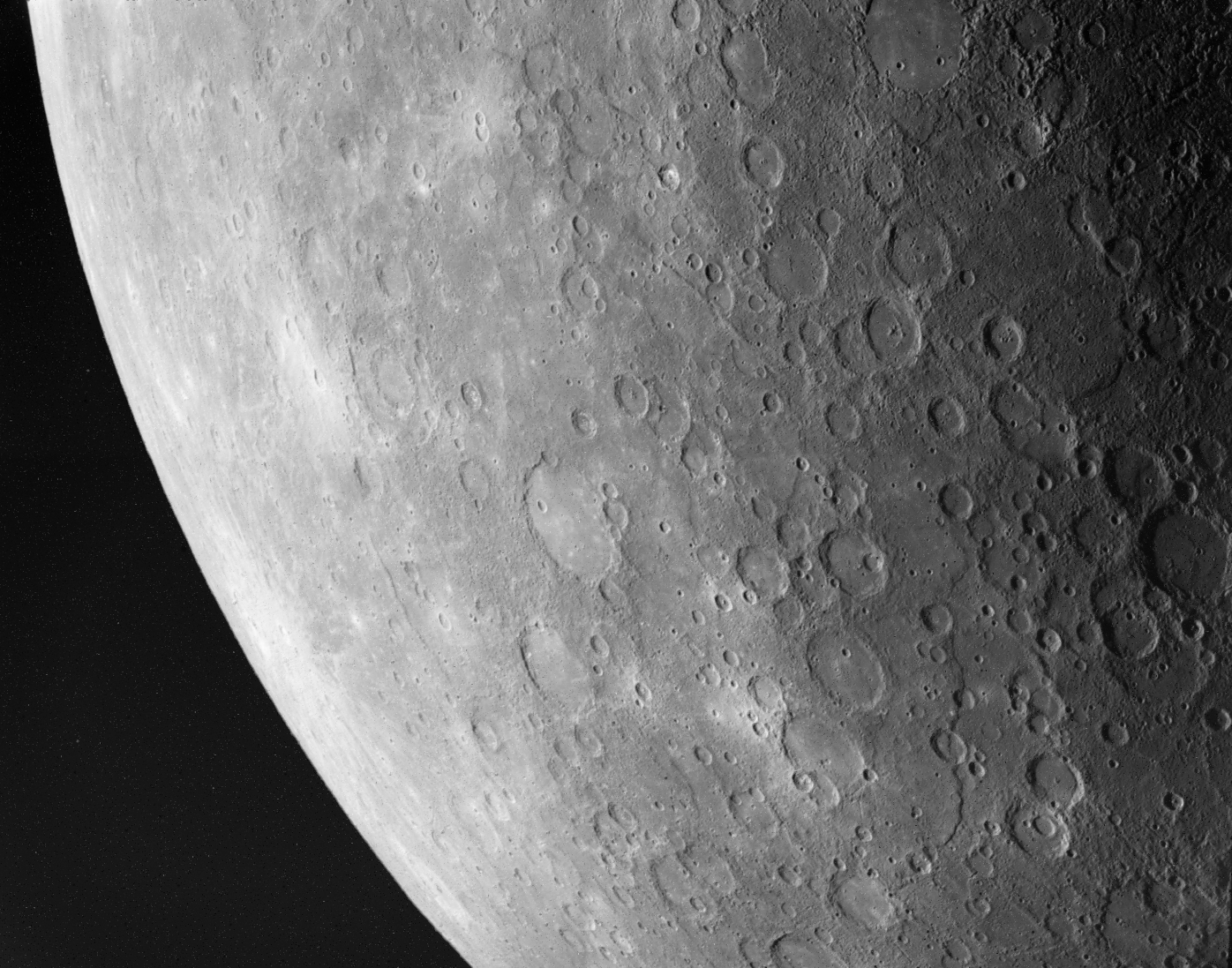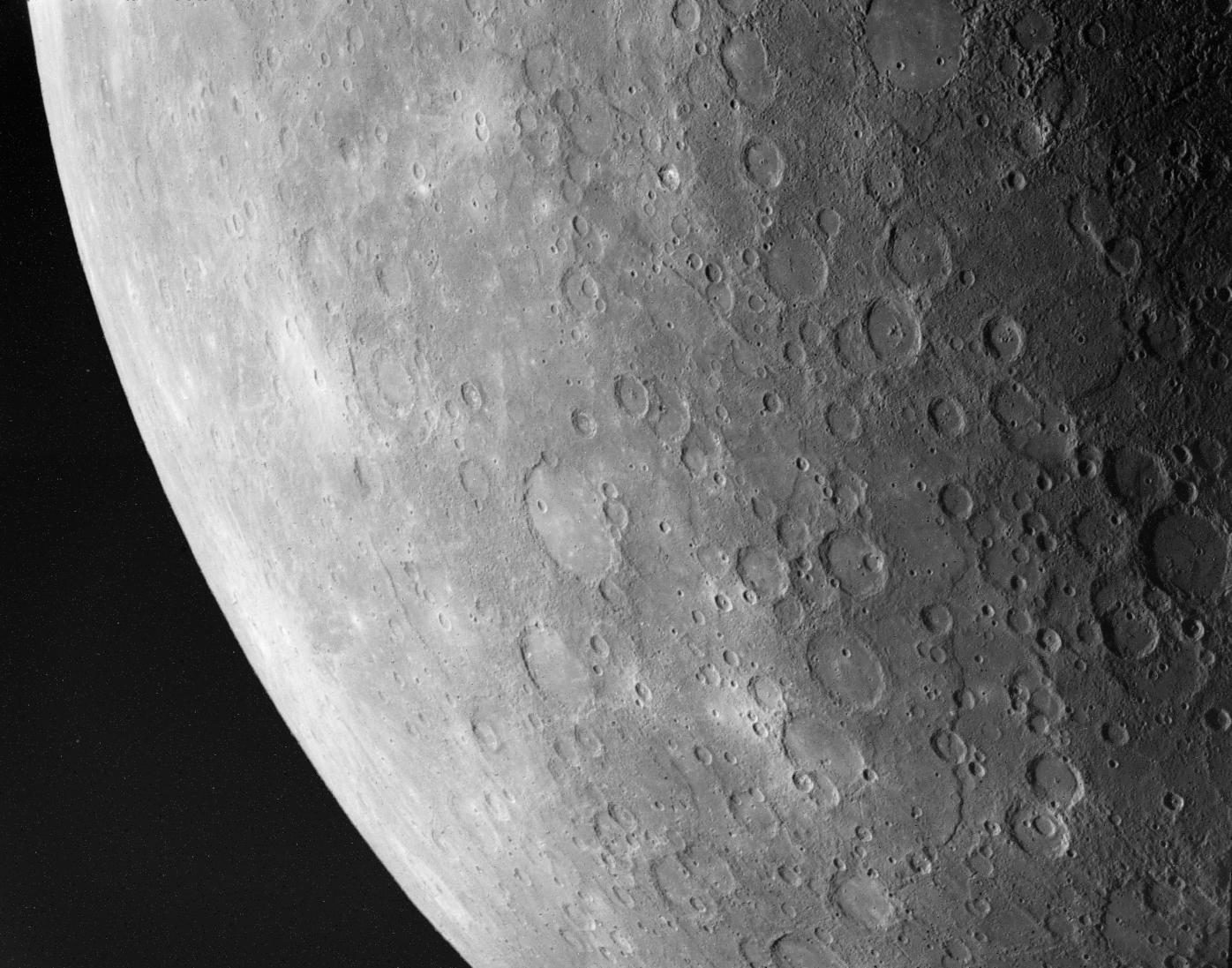
The planet Mercury resembles a moon. Mercury's old surface is heavily cratered like many moons. Mercury is larger than most moons but smaller than Jupiter's moon Ganymede and Saturn's moon Titan. Mercury is much denser and more massive than any moon, though, because it is made mostly of iron. In fact, the Earth is the only planet more dense. A visitor to Mercury's surface would see some strange sights. Because Mercury rotates exactly three times every two orbits around the Sun, and because Mercury's orbit is so elliptical, a visitor to Mercury might see the Sun rise, stop in the sky, go back toward the rising horizon, stop again, and then set quickly over the other horizon. From Earth, Mercury's proximity to the Sun causes it to be visible only for a short time just after sunset or just before sunrise.
El planeta Mercurio se asemeja a una luna. La antigua superficie de Mercurio está fuertemente cratizada como muchas lunas. Mercurio es más grande que la mayoría de las lunas, pero más pequeño que la luna joviana Ganimedes y la luna saturniana Titán. Sin embargo, Mercurio es mucho más denso y masivo que cualquier luna, porque está compuesto principalmente de hierro. De hecho, la Tierra es el único planeta más denso. Un visitante a la superficie de Mercurio vería algunos espectáculos extraños. Debido a que Mercurio rota exactamente tres veces por cada dos órbitas alrededor del Sol, y porque la órbita de Mercurio es tan elíptica, un visitante a Mercurio podría ver al Sol salir, detenerse en el cielo, volver hacia el horizonte de salida, detenerse nuevamente y luego ponerse rápidamente sobre el otro horizonte. Desde la Tierra, la proximidad de Mercurio al Sol hace que sea visible solo durante un corto tiempo justo después del atardecer o justo antes del amanecer.