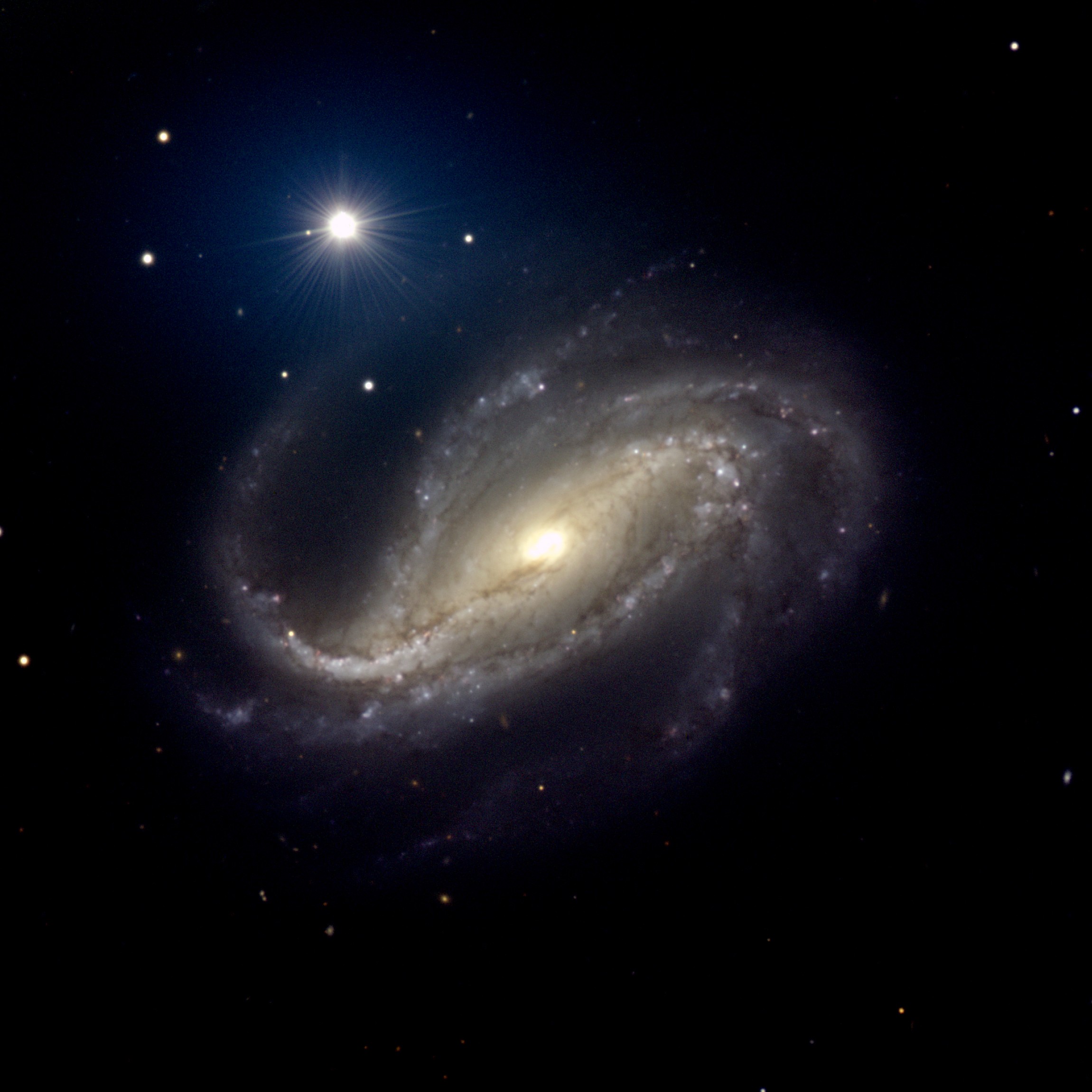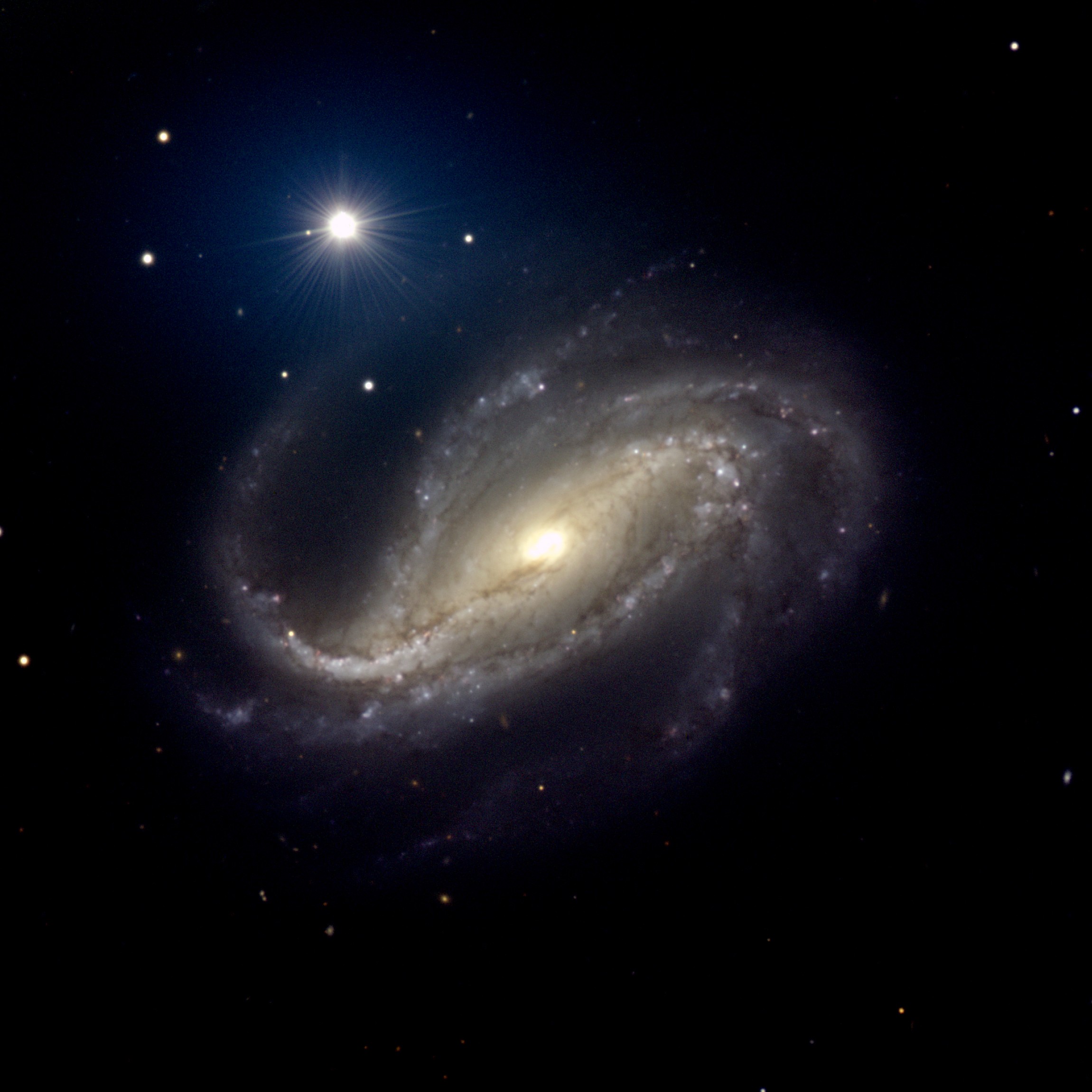
When morning twilight came to the Paranal Observatory in Chile, astronomers Mark Neeser and Peter Barthel interrupted their search for faint quasars, billions of light-years away. And just for a moment, they used Very Large Telescopes at the European Southern Observatory to appreciate the beauty of the nearby Universe. One result was this stunning view of beautiful barred spiral galaxy NGC 613, a mere 65 million light-years away in the southern constellation Sculptor. Over 100 thousand light-years across, NGC 613 seems to have more than its fair share of spiral arms laced with cosmic dust clouds and bright star forming regions near the ends of a dominant central bar. Radio emission indicates the presence of a massive black hole at the center of NGC 613.
Cuando el crepúsculo matutino llegó al Observatorio de Paranal en Chile, los astrónomos Mark Neeser y Peter Barthel interrumpieron su búsqueda de cuásares débiles, ubicados a miles de millones de años luz de distancia. Y solo por un momento, utilizaron el Very Large Telescope del Observatorio Europeo Austral para apreciar la belleza del Universo cercano. Uno de los resultados fue esta impresionante vista de la hermosa galaxia espiral barrada NGC 613, a tan solo 65 millones de años luz de distancia en la constelación austral del Escultor. Con más de 100 mil años luz de diámetro, NGC 613 parece tener más que su parte equitativa de brazos espirales entrecruzados con nubes de polvo cósmico y brillantes regiones de formación estelar cerca de los extremos de una barra central dominante. La emisión de radio indica la presencia de un agujero negro masivo en el centro de NGC 613.