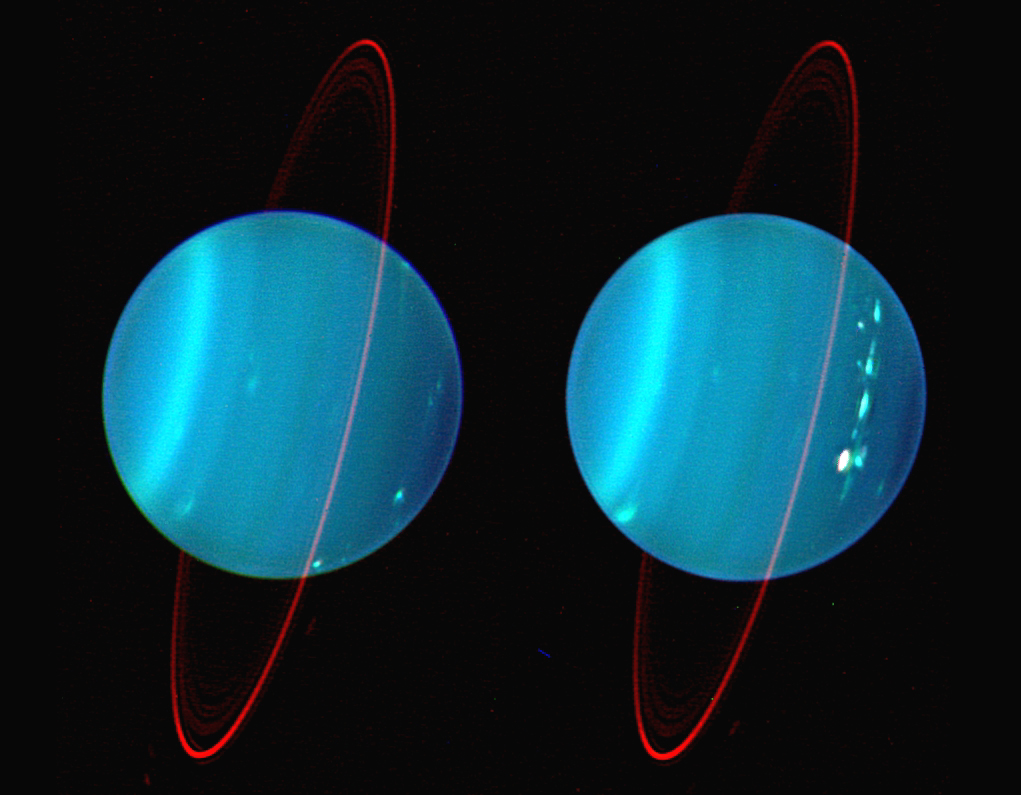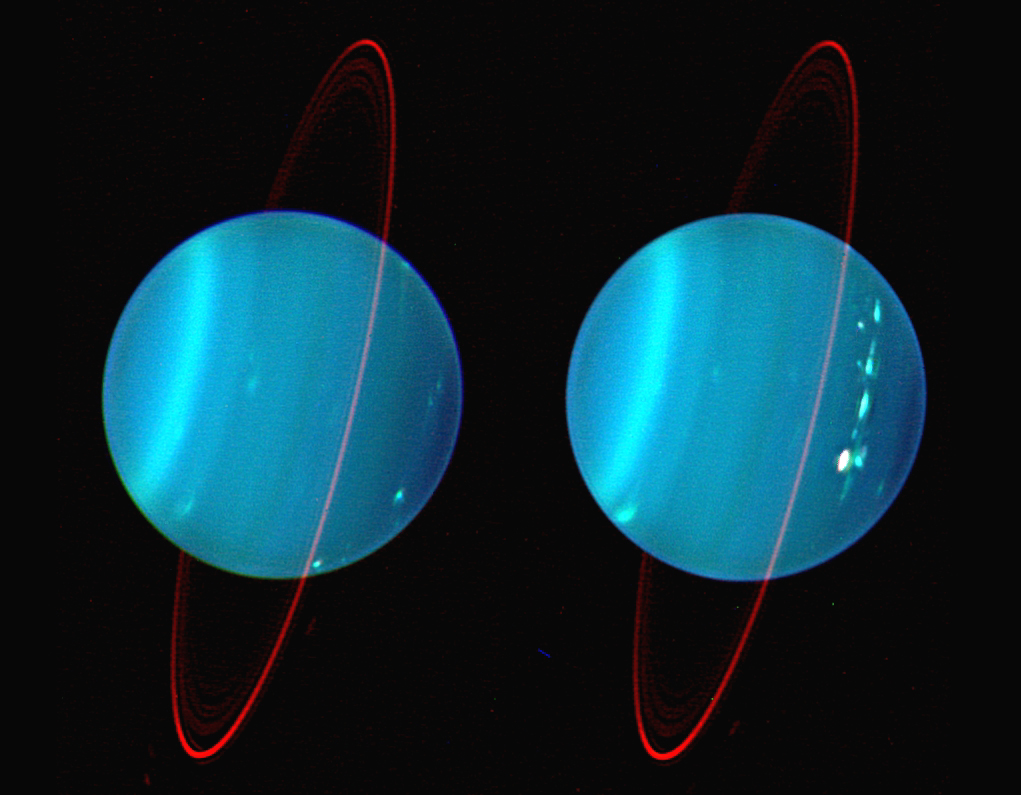
These sharp views of tilted gas giant Uranus show dramatic details of the planet's atmosphere and ring system. The remarkable ground-based images were made using a near-infrared camera and the Keck Adaptive Optics system to reduce the blurring effects of Earth's atmosphere. Recorded in July, the pictures show two sides of Uranus (careful how you pronounce that ...). In both, high, white cloud features are seen mostly in the northern (right hand) hemisphere, with medium level cloud bands in green and lower level clouds in blue. The artificial color scheme lends a deep reddish tint to the otherwise faint rings. Because of the severe tilt of its rotational axis, seasons on Uranus are extreme and last nearly 21 Earth years on the distant planet. Uranus is now slowly approaching its southern autumnal equinox - the beginning of fall in the southern hemisphere - in 2007.
Estas vistas nítidas del gigante gaseoso inclinado Urano muestran detalles dramáticos de la atmósfera y el sistema de anillos del planeta. Las notables imágenes obtenidas desde tierra fueron capturadas utilizando una cámara de infrarrojo cercano y el sistema de óptica adaptativa Keck para reducir los efectos de desenfoque causados por la atmósfera terrestre. Registradas en julio, las imágenes muestran dos lados de Urano. En ambas, se observan características de nubes blancas y elevadas principalmente en el hemisferio septentrional (lado derecho), con bandas de nubes de nivel medio en verde y nubes de nivel inferior en azul. El esquema de color artificial confiere un tinte rojizo profundo a los anillos por lo demás tenues. Debido a la inclinación severa de su eje de rotación, las estaciones en Urano son extremas y duran casi 21 años terrestres en ese planeta distante. Urano se acerca lentamente a su equinoccio otoñal meridional —el comienzo del otoño en el hemisferio sur— en 2007.